

This Is What Happens When You Make A Dairy-Free Pie Crust With Coconut Oil
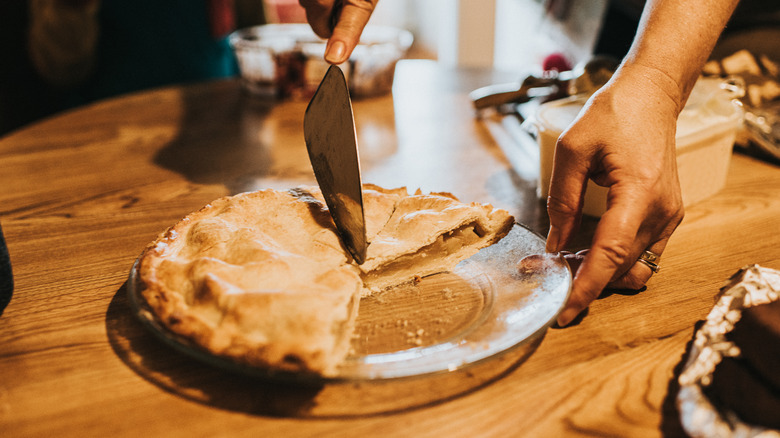
Mastering the art of a great pie crusts is one of the essential steps on the way to being a true at-home baker, and once you do, you've got a particularly useful (and versatile) tool in your kitchen arsenal. From a perfect pecan pie, to quiches and other savory pies packed with veggies and cheeses, the first step is always a nicely browned, flavorful crust. The traditional route to pastry perfection is by using butter or shortening, but sometimes dairy just isn't an option, whether that's because you don't have any to hand, or are baking for a vegan crowd. A good alternative? Coconut oil.
Coconut oil is a go-to dairy-free alternative, but it behaves differently to butter, both in prep and baking. To find out more about how best to work with it, we spoke to Nisha Vora, a vegan recipe developer and the author of "Big Vegan Flavor," who shared her expert insight with us. "Coconut oil is a great substitute for butter since it has a very high fat content," she told us. "However, it does behave differently than butter since 1) it has a uniquely low melting point and 2) it doesn't have any water content." These differences mean there are a fair few pitfalls to watch out for when using it as a substitute: For one, the dough can become greasy much quicker — but chilling your bowl and the oil can help keep things under control. "To achieve good results with a pie crust, you'll want to briefly chill the coconut oil if it has liquified and minimize handling of the dough since warm hands can make the dough greasy," Vora added.
How to master temperature and technique
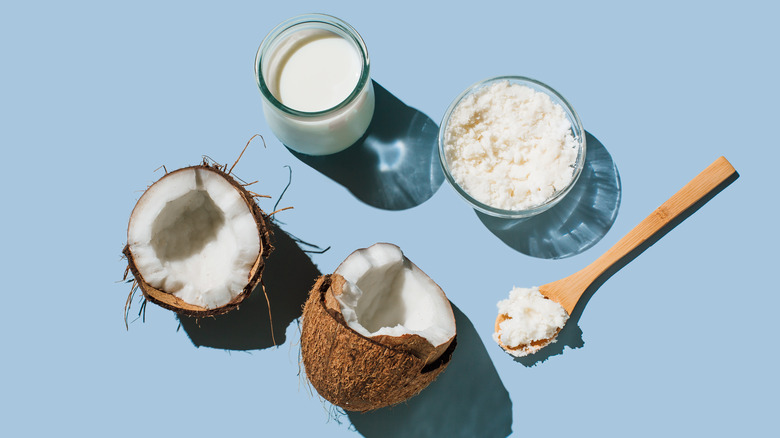
So, temperature control (as with baking other kinds of pastry, like puff pastry — though with that particular variation, you're often better off using the store-bought stuff) is crucial. "For a flaky crust, you need the coconut oil to be solid but pliable and scoopable — similar to the texture of chilled butter (this is typically the texture of the coconut oil when you buy it at the store)," Nisha Vora said. If you let it get too warm, you'll risk ruining your dough: "If the oil is liquid, it will blend too thoroughly with the flour and you'll end up with a mealy texture." That goes for over-cooling your oil, too, according to Vora: "If it's rock hard, it won't incorporate properly into the flour and you'll have chunks of hardened oil."
Sometimes, especially if it's a hot day, your coconut oil might separate. If it does, you'll need to reincorporate it. "If your coconut oil has separated... stir well and refrigerate it for 10 minutes," Vora suggested. "Stir again and chill again, repeating until it reaches a scoopable consistency."
Sometimes you'll find a recipe that requires the dough to be chilled before it's rolled out. If you find yourself needing to, consider adjusting the time for which you cool it, as coconut oil hardens faster than butter. As Vora explained: "If a recipe calls for chilling the dough for a long period of time, you'll likely want to chill the dough for a short period, just 20 to 30 minutes ... If you chill the dough for a long time, the coconut oil will harden a lot."
How the swap affects taste and texture
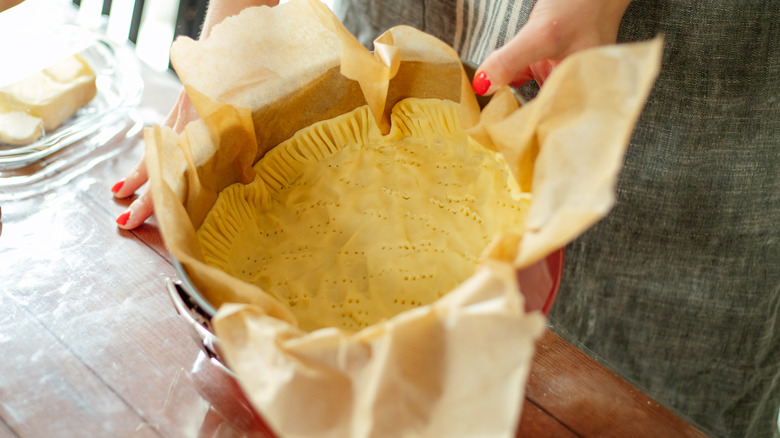
Once you've got your dough prepped and mastered the art of temperature control, you can turn your attention to flavor and texture. After all, these are what separates a good pie crust from a great one (or from a burnt, crumbly mess). Coconut oil makes for a slightly different texture to a traditional butter or shortening based version, said Nisha Vora: "Coconut oil crusts tend to be more delicate and crumbly than butter crusts ... The finished product tends to be rich and tender thanks to the higher fat content than butter." That crumbliness can make rolling out your pastry difficult, but a simple trick can help negate this. "If the dough feels fragile when rolling it out, you may need to add a bit more flour or use parchment paper to assist in rolling," Vora recommended.
You'll likely end up with a more brittle, fragile crust — but that can add some delicious contrast to your pie. As Vora explained: "They can also bake up crisper, particularly around the edges. Once baked, the texture is tender with a slight snap ... It's definitely tasty, but a bit more fragile." Flavor-wise, coconut oil also has its own unique qualities. Choosing the right type of coconut oil is a must: "Unless you want a detectable coconut flavor in your pie crust, use refined coconut oil, which has a neutral flavor," she said. While the distinctive coconut flavor of the unrefined oil can add a whole other dimension to your pies, most of the time the refined version should be your go-to: "Since refined coconut oil has a neutral flavor, that will allow the rest of the ingredients in your pie to shine."