

How To Tell If Your Cookware Works With An Induction Cooktop
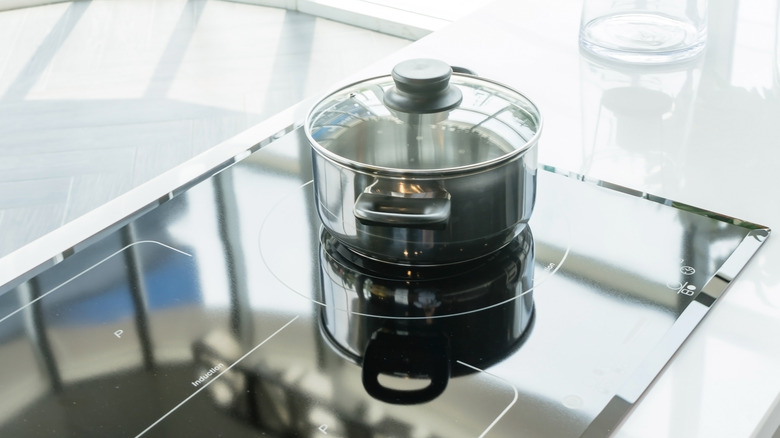
Induction cooking technology has been around since Frigidaire demonstrated the "Kitchen of the Future" in a 1950s traveling showcase, but as it has become more affordable and common in modern-day kitchens, it can still seem like science fiction. An induction cooktop will stay completely cool as the cookware placed on top of it seems to heat up on its own accord. You can even place a towel in between the cookware and the cooking surface, and it won't catch fire. But this magic doesn't work with all pans, and that's because it isn't magic at all. It's electromagnetism. So, to find out if your cookware is induction cooking compatible, just grab a magnet off your fridge and see if it sticks to the bottom. If it does, it will work with an induction cooktop.
The glass cooktops of an induction range hide copper wiring that is magnetized with an electric charge. When stainless steel or cast iron cookware comes into contact with this magnetic field, it agitates the magnetic material in the pan. The molecules vibrate at an incredible speed, quickly generating friction and heat. But it won't work with copper, brass, glass, ceramic, or aluminum cookware. It also won't work with non-magnetic stainless steel, which looks an awful lot like magnetic stainless steel, making the magnet check pretty handy.
It it worth throwing out all your pans for an induction cooktop?
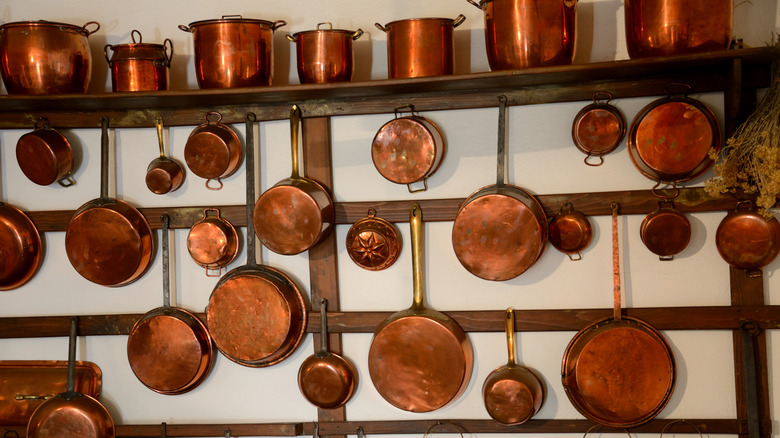
Induction cooking is very energy efficient, and it's certainly safer for a cook prone to leaving burners on. Still, it might not be worth trading in a set of copper pots or vintage ceramic cookware. As induction cooking does not generate radiant heat, the only part of the pan that gets hot is what is directly in contact with the magnetic field. If a 10-inch pan is heated on an 8-inch induction field, there will be a cooler ring around the edge of the pan, leading to uneven cooking. If a pan is removed from the cooktop, it stops generating heat immediately, making it difficult to toss ingredients for a stir-fry. And while cast iron and other heavy steel cookware work better with induction technology than lightweight, flimsy pots and pans, they can scratch or even crack the glass stove surface.
If you can work around these downsides and are ready for the benefits, don't rush to swap out all the cookware in your kitchen for new pots and pans with the induction cookware symbol on them. A pot might not look like it's ferromagnetic, but it could have an iron core or bottom. And if you followed Ina Garten's example and stocked your cupboard with All-Clad, you need not fear its aluminum. The layers of steel ensure a magnetic reaction. But don't take our word for it. Use a magnet and find out for yourself.