

The Easiest Way To Remove That Pesky Waxy Layer From Apples
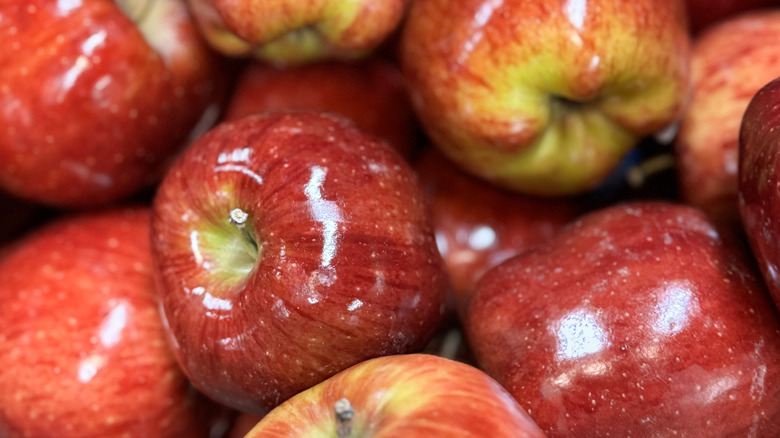
Whether you've noticed it or not, apples in the grocery store often have a slight wax coating. While you likely wouldn't notice the food-grade coating if you're just eating an apple or chopping it up to include in a salad, some apple-based treats, such as candy apples, require the removal of wax to get sugary items to stick to the peel. If you're making candy apples, want to see the natural shine of your produce, or you don't care for the waxy taste, you've got a few different options to remove the wax applied to apples during processing.
While you can scrape wax off of apples with a paring knife, there are less tedious ways to get the job done. If you've got some lemon juice and baking soda on hand, it's easy to remove wax from apples. Fill a bowl with enough lukewarm water to cover the apples, add a few shakes of baking soda and a bit of lemon juice, then use a brush to clean the apples while they're in the water. Another method is to give your apples a quick bath in hot water to remove wax. You need to be fast: You don't want to give your apples enough time in the boiling water to begin cooking, so leave your apples in hot water for just a few seconds using a slotted spoon (to be sure each side of the apple gets into the boiling water). When you remove them, rub them with a paper towel and you're good to go.
Why do apples come with wax, anyway?
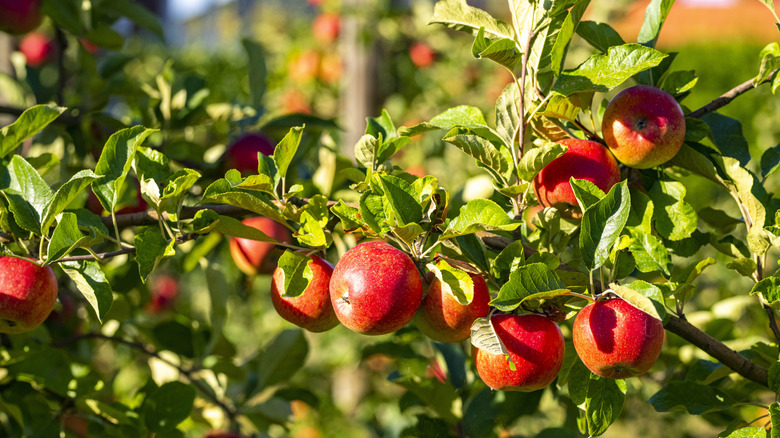
You may never have noticed the wax that's applied to your apples from the grocery store. They seem super-similar to any apple you'd pick from a tree at an orchard. That's because they are: Apples naturally develop a wax coating as they grow. While wax is applied as a protective agent during the production process, an apple's natural wax coating serves to protect it from moisture loss. Without wax, apples tend to dry out quickly — long before they make it from the orchard to your grocery store. After apples are picked in the orchard, they're washed and cleaned to remove dirt and debris. This process, however, also removes the apple's natural wax, leaving it more susceptible to moisture loss. Before apples are shipped to grocery stores, they're given a new wax coating to help them stand up against moisture loss while they're waiting for you to take them home.
If you remove wax from your apples and don't use them right away, be sure to store them properly so they stay nice and crisp until you're ready to enjoy them. Tucking apples away in your refrigerator's crisper drawer can help them stay fresh for longer than they would sitting on your countertop. Choosing apples known for their ability to stay fresh longterm is smart, too: Lean toward Pink Lady and Fuji apples if you're looking for fruit that stands the test of time.