

The Potentially Toxic Chemical That Makes Jamaica's National Fruit Illegal
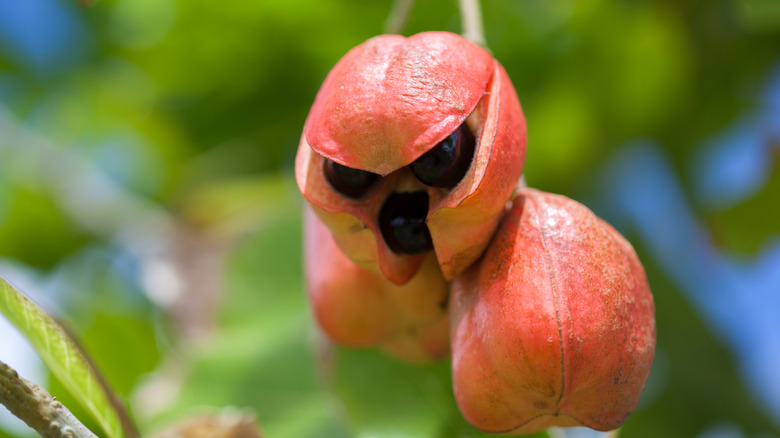
It's creamy. It's savory. And it's the star of Jamaica's national dish. But ackee, the national fruit of Jamaica, is also banned in its raw form across the U.S. Why? Because this tropical delicacy has a dark side, thanks to a naturally occurring compound that can turn breakfast into a medical emergency.
Ackee (Blighia sapida) might look like a harmless, pear-shaped fruit, but inside those rosy pods lurks chemicals known as hypoglycins A and B, toxins that can cause serious, sometimes fatal, illness. When the fruit is unripe, hypoglycin levels are high enough to trigger "Jamaican vomiting sickness" — a condition that causes severe hypoglycemia, vomiting, and even seizures or coma if untreated. Not exactly the kind of thing you want with your saltfish and plantains.
Here's the catch: the danger lies in when and how ackee is eaten. The fruit is only considered safe to eat when it opens naturally on the tree, revealing its soft yellow flesh and jet-black seeds. At this stage, the hypoglycin content drops to safe levels in the arils (the edible part), though the seeds and pink membrane are still highly toxic. It's a tight window between delicious and dangerous, which is why the U.S. Food and Drug Administration (FDA) continues to ban the import of raw ackee and strictly monitors the import of canned versions.
A canned workaround with big flavor
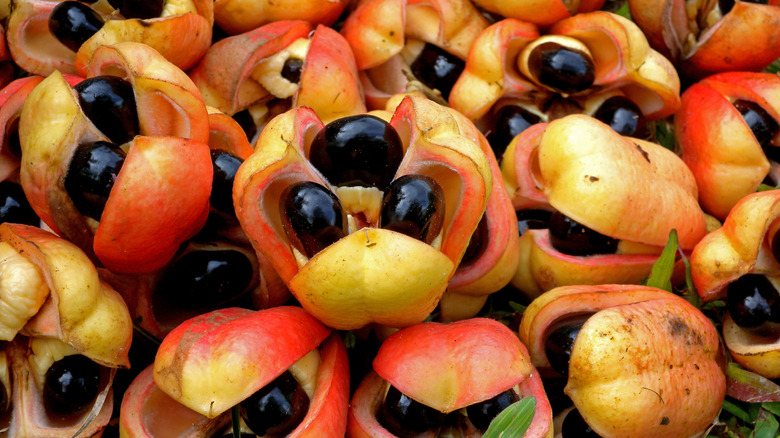
Canned ackee is legal in the United States, but only from approved sources that follow FDA regulations to ensure the fruit was properly ripened, processed, and tested. That means your safest route to tasting ackee stateside is through canned imports sold in specialty Caribbean or international grocery stores. It is not quite the same as fresh, but it's a solid stand-in for everything from ackee and saltfish to savory ackee patties.
So what does ackee actually taste like? When properly prepared, it has a soft, buttery texture and a mild flavor often compared to scrambled eggs, which is why it's such a natural fit for breakfast dishes, especially if you want to avoid eggs. But unlike your average fruit, ackee is used exclusively in savory recipes — it's the unexpected VIP of Jamaican cuisine, lending a unique richness that's hard to replicate with other ingredients. If you are traveling to Jamaica, you will find ackee on nearly every menu, but even there, locals take ripeness seriously. Cooking unripe ackee is a major no-no, and households often wait patiently for the pods to split open before harvesting. In fact, ackee's unpredictable ripening schedule is part of why many Jamaicans see it as a fruit that's ready on its own terms. No rushing allowed!
Bottom line: ackee might be one of the only fruits you will ever meet with government paperwork and a potential health warning, but when respected and properly prepared, it is also one of the most distinctive ingredients in Caribbean cooking (along with that green Caribbean seasoning). Just be sure to leave the raw stuff to the professionals. In the case of ackee, safety really is the secret ingredient.