

How Exactly Does Microwavable Rice Work?
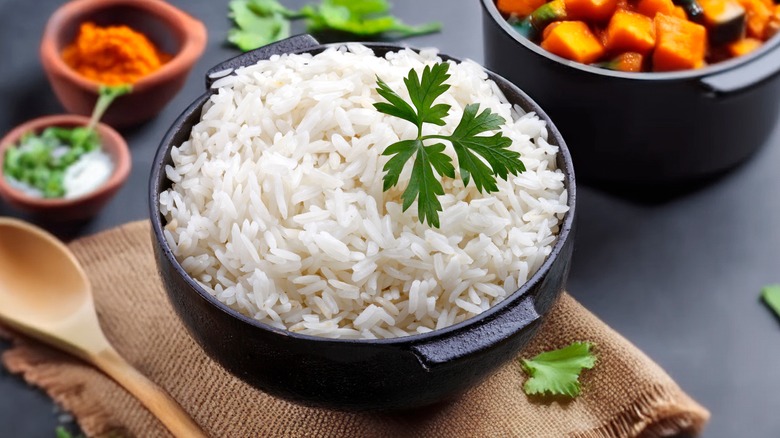
Carbs are never the enemy — especially when consumed in moderation. They give us an energy boost so that we're equipped to function throughout the day. Rice is a great source for that, and it's also fairly easy to pair with other dishes, making it a staple in a lot of Asian homes. However, it's not the easiest (nor the fastest) food to prepare, which poses a challenge if you don't have time. It's also highly likely you'll make a mistake that keeps you from making the perfect rice. And let's be honest, sometimes we're just too lazy to do all the work. This is where microwavable rice comes in handy.
When Chowhound spoke exclusively with Kathleen Benson, registered dietitian at Top Nutrition Coaching, we got to learn all about how it works. Benson mentions, "Microwaveable rice packets are pre-cooked and vacuum-sealed. When heated, the steam inside the pouch reheats the rice rather than cooking it raw." She also adds that these packets are packaged in containers that can survive higher temperatures while locking in moisture, which is why microwavable rice is so easy to make.
However, like a lot of packaged food, you might wonder all about the preservatives added to extend its shelf life. Is it really worth switching to microwavable rice rather than buying raw and taking the time to let the rice cooker do its magic?
Microwavable rice: Is it healthy or not?
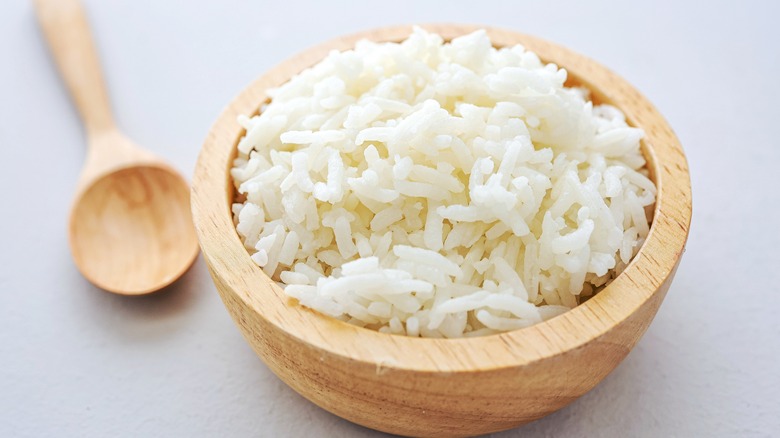
If we focus on the nutritional value of microwavable rice, Kathleen Benson mentions that the macros are the same as cooked rice. However, she also further explains that, "Some micronutrients (like certain B vitamins) might be slightly reduced due to the heat used in processing, but not significantly." It's best to be on the lookout for the ingredients list, as there are some brands with added flavoring, which affect the nutritional value. You might be better off upgrading the rice yourself with one simple extra step.
Some might be iffy about the long shelf life of microwavable rice that's possibly due to added preservatives, but the trick is actually in the packaging. Through vacuum sealing, it eliminates the potential risk of bacteria growth. Believe it or not, even rice grains have a long shelf life. When proper storage is observed, it can last up to 30 years, and variations like white rice are some of the foods that don't really expire. To check for the best rice packets, be on the lookout for the whole grain stamp, and go for the one labeled with 100%, which has more nutrients, allowing you to consume carbohydrates, protein, and fiber without worry.