

Are Green Blueberries Safe To Eat?

Blueberries are supposed to be blue. After all, it's in the name, right? Okay, sometimes purple, but if you've ever encountered a green blueberry, you've probably wondered if it's safe to eat. Thankfully, Courtney Pelitera, a registered dietician and nutritionist at Top Nutrition Coaching, has shared some insight on whether these little berries are safe to eat. It turns out that green blueberries are not any different than the bluish-purple ones you are probably quite used to, and they are perfectly safe to eat — but that doesn't mean there aren't a few things you might want to know before you chow down.
"Green blueberries are actually the unripened version of wild blueberries," says Pelitera. It's much easier to tell if some fruits are ripe than others. Take pomegranates, for example. You can tell if a pomegranate is ripe without cracking it open if you know what to look for, such as the shape of the crown and the texture of the skin. But with a blueberry, all you have to do is look at the color. So, if you see a green blueberry, it was simply picked before it was ready. "They are safe to eat in smaller quantities," Pelitera reassures us, noting that if you eat too many, they can cause you to have an upset stomach.
Green blueberries might be safe to eat (in moderation), but the taste won't be quite the same and they are actually sold this way on purpose for a specific reason. "The green berries have more of a tart, sour flavor," says Pelitera, "and are sold only during particular times of the year as a specialty food." They are typically available during the spring and summer and are meant to be used in specific culinary applications.
Green blueberries can be used creatively in the kitchen
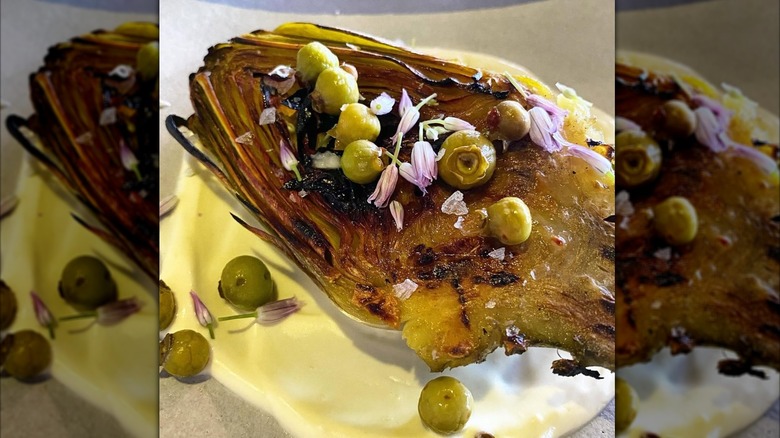
While you might find some unripened berries mixed in with a bunch of pre-packaged blueberries at the store, they are typically sold green on purpose to use in ways that make the most of their very sour taste. "They often prepare well by using a vinegar base, and combining the flavor with other foods," says Pelitera. Some chefs will add them in small amounts for a sour accent to food, but Pelitera suggests pickling them in vinegar and pairing them with meaty or fatty dishes such as ahi tuna, pork belly, duck, or lamb. These pairings work well together because, as Pelitera points out, the rich, fatty flavor in the proteins complements the tartness in the fruit.
Sweet blueberries are great for eating by themselves (you can ensure their sweetness by using the float test — stick ripe blueberries in water and the sweet ones will sink) or you can use them to make mouthwatering treats like a bakery-worthy blueberry pie. But learning to work with green blueberries will give you a leg up on other cooks who wouldn't even know where to begin. They let you be creative with techniques, such as treating them like pickled capers and adding them to a seafood dish, or halving them and tossing them in a fresh salsa or salad. You can even cook them in a jam or jelly, which will give you a condiment that pairs sweet and sour — and ensures you don't get a bellyache after your meal.