

Are Soda Crackers The Same As Saltines?

Soda crackers and saltines are made from the same basic ingredients: flour, water, yeast, baking soda, and salt. They even look the same; they have 13 or more holes punched per cracker to prevent them from puffing up during baking and to maintain their flat, crisp texture (this is called "docking"). Second, they share a very light sprinkle of salt that gives flavor without being overbearing, which is key when serving with soups, cheeses, or dips.
Saltines and soda crackers are also nutritionally speaking, low-fat foods often recommended for an upset stomach for one science-backed reason: they are bland, dry, and easily digestible, which can help absorb excess stomach acid. This also makes them less likely to induce more nausea, and the salt helps restore lost electrolytes due to vomiting or diarrhea. And if the regular soda crackers are too bland for you, you can always upgrade saltines like Ree Drummond by adding select seasonings.
However, while regional variations and names exist for these treats across the globe, saltines and soda crackers are, in fact, the same thing. Historically, "soda crackers" were the first to be invented. The name is derived from the method of leavening dough with baking soda (sodium bicarbonate) instead of yeast. Baking soda does wonders for baked goods when used correctly. During the baking process, any acids present in the dough would react with the baking soda, creating air pockets and contributing to the characteristic crispness of each cracker.
Same snack, different names
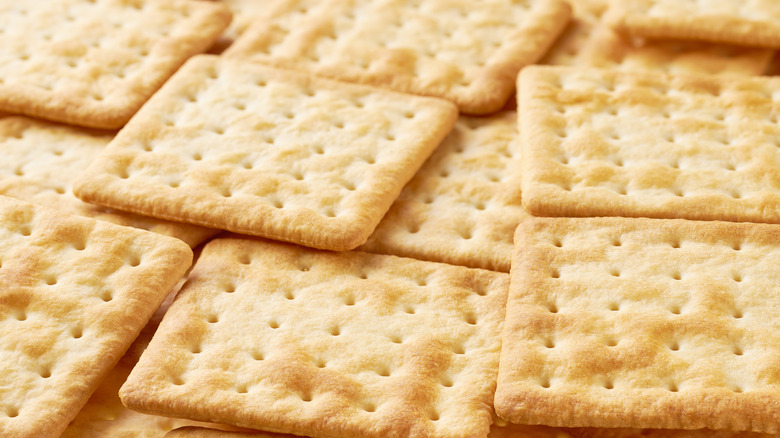
Around 1876, baker F.L. Sommer had been selling his "premium soda cracker" under the name "saltines" so that consumers could identify them by their salted tops and dissociate them from the many varied and less popular crackers of the time. Sommer sold lots of saltines, and soon his company merged with a few others and ultimately became part of Nabisco in 1898. This marketing effort made the product popular and ubiquitous. During the Great Depression, plenty of unusual foods gained popularity, including saltines. So much so that "saltine" eventually became synonymous in the minds of a new generation of the public with any thin, plain wafer-like cracker, regardless of whether the cracker was salted or not.
A good rule of thumb to not forget with soda crackers or saltines is texture. Brittle, dry, plain biscuits that provide a thickness to your meatloaf or crab cakes when crumbled, yet absorb water or broth quickly, are soda crackers. If it comes with a light layer of coarse salt on top, and you would like to be pedantic, it is a saltine cracker. Functionally, whether it is labeled soda or saltine, it is the same cracker in your pantry. The only difference that exists is a difference in labels, and this is an example of how marketing can change language faster than it can change a recipe.