

You're Making A Potentially Dangerous Error When It Comes To Storing Reusable Grocery Bags
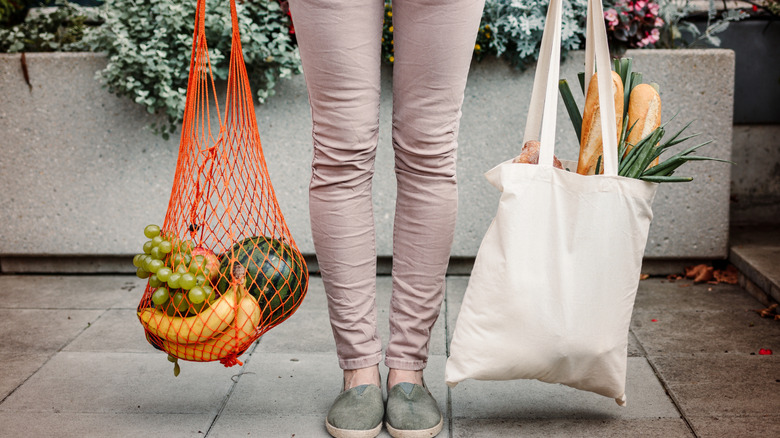
Reusable grocery bags aren't just great for the environment, they're also super convenient because they can hold more items than regular grocery bags. Plus, not only are they incredibly durable, but they're also a friend to your wallet since you don't have to buy a new one every time you're at the store. And on top of that, they come in so many shapes, styles, and sizes, it's hard not to get hooked and commit to building a full collection. On that note, check out these 14 reusable grocery bags from Amazon that are absolutely worth it.
However, similarly to how you have to keep insulated grocery bags sanitary for frequent shopping, reusable grocery bags also require proper hygiene and routine cleaning to prevent pathogen buildup and eliminate lingering odors. That said, it might surprise you that a 2011 study (PDF) published in the Food Protection Trends journal found that only 3% of shoppers actually washed their reusable bags. Can you imagine that the rest had never bothered to clean them? This ultimately turned the inner walls of the reusable grocery bags – especially those used to carry meat — into breeding grounds for bacteria such as Escherichia coli, Salmonella, and Listeria.
That's why to prevent cross-contamination — the movement of microorganisms from one object to another — and avoid potential health risks, keeping your reusable grocery bags clean and storing them properly is crucial. If by any chance you're wondering how to clean them properly, a quick run through the washing machine is more than enough to eliminate more than 99% of all the bacteria.
Proper care for your reusable grocery bags is a must
There are several things you can do to reduce the risk of contracting foodborne illnesses, and you can start by washing your reusable grocery bags after every use. Depending on the material, you can either machine wash fabrics like cotton, canvas, and polyester with soap and cold water, or for non-machine washable bags made of leather, jute, or other delicate fabrics use warm water and mild detergent and clean them by hand. While washing, make sure to rinse thoroughly and squeeze out the excess water, particularly when it comes to hand-washed fabrics.
Once that's done, let the bag air dry in a well-ventilated area instead of using the dryer. Remember, proper storage makes all the difference, so always keep your reusable grocery bags in a clean, dry spot away from direct sunlight. What's more, don't store them while still damp, as moisture promotes mildew and mold growth, and don't forget to sanitize them.
To stop making a common kitchen sanitation mistake, use disinfectant wipes or spray on both the inside and outside of your bags, and pay special attention to the spots that come into contact with food. With that in mind, hot water and vinegar can also be powerful sanitizers and get rid of harmful bacteria. Ultimately, using separate bags for different types of groceries and keeping them away from unsanitary surfaces is one of the easiest ways to prevent cross-contamination. By following these simple tips, you'll not only stay safe and organized, but also stick to your eco-friendly goals.