

The Old School Origins Of Mackinac Island's Legendary Fudge
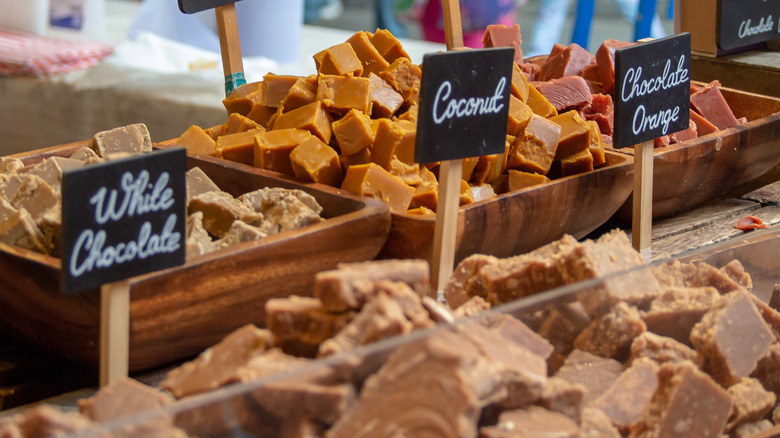
You might know it for its quaint downtown, crystal blue waterways, and charming horse drawn carriages — but you should also know it for its world-famous fudge. We're talking of course, about Mackinac Island in Michigan, and the town's claim to fame — its iconic fudge — earning the island the illustrious title of fudge capital of the world.
Such a thriving industry and impressive output of the fudgy confections might not be what you'd necessarily expect of a tiny dot of an island, population 500 (yes, 500). But for over a hundred years now, fudge has been a key industry for the island, turning the beloved Midwestern dessert into a multi-million dollar tourist attraction. Currently, over a dozen fudge shops line the main street of the island, peddling sugary wares to sweet-toothed tourists, and even fanning the sweet aromas of vanilla and chocolate out onto the pedestrian lined streets.
But the origins run back to the Victorian era, when one family in particular — the Murdicks — is credited with pioneering the uniquely Mackinac fudge industry, turning the treat into a thriving tourist draw and spectator sport. Today, modern fudge masters carry on the tradition of the original 1880s Murdick's shop with displays of showmanship. Onlookers gather in stores to watch as fudge makers mix and boil chocolate, cream, and butter, then form the fudge on giant antique marble slabs, paddling, shaping, and slicing the fudgy goodness into delectable gooey squares.
The island's original candy traditions run even deeper
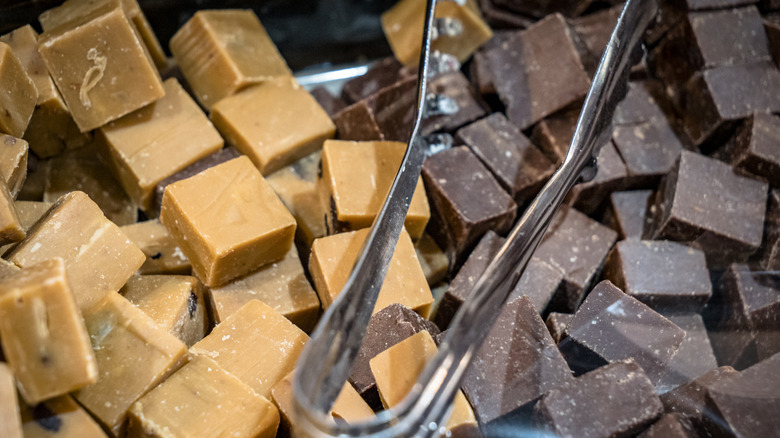
Today's Mackinac Island has firmly earned its reputation as the unequivocal masters of the old-school midwestern dessert — churning out over 10,000 pounds per day during the busy season, with a range of options from classic to innovative flavors like peanut butter or butter pecan. But like nearly all regional American customs, the emergence of fudge as a Michigan treat didn't happen in a vacuum, and was influenced by various cultures and customs of the region.
Trace almost any modern-day American food tradition or regional specialty back far enough, and it will almost certainly bump up against the culinary influence of Native Americans. In this case, Mackinac Island's emergence as a candy hub didn't originate with fudge, but maple syrup candy. These candies were made using the local syrup harvested by members of the local Anishinaabek (Odawa, Ojibway, and Potawatomi) people, who had long been living and working off the land.
European settlers entered into the area, and over the following years, the island continued to expand its candy business. Drawn to the island originally for the maple syrup candy, fudge soon entered the picture with the Murdick's first shop in the 1880s (the dessert had only been invented a few prior, and by total happy accident, no less). Squares of the rich, chewy chocolate quickly became a fan favorite for visiting Victorian vacationers, and the rest is sweet, sweet history.