

Heinz Ketchup Hasn't Changed Much Since It Was Introduced Almost 150 Years Ago
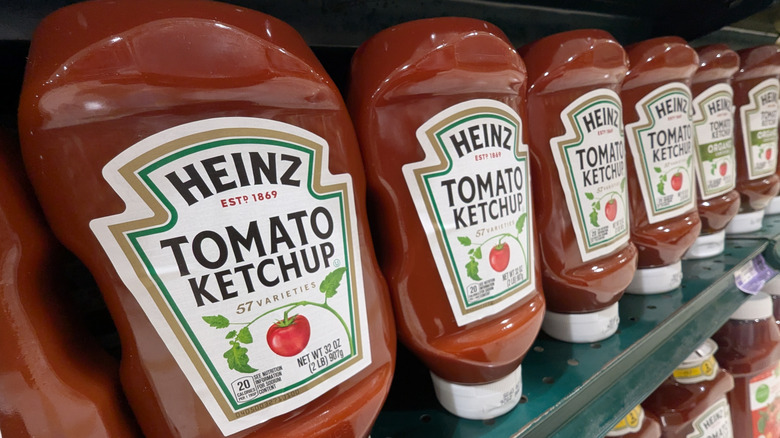
When you're nearly 150 years old, it isn't likely that people are going to say that you are little changed from the day in 1876 you were born to a man named Henry John Heinz. But that's pretty much what you can say about Heinz ketchup, which originated from a recipe with tomatoes, distilled vinegar, brown sugar, and a variety of spices. Twenty years later, the recipe changed slightly. In 2018, the brand introduced a Vintage version of the ketchup, based on Heinz's own 1896 recipe. This version, a Heinz executive told the Pittsburgh Post-Gazette, was a more savory version of the original. In 1896, the brand transitioned to rougher cut tomatoes; other ingredients included vinegar, salt, sugar (no longer brown sugar), onion, garlic, and various spices.
Today, the recipe isn't that different. Heinz ketchup, the brand Chowhound ranked at the top of its list in a taste test, is made from tomato concentrate (from red, ripe tomatoes), distilled vinegar, high-fructose corn syrup, corn syrup, salt, spices, onion powder, and natural flavoring. Thankfully, the recipe then or now did not include fish sauce, which was the condiment that bizarrely gave ketchup its name.
A shift from sugar to high fructose corn syrup
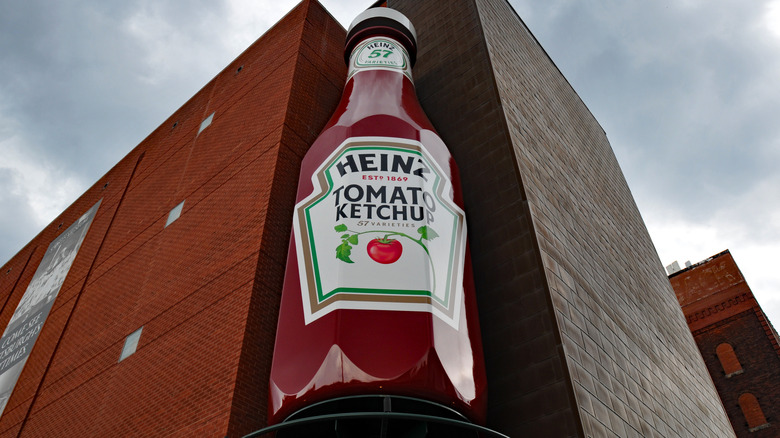
It's not clear when Heinz switched from sugar to high fructose corn syrup (HFCS) or why — although there has been speculation that Heinz, along with many other food manufacturers, made the switch in the 1970s. HFCS is less expensive than cane sugar. However, Heinz did introduce a version of its ketchup, Simply Heinz, which is made with sugar and not HFCS. Heinz has also not stated why it switched from tomatoes to tomato concentrate, but it may be due to the seasonality of tomato growing. In 1898, Heinz began producing ketchup at a plant in Muscatine, Iowa, which was considered the center of the tomato-growing region; bottling took place in August and September. When Heinz switched to using tomato concentrate in 1991, it expanded its ketchup production and stopped buying tomatoes exclusively from Iowa farmers.
That's not to say that Heinz hasn't tried to change things up in other ways. Over the years, Heinz has introduced some weird ketchup flavors and some interesting blends. Some of those — like pickle and a variety of chilis — fared better than others and are still offered by the company today. Sadly, you're unlikely to find Kranch (a blend of ketchup and ranch dressing) or Tarup (a blend of tartar sauce and ketchup) on shelves at your market.