

Rice Cookers Vs Pressure Cookers: What's The Difference?
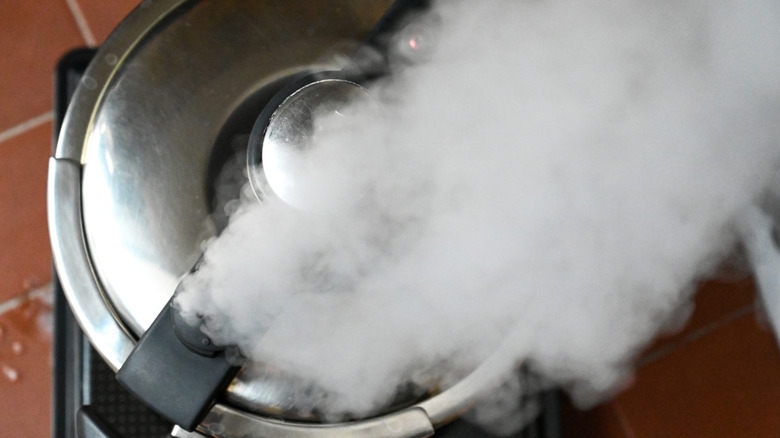
The smell of rice cooking in the countertop rice cooker is a comforting signal to many, as it often means a warm and nourishing meal is on the way, all with the press of one button. A pressure cooker, on the other hand, has a bit more of an aggressive presence. With its hissing and spitting noises, the uninitiated may wonder if it's about to burst open or take off. However, the sounds that come from a pressure cooker mean it's working normally, and the valve is safely releasing some of the built-up pressure from inside.
Many modern rice cookers are built to cook other foods as well, and pressure cookers can also be used to cook rice (in fact, some people prefer cooking rice in a pressure cooker). The main difference between the two types of cookers is that a pressure cooker uses steam pressure to significantly shorten the cooking time of food, and a rice cooker is meant to cook rice and other dishes with as little effort as necessary. The two can be used interchangeably; in fact, there are a surprising number of foods you can cook in a rice cooker, other than rice, but since a pressure cooker cooks food faster, it's a much better option for things like beans and slow-cooking grains when you are short on time. Let's take a closer look at some of the other differences between these two kitchen tools.
How do pressure cookers and rice cookers work?
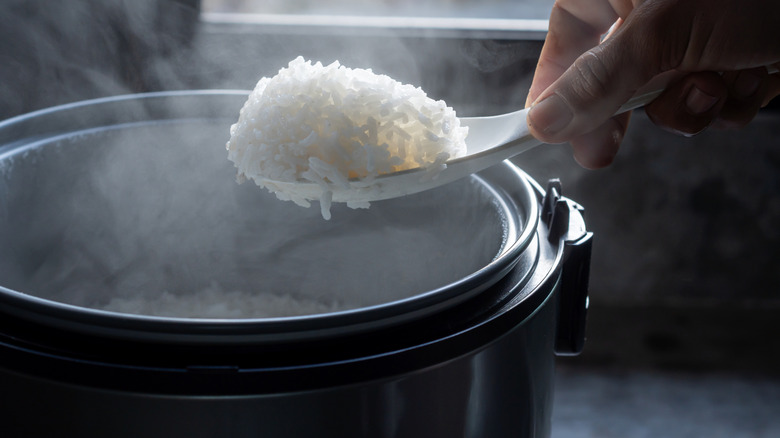
A pressure cooker is a sealed container with a valve that works by using steam to build pressure, which in turn raises the boiling point of water. The higher boiling point means that food can cook much faster than it would on a stovetop or in the oven. Rice cookers, on the other hand, work by using an automatic system that includes a heating plate, a thermostat, and a cooking pan.
The science behind how your rice cooker works is actually pretty simple: Basically, the rice cooker boils the water, and then when the rice has absorbed the optimal amount for perfectly cooked rice, it automatically switches to a keep warm mode, guaranteeing fluffy, warm rice every time. Let's be honest: Basic stovetop steamed white rice isn't exactly rocket science, but once you've experienced the ease of using a rice cooker, it's likely you will never look back.
Pressure cookers are the real all-stars when it comes to cooking beans and soup stocks, both of which require marathon simmering sessions on the stove. Pressure cookers produce tasty stocks because the higher temperature and absence of evaporation mean the stock is able to rapidly draw out flavors from meat and vegetables. Additionally, the higher the temperature, the faster the collagen from bones will break down into gelatin, and gelatin is the secret to a savory bone broth. So, while these two devices overlap, which to use greatly depends on your cooking needs.