

You'll Never Guess Who's Milking The Cows At The Award-Winning Rogue River Creamery
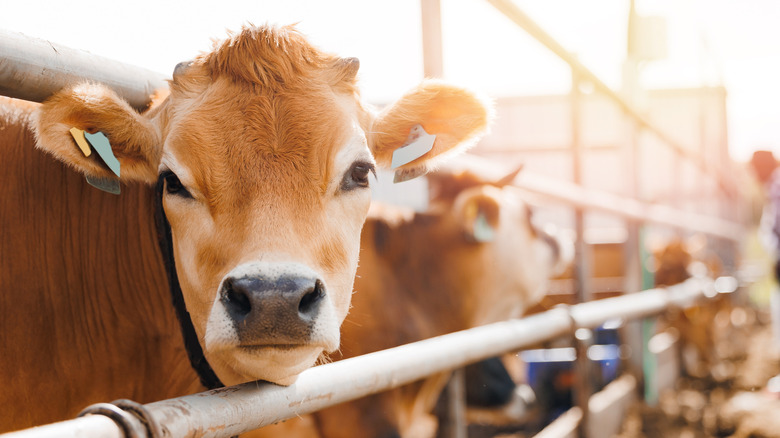
Rogue River Creamery is famous for its world‑champion Rogue River blue cheese. You might picture farmhands tending to and milking cows, but today, the milking is handled entirely by machines. Rather than a friendly farmer coaxing the milk by hand, robotic milkers dubbed Charlie and Matilda gently milk the cows. A high-tech twist has redefined the age-old task. The robots do the milking, but the cows call the shots, stepping up only when they choose to.
Since the installation of these milking machines in 2015, the creamery has prioritized animal comfort and milk quality. The system is designed to match the cows' natural rhythm rather than force them into a human schedule. To start things off, each cow gets a snack of grains before the milking begins. Cows wear ear tags, and when ready, will walk into a robotic stall that maps out each udder. Then, it cleans the udders and begins to milk them gently. At first glance, this technological shift might seem surprising, or even unnecessary. Historically, farmers have done the dirty work for that beloved funky blue cheese or creamy baked brie centerpiece. But the technology at Rogue River Creamery is designed to work with the cow's natural routine.
So, how exactly does a cow interact with a robotic milker?
When cows and robots meet
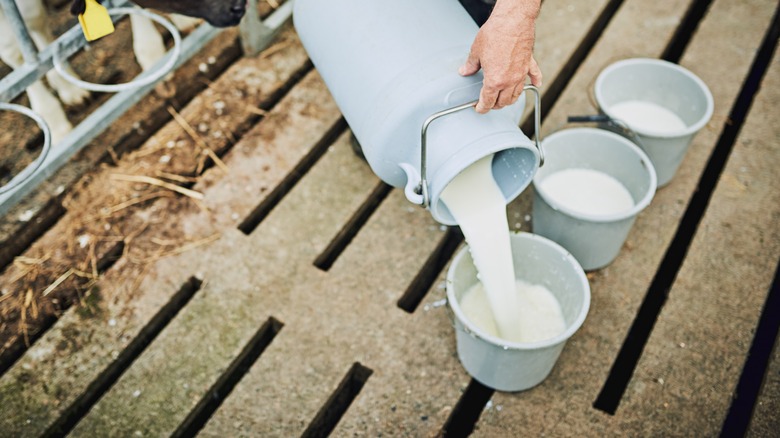
The U.S. is the second-largest producer of milk in the world. Located in Oregon, Rogue River Creamery has no line of farm workers or loud machinery pushing cows into place. Instead, each cow moves at her own pace. There is no human initiation. When the cow feels ready, she approaches Charlie or Matilda, the robotic milkers.
Here's how it works: The robot scans her electronic ear tag, identifies her, and decides whether enough time has passed since her last session. If she's ready, the robot adjusts to her unique udder shape, spray-cleans each teat, and gently begins milking. While the machine does its work, the cow is given a small serving of grain, reinforcing a familiar and voluntary routine. According to Food & Wine magazine, the robots are designed to automatically detach from the cow's teat when milk flow drops to 0.8 pounds per minute. This prevents overmilking and reduces discomfort for them. After milking, an iodine rinse washes over the udders, and a smart gate directs cows needing extra care to human handlers.
Unlike traditional dairies, where cows are milked at fixed times regardless of individual needs, this setup allows for a more cow-led rhythm. Some cows visit the milking robots multiple times per day, others less frequently. Each visit is recorded and monitored, helping staff document and catch early signs of illness or stress. Some critics note that while robotic milking doesn't resolve all welfare concerns, like calf separation or selective breeding, it does offer a meaningful shift in the daily quality of life for cows. Reducing human handling and offering more freedom for cows gives them some control in an otherwise tightly managed industrialized system.
For now, thanks to Charlie and Matilda, the cows at Rogue River Creamery are free to roam about the dairy barn.