

Why You Should Never Marinate Ham
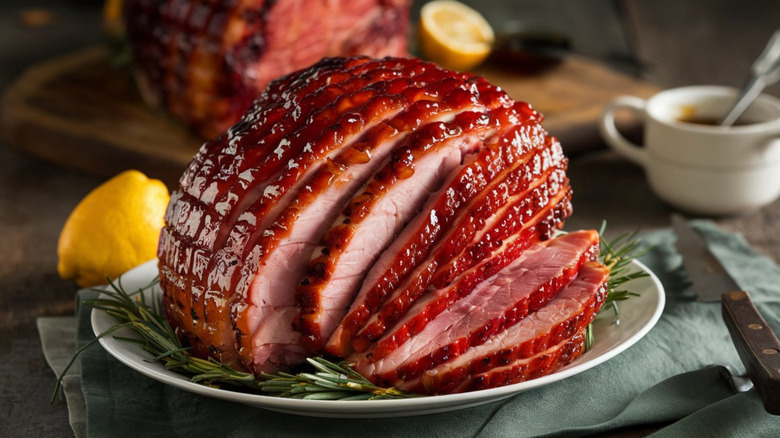
Generally speaking, marinades are basically magic. Not only are they an easy way to infuse proteins with flavor and moisture, marinades are key to making venison taste less gamey and tenderizing tougher cuts of steak and chicken, elevating simple dishes from merely tasty to mouthwatering. However, that doesn't mean it's necessary to marinade the main dish of every meal. In fact, marination can actually detract from the flavor and texture of certain proteins, especially if they've already been brined or smoked, as ham often is.
Though it may seem counterintuitive at first, one of the handful of tips you need when cooking ham is to skip the marinade. Whether of the water-cured city variety or salt-cured country style, most hams are soaked in brine as part of the curing process, which is basically a saltwater marinade. This process locks in plenty of flavor and moisture, pretty much guaranteeing your ham will be succulently tasty no matter how you decide to season or cook it.
Knowing all of this, it's easy to see how marinating your ham could be overkill. Not only could the marinade make it taste unbearably salty, it might spell disaster for the texture. All marinades contain fat whisked with vinegar or citrus juice, so soaking an already juicy, tender ham in acidic liquid could break down the protein fibers too much, resulting in an unappealing, soggy texture. It's also harder to cook a waterlogged ham, as the additional moisture could cause it to steam instead of sear.
Best ways to give ham an extra punch of flavor

If you want to season your ham to complement the curing process, the best way to do that is with a glaze or a sauce. Glazes are particularly popular on ham and for very good reason. Since most glaze recipes call for something sweet (such as brown sugar or honey) mixed with bold flavors like spicy mustard or even chilis in adobo. Once applied to the ham, the sugars in the glaze melt into a beautifully glossy, flavorful coating that cools into a lightly crunchy crust as the ham rests after baking.
Since sugar is very prone to scorching, it's best to glaze your ham about a half hour before it's finished roasting. If your ham looks dry or you're concerned the glaze is starting to burn, cover it with a tin foil tent and use the roasting pan juices to baste it at regular intervals. The juices will mingle with the glaze, allowing the flavors to bloom and create a beautiful layer of deliciousness on your ham.
If glazes are a little labor-intensive for your liking, you can also try making a sauce. Classic raisin sauce combines the sweetness of raisins with tangy ACV and boldly spicy cloves in a buttery base that's a beautiful contrast to salty, earthy ham. Not a fan of savory and sweet together? No problem — creamy, milk-based white sauce offers a simple yet rich and peppery way to elevate basically any type of ham.