

The Common Household Disinfectant You Should Never Use To Clean Your Refrigerator
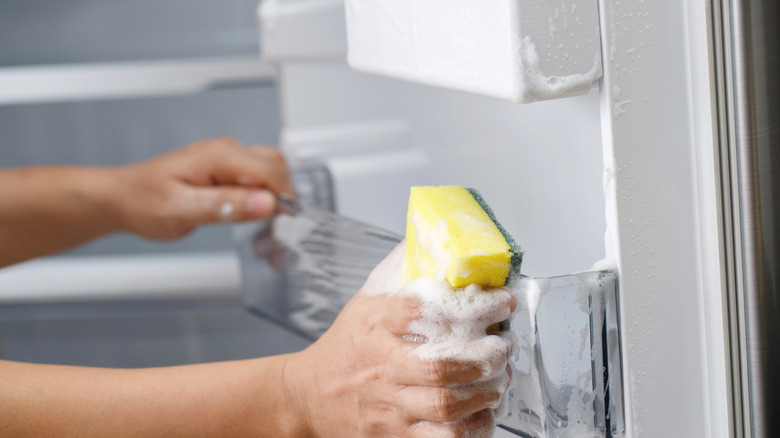
There might be nothing more satisfying than a refrigerator that has been thoroughly cleaned. A clean fridge is not only about a sense of calm but also a matter of food hygiene and organization. A disinfected refrigerator is a priority but there are several best and worst practices to keep a note of before you pop the cleaning playlist on to get scrubbing. One of the top points to keep in mind is avoiding the use of bleach in the first instance when trying to achieve a squeaky clean refrigerator.
Even while it may be tempting to get the bleach out for a more robust clean, there are several reasons why you may want to hold off on bleach and harsh chemical products in general. If mishandled, bleach can be hazardous, so food safe cleaners are better options. Bleach should never come into contact with food and if food interacts with bleach (yes, even through a cleaned surface), it will need to be discarded. For this reason, it's best to look to milder cleaners that can be just as effective such as fragrance-free dish soap, vinegar, hot water, or even baking soda to fight those lingering smells in the refrigerator. It's crucial to safely keep your refrigerator fresh by seasonally deep cleaning. Keeping to simple and daily checks to avoid moldy food building up and going to waste somewhere hidden will prevent the need to even consider bleach.
Is it ever safe to use bleach to clean the refrigerator?
While using bleach on the inside of the refrigerator can damage the materials and put your food at risk, there are some moments when you may want to use it for extreme cases. For instance, if you're unable to remove a stain or odor using gentler mixtures like water and vinegar or water and baking soda, you may draw for a diluted bleach solution for help. The best way to create a bleach mixture is to balance out a ratio of more water than bleach (1 tablespoon of bleach for every gallon of water is recommended by the CDC in the case that the bleach doesn't come with diluting instructions). You can put the mixture in a spray bottle and wipe the surfaces down.
A few things to remember when using bleach as a last resort is to always wipe the shelves down a final time with a non-bleach solution and dry them for extra measure. It is also recommended that you allow the refrigerator to dry for a few hours before placing food back in the refrigerator. This is also the case for removable trays and shelves, which will need time to fully dry before being placed back in the refrigerator. Using gloves and ensuring that the kitchen is well ventilated is also recommended since bleach is toxic and shouldn't come into direct contact with skin or be inhaled for too long.