

The Crucial Tip For Picking The Best Chicken At The Grocery Store
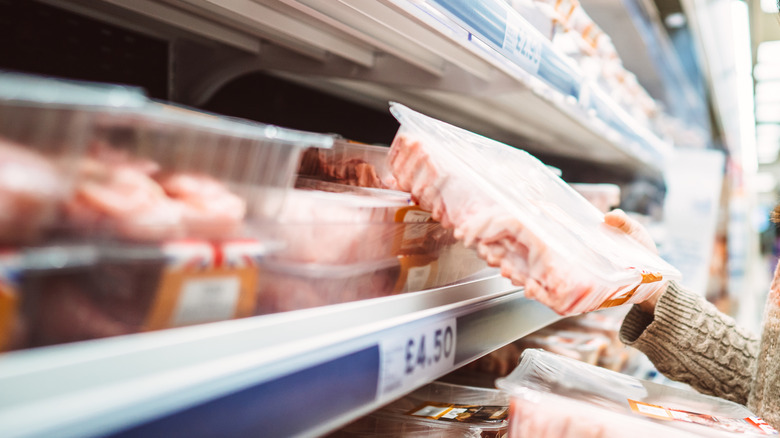
If you're into cooking (and you're not a vegetarian or vegan), chances are that you're buying chicken pretty frequently. As a staple food for much of the world, chicken features in dishes from just about every cuisine, from Mexican enchiladas to Tuscan chicken, Nigerian suya, and East Asian-inspired soy-marinated chicken thighs. But as any chef will tell you, a dish is only as good as its ingredients. So, it's important to buy the highest quality chicken you can, no matter your budget. There's an art to picking the best chicken at the grocery store — and to get some tips on how to do it, Chowhound spoke exclusively with chefs Andrew Zimmern and Robert Irvine — two people who know a thing or two about great poultry!
If you're buying breasts, Zimmern suggests looking for those "that are not bloated or oversized," which can be a sign of artificial inflation. In fact, assessing the musculature of the bird can be a good way in general to infer the quality of a piece of chicken, and bigger doesn't always mean better. Look for "[l]egs and thighs that look strong and well-developed (indicating the bird moved around and wasn't confined)," says Zimmern. "This is the opposite of those cartoonish, balloon-breasted supermarket chickens." Smell is also a good indicator of freshness, at the very least: "Fresh, high-quality chicken has little to no smell," he says. If there's a hint of sourness, egginess or a notably gamey whiff, you should probably play it safe and not buy it.
Read the packaging, but don't let it fool you
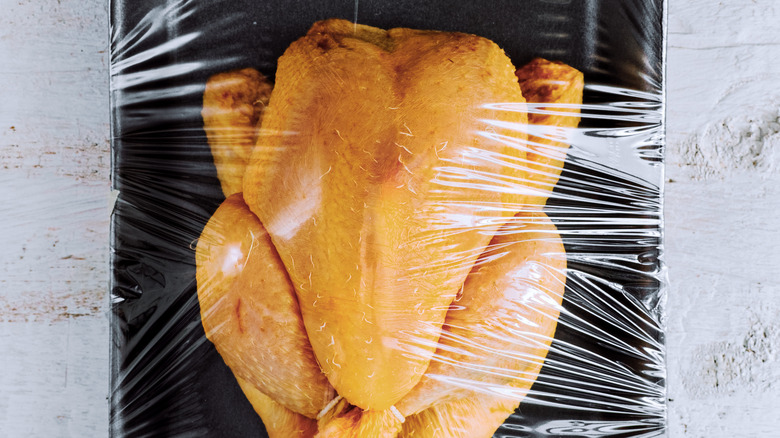
Beyond a visual inspection of the chicken itself, keep a close eye on the packaging. Knowing what to look for as far as the label is concerned (as well as what to steer clear of) can help you to ensure that the chicken you're buying is both of high quality and ethically produced (the two often go hand in hand). "Read the packaging," Robert Irvine recommends. "Most chickens are plumped with water and washing agents; the package will let you know how much water was retained, for example, 7% to 10%." You want to steer clear of such artificially inflated chickens — they won't taste as good, and it doesn't exactly show a commitment to quality. There's a risk that the water used to inflate those chickens contains chemicals like sodium phosphate, too, which can affect its taste."I look for air-chilled chicken for this reason," says Irvine. Forgoing plumping is also better for the environment: "It also cuts down on the water usage that is used to wash and plump the chicken," he says. It might be more expensive, but to him, "air chilled and organic is worth the premium cost."
When you're reading those labels, look out for buzzwords that might lead you astray or trick you into thinking that your chicken is higher quality than it actually is. "Remember, terms like 'Natural', 'All vegetarian-fed', 'Cage-free' ... mean basically nothing in the chicken world," Andrew Zimmern adds. "They sound good but aren't indicators of meaningful welfare or taste."
Judge a bird by its color (and processing)
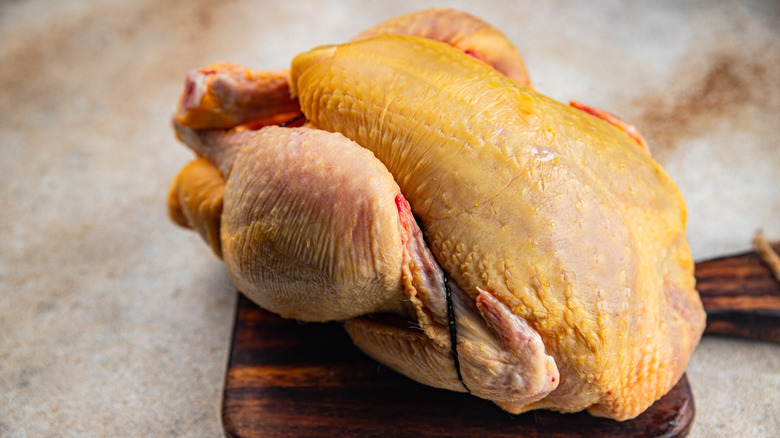
When it comes to assessing ingredients of any kind, be it picking vegetables or testing to see if that "fresh" piece of fish has actually been frozen, it's best to trust your senses and your gut. That goes for how the chicken looks, too. Besides size and build, you should pay attention to the appearance of the meat. "I also look at the color of the chicken," Irvine explains. "White meat is opaque and white when it was raised on pellets," he says, so instead, look for meat with a little more coloring to it, indicating that the bird ate a more nutritious, high-quality diet. According to Irvine, "If it's a little bit of a yellow color, it was free range and ate naturally and balanced."
So, that's raw chicken dealt with — but what about cooked chicken? After all, knowing how to navigate the deli can be a valuable skill, whether you're a budding home cook or not. "I typically don't eat deli chicken or turkey due to processing and additives injected," Irvine says, "but I would say you can check the nutritional labels and look at what's added and judge based on what you are okay with. The less that's been added, the better." Zimmern echoes his sentiment: "Bad chicken is anonymous, flabby, and suspiciously uniform. Great chicken looks like it lived a decent life because it did."