

How To Grill Flanken-Cut Short Ribs For Fast, Flavorful Results
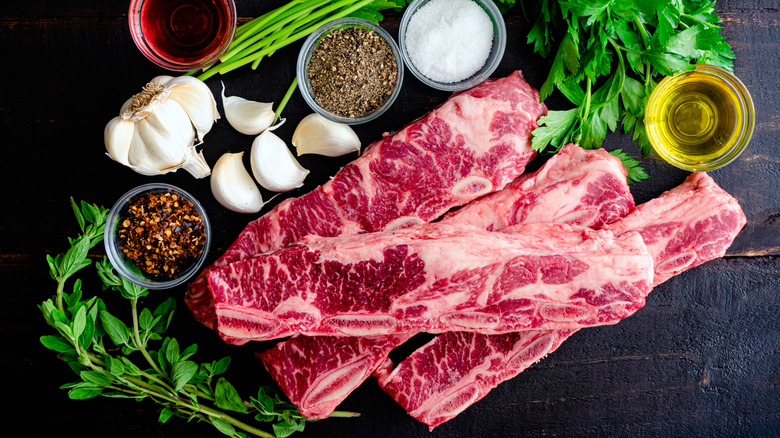
When you hear "beef short ribs," your mind probably floats to a chunky piece of meat, often on the bone, that's deliciously soft and tender in a gorgeous, rich sauce. They're almost always cooked low-and-slow, whether that be on the smoker or via a long braise. When you're cooking traditionally cut short ribs, that's the way to go. It's a cut that needs time and patience to let the meat break down, and it's worth the wait once it does. But, if you're in a pinch and want big flavors fast, try getting short ribs cut flanken-style.
To find out more, we spoke to Scott Thomas, owner of The Grillin' Fools. "Flanken-cut ribs are cut thin, across the bones of the ribs. Thus, each one has many small cross sections of the rib bones lined up along the length of the cut," he explained. Reminiscent of the Korean barbecue classic galbi, the thickness (or rather, the lack thereof) of these short rib pieces respond to heat differently, and can't be cooked in the traditional low-and-slow fashion. Instead, treat them like other grill classics, searing them to quickly lock in flavor. "I cook these hot and fast over direct heat like a steak," Thomas said. That way, you get the delicious smoky flavor of the grill, without overcooking or drying out your meat.
Why can't you smoke flanken-cut ribs like other cuts?
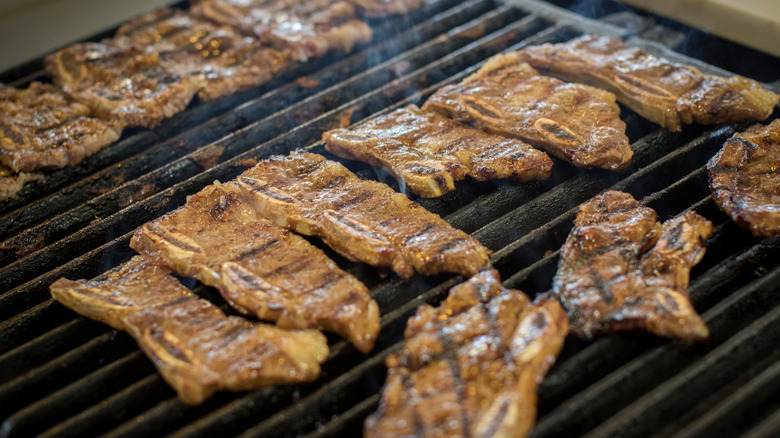
Flanken-cut ribs are delicious when cooked quickly and over a high heat (just like you grill a perfect steak). But why can't you cook them like you would most other types of rib, including on a smoker? In short, they're simply not thick enough. "The biggest issue with these is that they are very thin," Scott Thomas told us. As a result, "they don't take long to cook." According to Thomas, this means traditional barbecue methods give you tough, chewy, overcooked meat. "Smoking isn't really the best method," he said, "as they will be done before much smoke penetrates."
Thomas continued by saying "if the beef rib is cut with the bones, like beef plate ribs, there is a ton of meat per rib. They are glorious after a long, slow smoke bath." The plate is the traditional way of cutting ribs, similar to the classic rack you're probably familiar with from your favorite barbecue joint. That's why the quick cook is essential: It's better to think of these less as ribs and more like other thin cuts of meat, such as pork medallions or chicken breast fillets. Just remember, speed is key.
More tips for cooking flanken-cut ribs to ensure maximum flavor
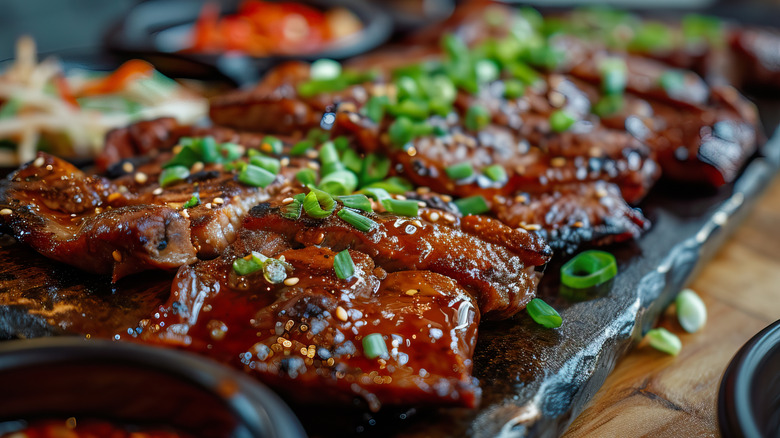
You need to cook them fast, that much we know, but how, exactly, should you do that? "I cook them hot and fast," Scott Thomas said. "My favorite way is to season them and put them onto a blazing hot cast iron griddle or pan so I can get the most browning possible." Getting color on those ribs is essential. Without the deep penetrative power of the smoker to imbue them with that characteristic barbecue flavor, the Maillard reaction that changes meat's color (when natural sugars and amino acids caramelize) is essential to build proper flavor. Make sure you adequately season them, too. Salt and pepper are great, but for that classic barbecue flavor, consider adding spices such as paprika, garlic powder, onion powder, and white pepper, which bring even more depth and complexity.
Get your grill (or frying pan if you're cooking indoors) up to high heat, and you're ready to go. "It doesn't take long. Two to three minutes per side and they are done," Thomas told us. To ensure you've got a great cook, and to make sure you don't overcook them, keep an eye on their internal temperature using a probe thermometer. For a medium-rare cook, aim for 135 degrees Fahrenheit internal.
Finally, serve them up however you like. They're great with barbecue sides, such as mac and cheese and coleslaw, or go with something less traditional like Thomas: "I love to do these with a couple sunny side up eggs for breakfast. Nothing better than dunking some beef short rib in that gooey yolk."