

Here's What Happens When You Use The Wrong Fat To Cook Veal Steak
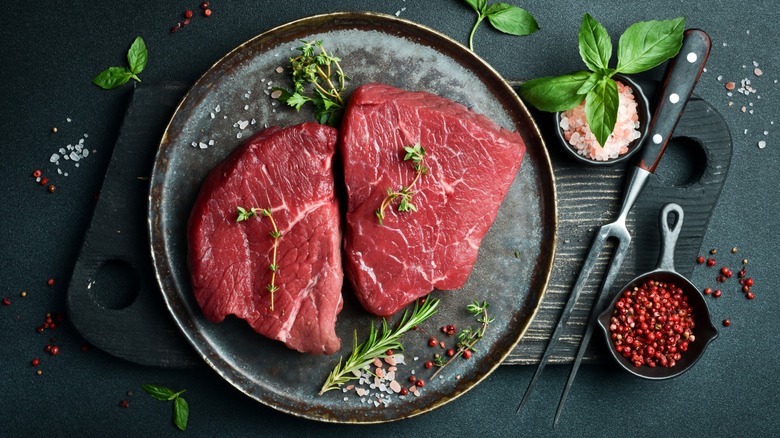
How do you get a tender, sumptuous steak? You could use a mallet to take the toughness out of a cheap steak. Alternatively, you could skip that step entirely and grab a piece of delicate veal instead. But, just as there are many potential pitfalls to avoid when cooking beef steak, you also want to take the right steps to make sure your veal is cooked properly. Part of that process is avoiding the wrong type of fat when you're cooking.
It's crucial to choose the right fat when you're cooking veal to avoid some unfortunate consequences, so we spoke to Matthew Cutolo, a third-generation Italian chef at New York's Gargiulo's. He knows his way around a veal steak, and knows that the wrong oil can leave you with a disappointing meal. "Using an oil with a low smoke point can result in scorching and unpleasant bitter flavors," he says. "This not only spoils the delicate taste of the veal, but also affects texture and appearance, creating a burnt crust instead of a golden-brown sear." If you want that sought-after perfectly seared crust, stay well clear of any oil or fat that has a low smoke point. It's one less thing to worry about when striving for the perfect veal steak.
Which oil should you use?
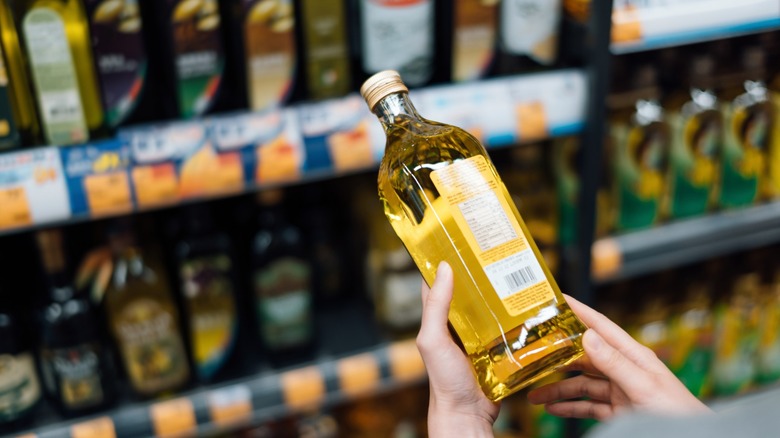
Knowing you should avoid low-smoke point oils is great, but there are plenty of oils out there that you can use; your search is still far from done. After all, choosing the right fat can really make a dish, just like how cooking rice in fat can pack it with extra flavor. Thankfully, Matthew Cutolo provided us with some recommendations on which oils to use for veal. "For veal steak, a neutral oil with a high smoke point — like olive oil, corn, or canola — is ideal," he states quite clearly. It's important to note here that olive oil and extra-virgin olive oil are not the same; the classic EVOO has a much lower smoke point. Be careful which olive oil you select if that's the oil you choose.
Elaborating on why he put these oils on his shortlist, Cutolo explains that "these oils allow the delicate flavor of veal to shine without overpowering it, and [they] can withstand the high heat needed for a proper sear." The neutral flavor requirement is what would eliminate anything like beef tallow, a fat that has its own pros and cons, from the equation. Instead, focus all the attention on the flavor of the veal. Cutolo doesn't rule out butter, but suggests that "it's best added at the end, during the basting stage, to build flavor without burning." All told, a high smoke point and neutral flavor are the primary qualities you want for your veal's accompanying oil.
Avoid other veal cooking mistakes
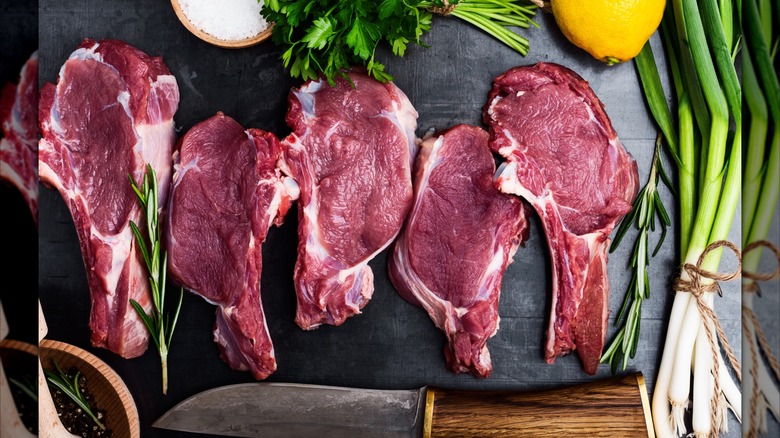
Matthew Cutolo provides some sound advice for choosing the right fat to cook your veal steak in, so we also inquired whether he had more general advice to give in regard to cooking veal steaks. He responded with four things to avoid: overcooking, skipping a rest period, under-seasoning, and cooking the steak cold.
No matter how rare or well-done you like your steak, no one wants it to be overdone and tough. "Veal is lean, so it can dry out quickly," warns Cutolo, advising to "aim for medium or medium-rare, depending on the cut." He also tells you to "let the steak rest for five to 10 minutes after cooking to allow juices to redistribute for better texture." It's a vital step many may be eager to ignore. He also mentions that "veal needs a confident hand with salt and pepper. Season 30 to 60 minutes before cooking for deeper flavor." While you're letting that veal wait, you're also letting it warm to room temperature, satisfying the last of Cutolo's commandments. He says to "always bring veal to room temperature before searing to ensure even cooking." With these steps in mind, and the proper oil in hand, a perfect veal steak is only a quick sear away.