

We Love Lox Bagels, But Why Are They So Expensive?
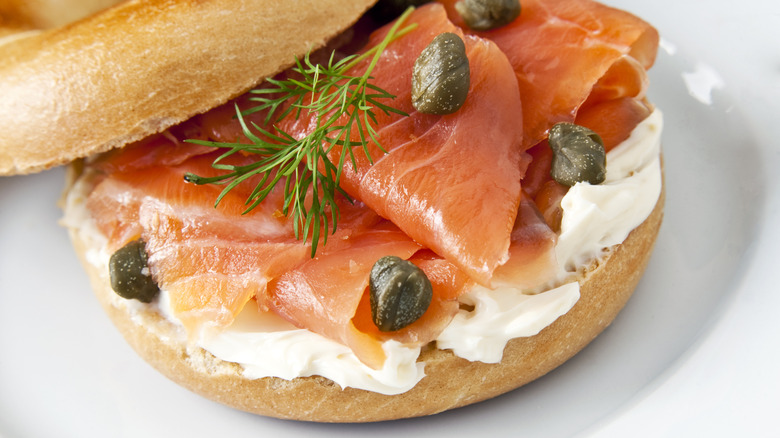
Native New Yorkers will always have an answer when you ask them where to get the best lox bagel — even the culinary icon Andrew Zimmern has a favorite NYC lox bagel. Typically consisting of lox, cream cheese, thinly sliced red onion, and capers, these bagel sandwiches are a symphony of chewy, crisp textures and creamy flavors paired with salty tang. They're timeless, but like most things in New York (and everywhere else), they're getting pretty darn pricey.
If you've noticed lox prices rising around you, it could be for a few reasons. First off, lox is just an expensive fish. Unlike something like chicken breast, which is often mass-produced, quickly processed, and domestically sourced, lox comes from high-quality salmon, typically belly cuts, and requires labor-intensive curing.
Lox is not just smoked salmon — there's actually differences between the two. Technically, it's fresh salmon belly that's been salt-cured over several days without heat. That means you're paying for time, technique, and texture. Using meat from the fatty belly of the salmon is what gives lox its signature butteriness and makes it rarer and more expensive than standard fillets. The cost of the raw fish itself isn't cheap either. Wild-caught salmon is already pricey due to limited supply, and even farmed salmon prices have been volatile. According to Intrafish, although prices briefly dropped in 2024 due to a global supply surge, long-term projections still point to an upward trend in cost, especially for premium cuts used in lox.
Why your bagel costs $17
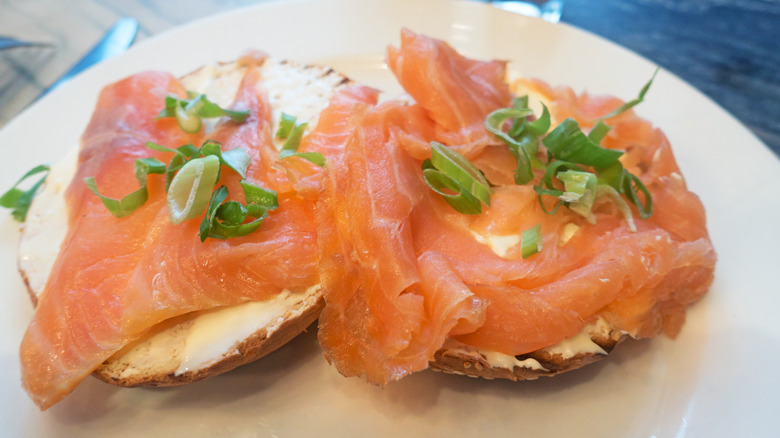
It's hard to pinpoint exactly why lox bagels have become so expensive, since they're at the crossroads of global fish trade, inflation, and bagel shop economics. Tariffs and trade disruptions are a major factor. A lot of shops use farmed Atlantic salmon, often imported from Norway and Chile. When international shipping costs spike, or when trade policies tighten, suppliers pass those costs to buyers. In fact, tariff anxiety between the U.S. and EU has been linked to price instability in the salmon market.
Plus, when you're ordering a lox bagel, you're paying for the bagel, that New York-style cream cheese, other ingredients, and labor, all of which have risen as of late and are expected to continue to rise. Cream cheese saw price hikes in recent years, likely due to rising dairy costs, and bagel shops are paying more for flour, labor, and rent. Even the act of making lox is labor-intensive. Unlike cooked salmon, lox requires multiple days of curing and precise handling. So while the fish is already expensive, you're also paying for skilled prep and small-batch quality.
So, the pain you feel while paying that $17 for a lox bagel is hopefully softened a bit by knowing you're not really getting scammed — you're simply paying for quality, care, and serious tastiness.