

How Much Water Should You Use To Blanch Vegetables?
Vegetables add fiber, flavor, color, and nutrients to just about every dish. But they have a short shelf life: opening the fridge with dismay to find wilted broccoli, shriveled peas, and wrinkly, browning carrots, is something you've probably experienced firsthand. But that's where blanching swoops in to save the day.
Blanching is the process of boiling and freezing fresh vegetables. It amps up flavor and color by slowing down enzyme action. Green beans, asparagus, cauliflower, and leafy greens all benefit from blanching. Pears, apples, as well as nuts, like almonds and pistachios. You can even blanch canned veggies for a better flavor — it gets rid of that metallic taste.
Typically, vegetables are boiled in a large amount of water — around 1 gallon per pound. The logic behind this is that if the pot of water is too small, its temperature will plummet when the cold vegetable is dropped in, meaning it won't cook as quickly. However, some evidence suggests there's actually no quality difference in veg boiled in large amounts versus small amounts of water. Either way, make sure you've added a seriously generous dose of salt to the bowl, which seasons the vegetable, secures nutrients, and draws out the vegetables' natural salts. Follow these pro tips and you'll be sure to end up with crisp, crunchy vegetables.
Top tips for blanching your vegetables
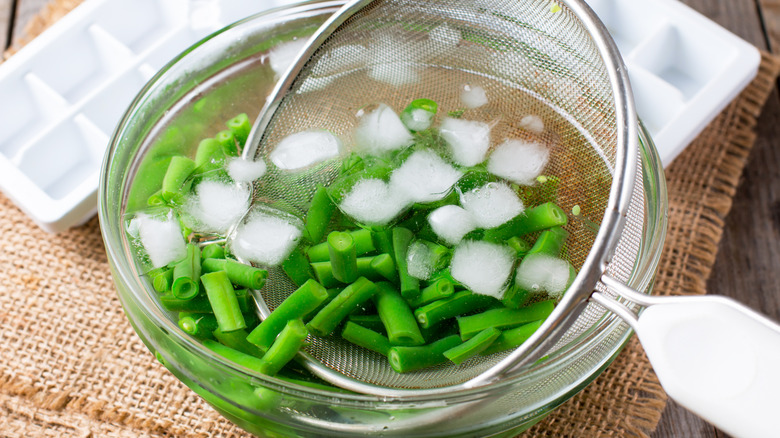
After boiling your vegetables, quickly shock them in ice-cold water to stop the cooking process before storing them away in the freezer until it's time to cook. The whole process should only take a few minutes, and makes for restaurant-quality veggies that take summer salads to the next level, creates vibrant, tasty stir fries packed with greens like bok choy cabbage, and adds a nutritious, colorful pop to meal prep (warning, your packed lunches will become the envy of the office).
And remember, right after the boiling step, a quick toss in oil or butter can lock in moisture and freshness, acting as a natural seal. There's no need to reach for wine or stock, as unlike braising or sautéing, the liquid doesn't impact the taste that much. But don't underestimate the power of a pinch of MSG in boosting flavor with a subtle, umami kick.
Before the boiling step, it's smart to separate your veggies depending on size so they cook evenly. With just a few thoughtful touches, even the simplest boil can yield vibrant, satisfying results.