

Russet Vs Yukon Gold Potatoes: The Differences You Should Know About
Over 200 varieties of potatoes can be found across the United States, so you would be forgiven for not knowing the nuances of each type. But if there is one bit of potato knowledge that will serve you well in your culinary journey, it's the difference between russet and Yukon Gold potatoes, considering they are the two kinds of potatoes you are almost always sure to find in any grocery store. While russet potatoes have been around for centuries, Yukon Golds are a relatively new potato variety. The former was developed in response to the Irish Potato Famine, when American botanist Luther Burbank wanted to create a potato that was immune to the blight. Yukon Golds were developed in Canada in the 1960s, now grown widely and gaining popularity across the world.
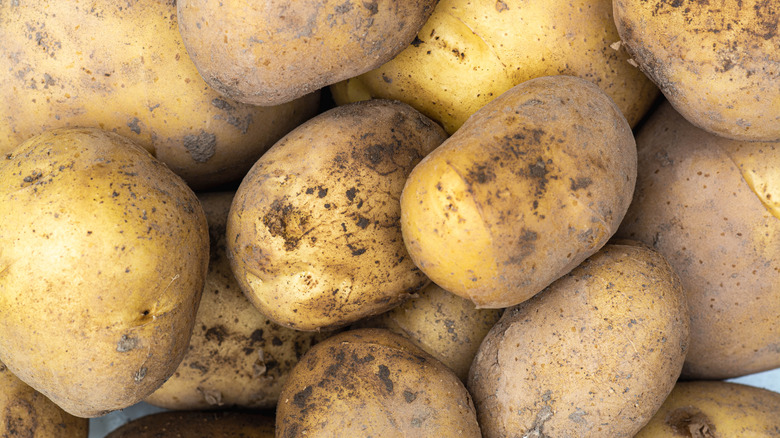
Russet potatoes typically have a brown skin, appearing as though they were just pulled straight from the ground and often still sporting a bit of dirt. When sliced, russets reveal a white flesh that, when cooked, have a fairly neutral flavor. On the other hand, Yukon Golds have a smooth, thin skin that is much lighter in color. The flesh of these potatoes is golden or yellow and has a subtly sweet, buttery flavor. Though the Yukon Gold is a preferred potato for many, there are some dishes where only a russet will do.
The differences between russet and Yukon Gold potatoes

The most common way to distinguish the differences between types of potatoes is to classify them as either starchy or waxy. Starchy potatoes, as their name suggests, have a high starch and low moisture content. Russet potatoes are a classic example of this, which is why they are so perfect for frying (found when making french fries and latkes). They also have a more fluffy texture that tends to soak up the flavors of whatever they are partnered with, making them the go-to potato for baking, as well. The crispy, thicker skin creates a perfect jacket for the more neutral potato flavor that is ideal for picking up the notes of fresh butter or sour cream and chives. With the blank slate of a russet, you can get really creative and try out these 12 ingredients to upgrade a basic baked potato.
Waxy potatoes, on the other hand, have a low starch and high moisture content, which helps them hold their shape when cooked. This makes them ideal for things like soups, stews, and salads. Red potatoes are an example of a waxy potato, which is why many salads — including this perfect summer herbed potato salad recipe — call for them.
The Yukon Gold falls somewhere in between a red potato and a russet, making it an extremely versatile potato with a sweet, mild flavor. When it comes to making deliciously crispy potatoes, using Yukon Golds should be at the top of the list. They are absolutely the potatoes you want to reach for when roasting, as they keep a crispy skin but maintain a dense, creamy center.