

The Temperature Tip That Makes It A Bit Easier To Separate Egg Whites And Yolks
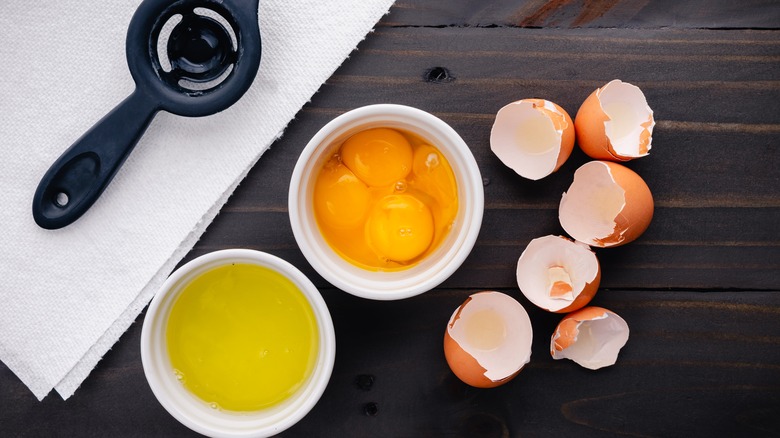
If you've ever struggled to keep egg yolks from breaking into the whites, there's one simple trick that makes the job easier: start with cold eggs straight from the fridge. The reason for this is that colder eggs have tighter whites and yolks. This means that they tend to hold their shape when you crack open the shell, which in turn, makes it easy to separate cleanly. Warm eggs are often loose and will break easily, which is why the yolk is so prone to breaking, and the whites might end up mixing in.
However, quite a number of baking recipes specifically ask for room-temperature eggs. Thankfully, there's nothing to worry about, and you can still use this tip. What you can do is crack the eggs while they're still cold, and separate them as usual. After that, let the whites and yolks sit out for 10 to 20 minutes, until they are at room temperature. Another hack is to place the cool, split parts in different bowls and set them in warm water (not hot!). That way, you can still achieve clean yolks and whites that are warm enough for silky smooth mixing. This temperature tip keeps the mess to a minimum, and you really come to appreciate it when it's time to whip up delicious meringues, angel food cakes with cream of tartar, and other recipes where egg whites are essential.
Making the most of this egg hack
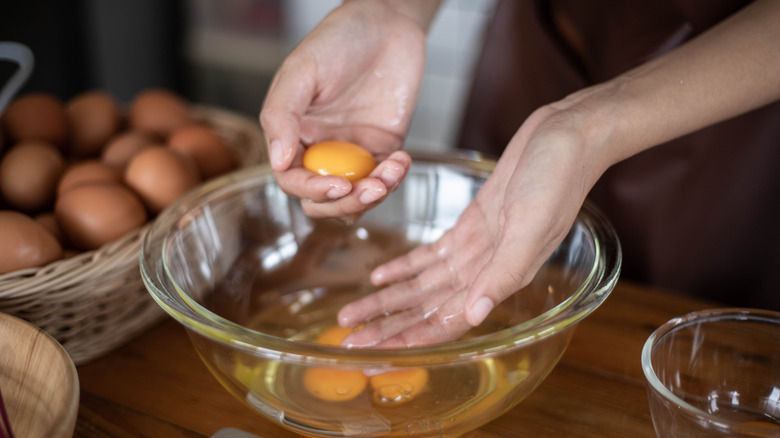
To get the most benefit from using cold eggs, get three bowls ready in advance. One for the yolks, another for whites, and a third "test" bowl where you crack each egg before putting it in with the rest. That way, if a yolk does break, you'll lose only one egg, not the whole lot. And if an egg does crack, you can still reuse it later on in another recipe. Simply transfer it into a clean container and store it in the refrigerator, where it will last for about one to two days.
Also, crack your eggs on a flat surface, not on the rim of a bowl, to avoid sharp-edged shells getting into the yolk. Let the whites fall into your clean hand, or transfer the yolk from shell half to shell half. Cold eggs are less slippery and less likely to burst in your fingers, making them more manageable. They're also perfect for dishes where you want structure, like hard-boiled, poached, or elevated deviled eggs.
In short, this one tweak can improve your success with everything from soufflés to extra-fluffy pancakes, because there are fewer wasted eggs due to unwanted mixing. Finally, remember to keep your eggs away from the refrigerator door, because it experiences fluctuating temperature changes. Instead, store them in the refrigerator's back section, where they can safely be stored for about three to five weeks.