

Can You Get Kicked Out Of An All-You-Can-Eat Buffet For Eating Too Much?

It's a question many foodie adventurers have: Can you be kicked out of a buffet for eating too much? The answer is not as straightforward as you might think. First things first, no restaurant is likely to kick you out just for having a big appetite. However, you can be asked to leave if your behavior goes beyond what the buffet was intended for, or if you break the establishment's rules.
Buffets operate on the idea of "reasonable consumption" within a single meal period. For example, treating the buffet like a competitive eating event, such as eating 30 to 40 crab legs, would likely be seen as excessive and a misuse of the concept. (Speaking of crab legs, they're actually one of the foods you should steer clear of at a buffet.)
It's also worth noting that if you are taking so much food that other customers are left with little to nothing, the staff may intervene. Similarly, staying at your table for hours or stretching one meal from lunch into dinner could result in being asked to leave or being charged a higher dinner rate. Joy Luck Buffet in Brentwood, for example, charges extra for anyone who lounges from lunch through to dinner. So, in summary, a buffet may award you one boisterous meal and then some, but it's not an all-day dining experience.
Buffet rules and the limits of all-you-can-eat
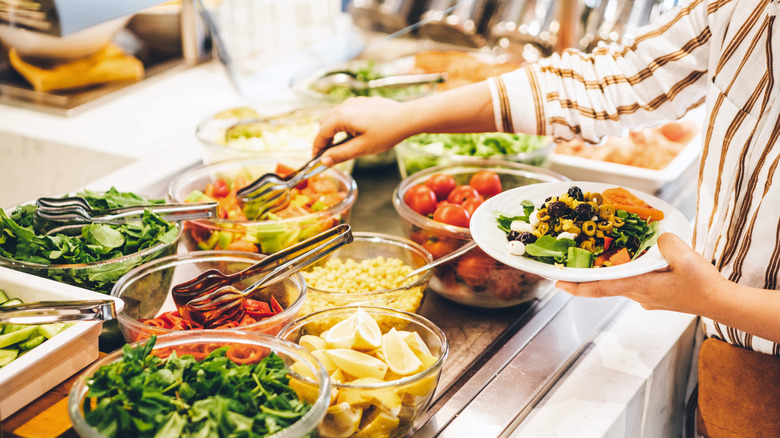
Buffets often have rules not only about how much you can eat, but how you go about eating. Taking food to go or feeding someone who hasn't paid is a common violation since your payment covers on-site consumption only. Some restaurants will even charge you for uneaten food to discourage waste. You can also be asked to leave for violating hygiene standards, such as eating in line, reusing a plate, or ignoring sneeze guard etiquette, which could put other customers at risk.
That said, most buffets are not trying to micromanage your appetite or dining experience. Some customers load up on expensive items like seafood, while others fill up on more affordable options like rice, bread, or salad. To protect profits, many buffets rely on tactics like offering smaller portions, placing filling items at the front of the line, or assigning staff to serve premium foods at select stations. And, before you rush out to eat, you should be aware of some insider secrets about buffets, one of which (having an appropriate number of waitstaff around) is a huge indicator of the food's quality.
But, all in all, buffet managers are focused on the average diner, not the occasional overeater. In most cases, getting kicked out has more to do with behavior than hunger. So, enjoy your buffet visit and be respectful of the rules. With a little common sense, your feast should end with dessert, not a confrontation.