

The Actual Difference Between Melting And Tempering Chocolate
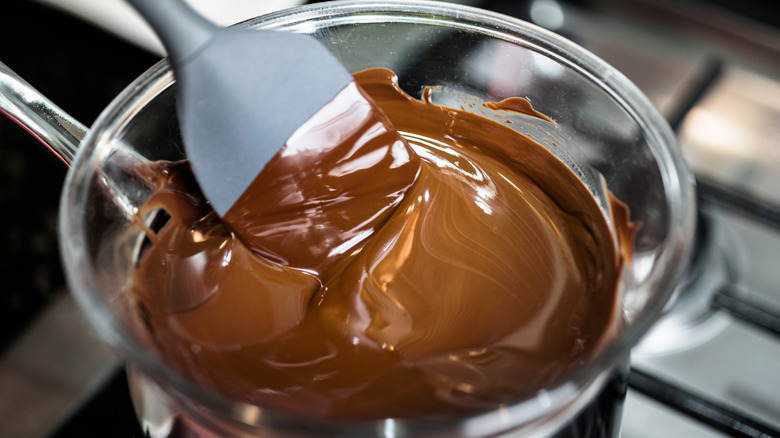
Chocolate, whether in the form of a candy bar or as a drizzle for ice cream, is a delight for many. Although melted chocolate and tempered chocolate are often associated with one another, the two terms differ from one another. The short answer is that melting chocolate is the first step in tempering, whereas the long answer lies in the chocolate sugar crystals.
Melting chocolate is fairly straightforward: take the chocolate, heat it, and it melts. As you might guess, this process is much less complicated than tempering. However, for melting chocolate, there are two primary methods: microwaving and using a double boiler. When using a microwave, simply add your chocolate to a microwave-safe bowl and heat it in 30-second intervals. Between each interval, give the chocolate a quick stir to prevent it from burning. For the double boiler method, add about a cup of water to a saucepan — or fill it a few inches deep — and bring it to a simmer. Place a second bowl over the pan. Add your chocolate and continuously stir until the chocolate is melted from heat produced by the simmering water below. Either method works perfectly, and you can add a tablespoon of butter to make your chocolate smooth and rich.
Melting chocolate is just the starting step to a more complex process of tempering. Although it can appear daunting, the process isn't rocket science, and mastering the technique will allow you to make chocolate moldings and more decorative desserts.
The crystallization of tempering chocolate
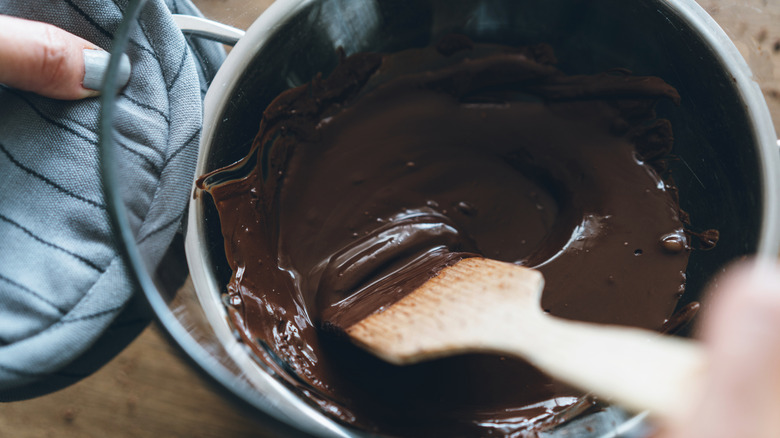
Tempering chocolate involves a cycle of heating and cooling to get it to an exact form and finish. Chocolate contains six different forms, each varying in strength and molecular structure. The temperature at which the chocolate melts will determine which form it will take. To achieve tempered chocolate, the sugar crystals need to be first melted correctly to morph into the fifth form: beta crystals. Form V sugar crystals are responsible for a glossy finish and the audible snap we all know and love. The molecules in the melted chocolate will start to arrange into a structured form as the chocolate cools. As the tempered chocolate continues to cool, crystals grow and form on one another, creating a network that holds the chocolate structure.
Now, you can temper the chocolate by microwaving it in 30-second intervals or using the double-boiler method. Ultimately, the primary focus of tempering chocolate is controlling the temperature. Needless to say, it's best to keep a thermometer within reach as you heat and cool your tempered chocolate.
Be sure not to add any water while melting your chocolate, otherwise it will seize. Regardless, melt your chocolate to about 115 degrees Fahrenheit. Remove from the heat and add the remaining chocolate, while letting it cool to around 80 degrees Fahrenheit. Then heat it back up to 90 degrees Fahrenheit before molding.