

Take A Peek Into Your Bedroom Closet For The Perfect Homemade Cheesecloth Substitute

When it comes to particular recipes, straining is necessary. That's where the cheesecloth comes in handy. The light cheesecloth can be used for many important kitchen tasks, including straining bacon fat or straining store-bought ricotta, among other things. However, it may not always be readily available in your pantry.
Picture this: you're mid-recipe, halfway through making a homemade batch of yogurt, and it suddenly occurs to you that you're out of cheesecloth. Relax, you don't have to dart to the store or abandon your project. Instead, just stroll over to your closet. A clean, soft, 100% cotton T-shirt makes a decent alternative. It might sound ridiculous, but cotton T-shirts, especially the thin, soft ones, are tightly woven enough to strain out small particles but are still breathable, much like the real deal. This means you can use it to thicken yogurt into Greek yogurt, or strain out chunks from homemade nut milk.
The key is to go with a plain white T-shirt with no logos or design, and no synthetic fabrics. You want something that has probably been washed a dozen or so times and has that soft, clingy feel. That will make it thin enough to mimic cheesecloth, but durable enough to hold up under stress. Your makeshift T-shirt cloth is also reusable, which is not the case for some cheesecloth. So it's cheaper, more sustainable, and frankly, more convenient if you're the kind of cook who jumps into projects without triple-checking your pantry.
Prepping a T-shirt as an alternative
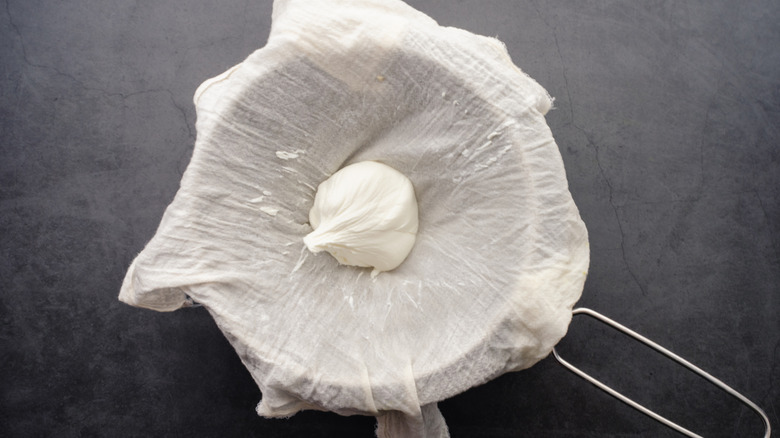
Before tossing any old T-shirt over a bowl as a cheesecloth substitute, some prep is required. Even if your shirt looks clean, you will still want to run it through a hot water rinse beforehand, preferably without detergent. This will strip out any fabric softeners, remaining scents, or laundry residue. Adding a splash of white vinegar to the rinse water can also help break down any odors you don't want getting into your food. And if it's your first time using the shirt this way, do a quick sniff test; it should smell like absolutely nothing.
After washing, you can cut the shirt into large squares or rectangles, and keep a few different sizes on hand in your pantry so you'll never be without your homemade "cheesecloth" in the future. You may even double two pieces if you're dealing with something extremely fine, like almond flour or tomato juice. With each use, rinse it right away under hot water, then launder as usual. Let it dry completely before storing again to avoid any funky mildew smells.
And don't limit yourself to just cheese. T-shirt cloths work wonders when dusting powdered sugar (not to be confused with granulated sugar) on desserts, or wrapping herbs for flavoring soups. So next time a recipe calls for something to be strained and you're on the verge of hitting pause, rest assured, because the answer could be just one cotton tee away.