

The Rookie Mistake That's Bound To Dry Out Your Eye Fillet Steak
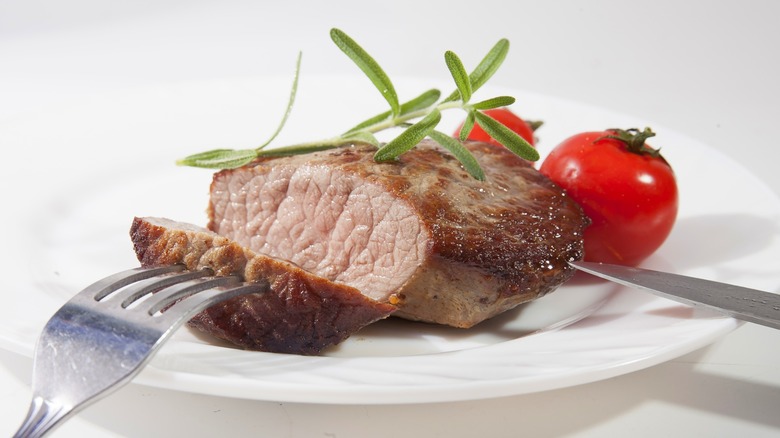
The eye fillet, also known as the tenderloin, can give you some of the most satisfying steaks you've ever had. The filet mignon, considered to be one of the best cuts of steak according to chefs, comes from this cut. It can, however, be pretty tricky to cook, with a lot of first-timers accidentally drying out their steaks. Chowhound spoke with Kevin Chrisman, executive chef at Golden Hour (@goldenhouravl on Instagram) in Asheville, North Carolina, to ask what common mistakes people make when cooking this delicate cut. According to him, the answer is simple. He said, "People leave it in the pan way too long."
Eye fillet is leaner than other premium cuts, which in turn makes it easier to overcook. A New York strip, for instance, comes from the short loin, which has more intramuscular fat than tenderloin. During cooking, this fat melts and moistens the steak; eye fillet doesn't have that advantage, making it more prone to drying out if you have it on the heat for too long.
A 1½-inch-thick eye fillet steak typically takes about 4 to 5 minutes to cook to medium-rare, but cook times can vary based on the temperature and thickness of the meat. How long it takes to cook filet mignon on a grill can also differ based on the type of grill, so it's best to confirm doneness with a meat thermometer. If you're a newbie at cooking steaks, you might also want to practice with a shoulder petite tender, a cheaper cut that doubles as a filet mignon alternative. In the meantime, there are a few things to do to make sure your eye fillet stays juicy.
How to ensure your eye fillet steak stays moist
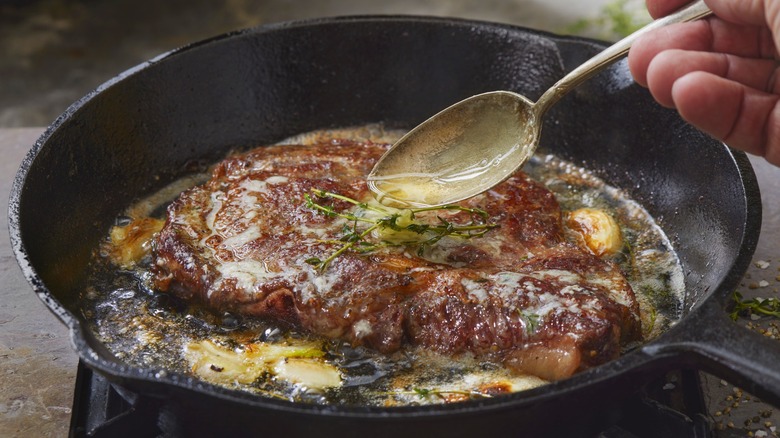
Other than sticking to the right cook times, Kevin Chrisman's top suggestion for keeping your steak moist is to be almost fanatical about basting it with butter. "Baste, baste, baste! The old saying, 'more butter is mo' better' will take you far!" he said.
After searing the steak, Chrisman recommends basting it with brown butter, rosemary, and garlic. The butter, in particular, allows the beef to stay moist by coating it with a layer of fat. This fat serves as a protective barrier that prevents the meat's internal juices from seeping out. Basting also contributes to the formation of a more rigid crust, which helps lock in more of the steak's moisture. Butter-baste your steak with the right techniques, and you're several steps closer to having melt-in-your-mouth goodness on the plate.
Once it's cooked to your desired doneness, you'll want to rest the steak for a few minutes. As a steak cooks, the heat around the surface forces its juices towards the center, causing them to leak out if you slice into the meat too soon. By letting the meat rest for about 10 minutes, you allow those juices to redistribute themselves throughout the entire steak, giving you a tender, uniformly moist eye fillet steak.