

What Container Is Best For Marinating Meat?
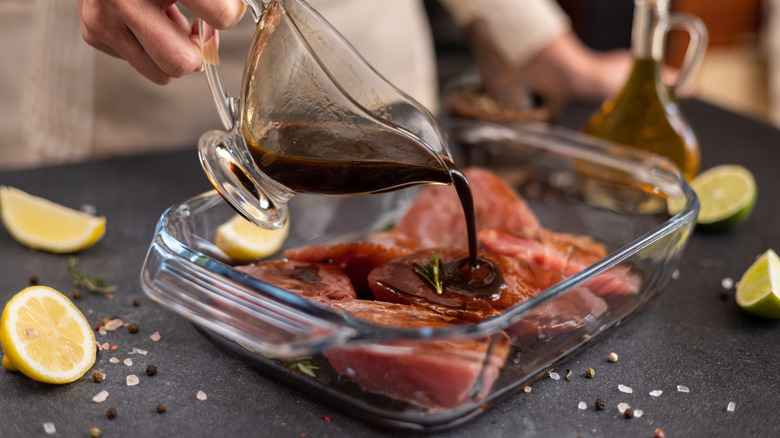
Even if you whip up the perfect steak marinade and achieve the perfect sear, it can all be for naught if you make one simple mistake: You don't marinate your meat in the right container. To find out which container is best for marinating, we sat down for an exclusive chat with Matt Abdoo, the executive chef and co-founder of Pig Beach BBQ, with locations in New York, Boston, and Florida. Abdoo says plenty of different vessels can be a good fit for this job. When it comes down to it, there's really only one overarching rule to remember: "The best containers for marinating meat are non-reactive materials like glass, food-grade plastic containers, Ziplock bags, or vacuum-sealed bags," he suggests.
Containers are made up of materials that are either reactive or nonreactive. Reactive materials, such as cast iron and copper, can impart metallic flavors and colors onto the food that's stored in them. While these materials can enhance some recipes, this storage mistake will ruin your food if you're using it to marinate meat. The sauce can soak up the flavor of the container it's sitting in and alter the fundamental flavors. To avoid an off-kilter plate, sticking to nonreactive containers is best. Beyond the ones Abdoo mentioned, other materials that are nonreactive include containers made of stainless steel and ceramic.
For the best flavor, consider vacuum-sealing
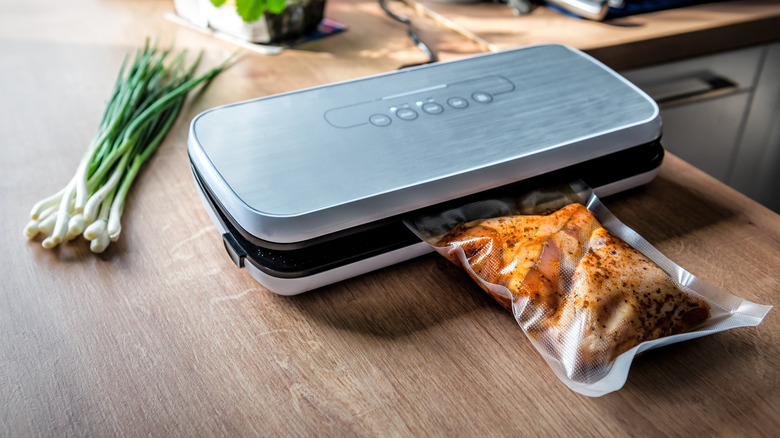
While almost any nonreactive material can be used to marinate meat, Matt Abdoo has one vessel in mind that will help you achieve the absolute best of flavors. "For maximum flavor, vacuum sealing is hard to beat — it helps the marinade penetrate more deeply and evenly," he says. This method not only enhances the taste of the meat, but it also speeds up the marinating process itself. (And if you're wondering, no, it's not always better to marinate food for longer.) The vacuum technology opens up fibers in the meat, helping the marinade to easily soak into the flesh. This can make the marinating process take minutes instead of hours.
If you don't have a vacuum sealer in your kitchen, plenty of other options can work beyond the above. "Ziplock bags are a great, convenient option too — they save space in the fridge and make cleanup easy," Abdoo says. No matter what vessel you choose, just remember to make sure it's nonreactive, and always put food safety first. As Abdoo advises, " ... If you're marinating for more than four hours, always keep the meat in the refrigerator to avoid any food safety risks."