

Does Beer Ever Expire? How To Tell If Your Bottles And Cans Need To Go
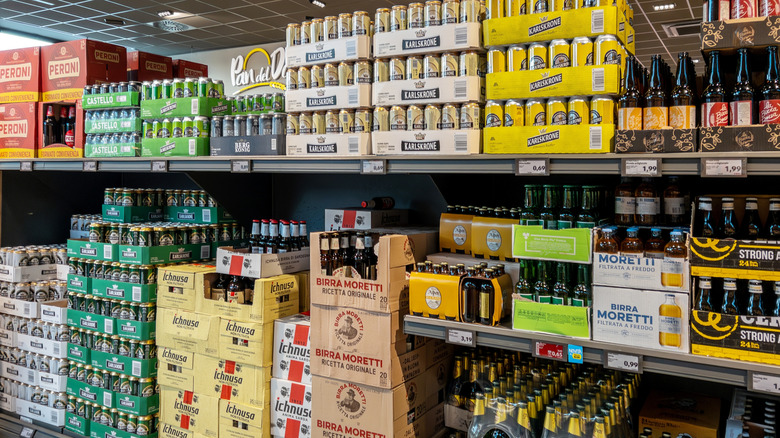
It can be difficult to discern whether canned or bottled beers have gone bad. If you're an avid beer drinker, it's unlikely you held onto your latest purchase long enough for it to go bad, but we've all come across the lost can at the back of the fridge that you can't quite tell if it's still okay to sip from. While beer can indeed expire, it's more likely to degrade in flavor or lose its effervescence as opposed to becoming unsafe for consumption. To break this down, Chowhound spoke with Stephen Alexander, the sales and marketing director for Tall City Brewing Company in Midland, Texas, and public relations and marketing committee member for Texas Craft Brewers Guild.
"Here's the thing... most beers don't really expire the way milk does," Alexander said. Unlike dairy products, beer doesn't become dangerous if consumed past the sell-by date. "What actually happens is that it goes stale," he clarified. The amount of time your beer lasts past its expiration date is contingent upon a few variables, including its alcohol by volume percentage and how it's stored.
Every beer has a different shelf life, which adds to the list of red flags to look for when shopping for beer. "High ABV beers, dark beers, and barrel-aged beers usually age the best because alcohol and the roasted malts help preserve it," Alexander explained. On the other side of this, he noted that "light beers, hoppy beers, and low-ABV styles tend to fade faster, especially anything hop-forward like IPAs." This is why proper canned beer storage is important. "Beer hates three main things: heat, light, and oxygen," Alexander said.
How to tell if beer has gone stale
When it comes to beer that's lost it's luster, Stephen Alexander noted a few tell-tale signs to look out for. First, he said, the smell may come across as "papery, cardboard, musty, or just flat. Hop-forward beers might lose their aroma." Appearance is also an important factor. "If you see floaters or haze in a beer that's normally clear, or you can see the can bulging, that's a hard no for me," Alexander added.
Flavor is another giveaway of staleness. Alexander said you may notice beer tastes "faded, dull, metallic, and sweet, but in a weird way. Hop-forward beers can taste like wet bread when they oxidize." Just because a beer tastes a bit funny doesn't mean it's not safe for consumption. Alexander explained, "If a beer tastes a little flat or muted, it's still drinkable, but just not great." However, pay special attention to more disconcerting flavors; "If it tastes funny or sour when it shouldn't be... it's time to let that beer go," he said.
While most beers just go flat or lose their prominent flavor notes if they go bad, you still want to note when more concerning features present with your bottles and cans. "Unless the can is swollen, dented, leaking, or clearly contaminated, it's not dangerous," Alexander said. You just have a regrettable sipping experience. So, yes, beers can go bad. That said, it's still good to have a baseline understanding of how long beer lasts in cans versus bottles (usually up to six months after production).