

The Crucial Mistake Ruining Your Charcoal-Grilled Food
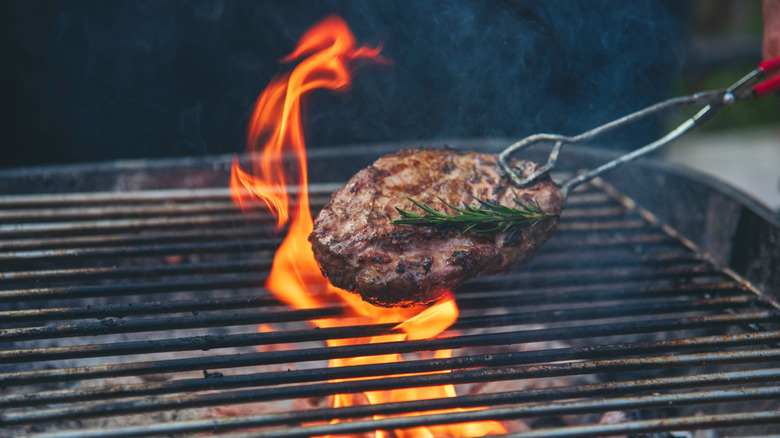
If your grilled chicken ends up being flavorless and comes out half-charred, half-raw, or your burgers are refusing to cook through while the outside is scorched, it might not be your recipe — it might be your lid. Specifically, it might be that you are cooking with the grill lid open. On a charcoal grill, that's not just a rookie move. It's a heat-diffusing, flavor-leaching, smoke-sabotaging mistake.
While different types of grills serve different purposes, charcoal grills are all about that enclosed, smoky environment. Unlike gas grills, which can crank out heat on command and rebound quickly, charcoal needs a little nurturing. The lid isn't just a cover, but rather your oven dome. It locks in heat, concentrates smoke, and helps maintain a consistent temperature around your food. Take it off mid-cook, and you are basically waving goodbye to all the ambient heat you worked so hard to build up. It is the barbecue equivalent of opening the oven every 30 seconds to peek at your cookies.
So when exactly should the lid stay on? Most of the time. If you are cooking thicker cuts of meat like bone-in chicken thighs, steaks over an inch thick, or a rack of ribs, keeping the lid closed is essential. The trapped heat circulates like a convection oven, cooking the food more evenly from all sides and infusing it with that signature charcoal flavor. Even for smaller items like skewers or veggies, a closed lid can mean faster cooking and more uniform char.
Controlled airflow is the key in charcoal grilling
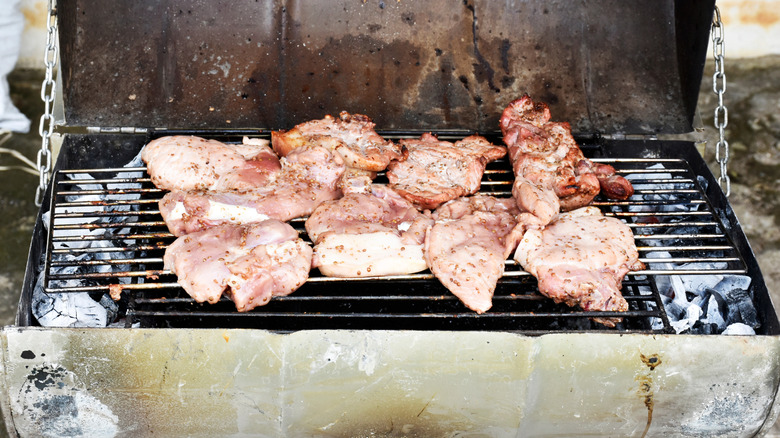
Now, are there exceptions? Of course. If you are going for a hard sear — say, on a thinner burger or some quick-cooking shrimp — you might keep the lid off for a minute or two to avoid overcooking. But that should be intentional and brief. The moment you open that lid and walk away, heat escapes, oxygen floods in, and the grill loses its magic.
Let's talk airflow. When you grill with the lid open, your coals get more oxygen, which can make them flare up and burn hot but not necessarily in a controlled way. That often means scorched outsides and undercooked middles. Closing the lid regulates airflow through the vents, giving you a more manageable, steady burn and allowing you to fine-tune the temperature with precision.
So if your grilling results are more "campfire chaos" than "summer dinner glory," ask yourself: are you babysitting your food with the lid open, tongs in hand, flipping every 30 seconds? Try the opposite. Set it, watch the temp, and let your grill do what it does best — create a smoky, evenly heated environment that makes your food taste like it belongs at a backyard cookout, not a rushed kitchen burner.