

Oven Vs Slow Cooker: Which Makes The Juiciest Turkey?
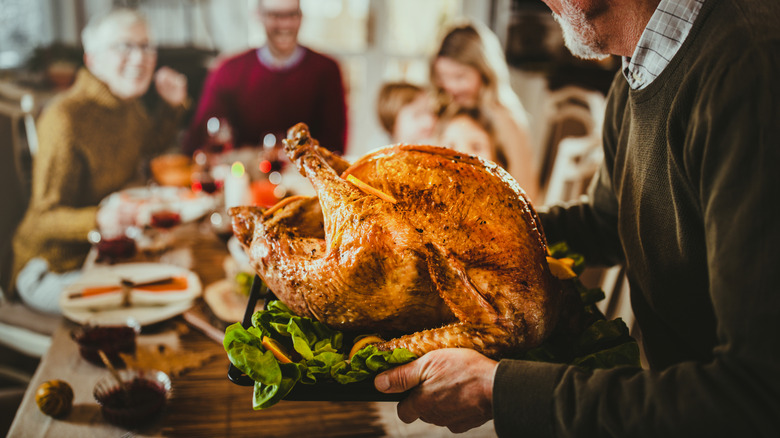
We've covered it before: Using your Crock-Pot to cook a turkey can save you a ton of stress on Thanksgiving. While slow cooking in a Crock-Pot tends to lead to tender, juicy meat, it doesn't necessarily guarantee a juicier bird than a more traditional oven roast. Whether your turkey is moister in a slow cooker or in the oven comes down to technique and preparation, and both methods have their pros and cons.
Slow cookers apply gentle heat over long periods, which usually leads to tender meat (assuming you avoid some common mistakes), but overcooking is still a risk. Also, because slow cookers trap steam in the chamber with the bird, it's virtually impossible to get a crispy skin the way you can with an oven cooked turkey. Many slow cookers aren't large enough to accommodate whole turkeys, meaning you'll need cut pieces or quarters, which can add more prep time (mitigating one of the slow cooker's major advantages: convenience).
Regardless of which method you choose, proper cooking time is key. As your turkey heats up, its muscle proteins contract and expel juices, so excessive cooking in either appliance can lead to dry breast meat, even if you've got a pool of liquid in your slow cooker. Tempting as it may be, turkey in a slow cooker isn't a "set it and forget it" scenario. You'll still want to carefully monitor temps until they approach that 165 degree Fahrenheit mark (the safe point for poultry).
Tips for achieving the juiciest bird
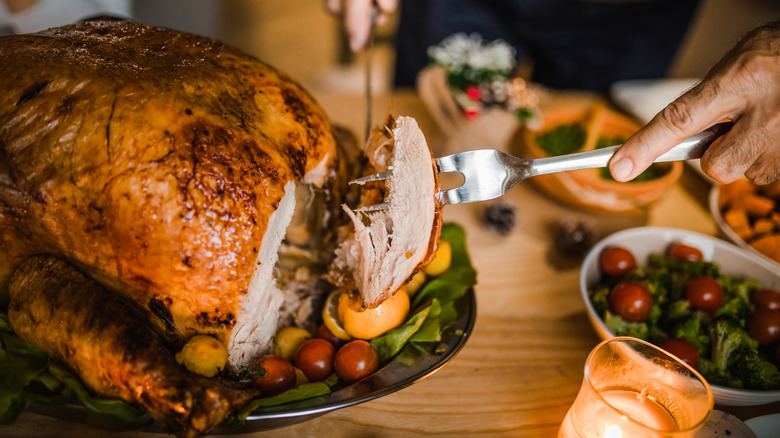
As someone that's cooked dozen of turkeys over the years and experimented with a number of different methods, I can say with confidence that some tips apply regardless of whether you're slow or oven cooking. The first choice you'll be confronted with is whether you prefer a fresh or frozen turkey: both have advantages and disadvantages.
Regardless of which you choose, I strongly recommend brining. I've had success with both wet and dry brining: either sink a defrosted turkey into a bath of water, salt, and citrus fruit like oranges and lemons the night before cooking, or cover your turkey in salt and let it rest in the fridge uncovered or in a bag for at least an hour per pound.
I also rely on a number of other tips from the respective churches of Alton Brown and Gordon Ramsay. Rubbing fat like high quality butter or mayo under the skin helps preserve moisture, especially on the breast, which is notorious for cooking faster and drying out more quickly than the thighs or wings. Speaking of the breast, when oven cooking, I build a protective "breast plate" of bacon and layer it over the breast, which not only shields it from overcooking but also imparts some of that rich flavor to the meat.
Finally, avoid basting. Opening your slow cooker or oven to baste releases heat, which can lead to slower cooking, and tests have shown that the moisture doesn't penetrate the skin, and can even have the opposite effect, making the skin leathery or rubbery.