

Boomers Swear This Food Just Doesn't Taste As Good Anymore
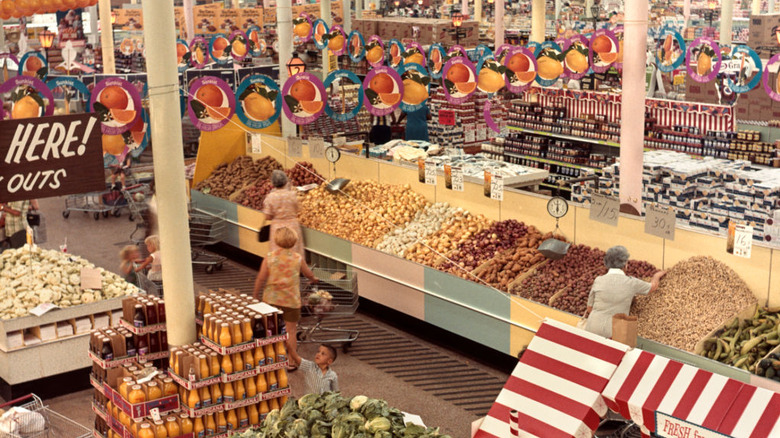
Older generations are bemoaning the loss of the delicious fruit of their childhood. As one Reddit user put it, "Most fruit doesn't taste as good as it used to." However, it may not all be the rose-colored glasses of nostalgia. The 1960s and '70s saw a more globalized fruit supply chain, and the number of overall farms decreased while the remaining farms' acreage increased (via the USDA).
"Fruit used to taste like fruit," said Peter Chambeyron, a veteran apple grower raised on his family's orchards in the '50s and '60s. Speaking to Unpeeled, he noted that older customers who come to his orchard often remark, "This is the way apples used to taste." Chambeyron was specifically referencing how supermarket cold storage demands stripped flavor out of modern fruit. Genetic differences, growing conditions, the timing of harvests, and storage conditions can transform flavors and textures.
For example, some consumers believe that the flavor of Honeycrisp apples has declined. The popularity of this particular apple variety led to mass production, which meant longer storage times and poorer-quality fruit. In response, farmers have produced hardier strains of Honeycrisp, which may taste different or have different textures.
How genetics and harvesting changes affect produce
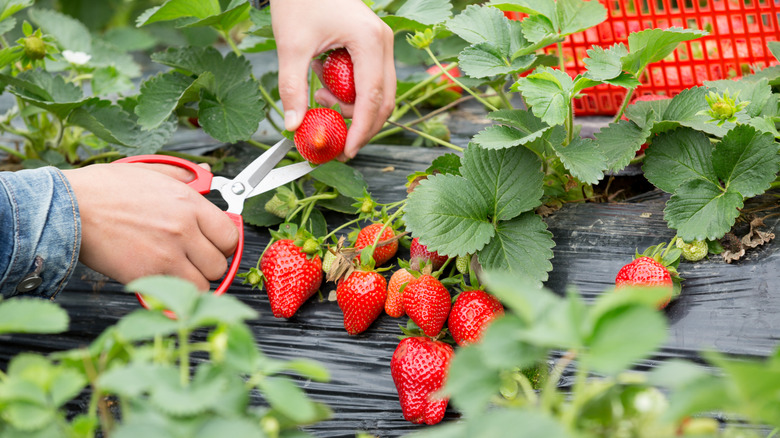
The strawberry provides more context. Research involving 213 samples from 56 strawberry cultivars found that particular aroma compounds can enhance perceived sweetness independently of sugar content. Genetic manipulation to balance natural sweetness with higher yields has also influenced strawberry flavor. A study at the University of Florida found that the alleles that contribute to a strawberry's sweetness can negatively impact a plant's yield.
Ripeness is another factor. Strawberries have optimal flavor and sugar levels when harvested fully ripe, but don't continue ripening after picking. A berry harvested prematurely may never develop the flavor of one harvested fully ripe. This may explain why, on a thread about fruit over the years, a poster on Senior Forums remarked, "I remember as a child from 70 years ago how succulent fresh fruit from the grocery store was. But today's grocery store variety—yuck! Strawberries are the worst, bland at best but even bitter sometimes."
Bananas: The poster child for fruit evolution
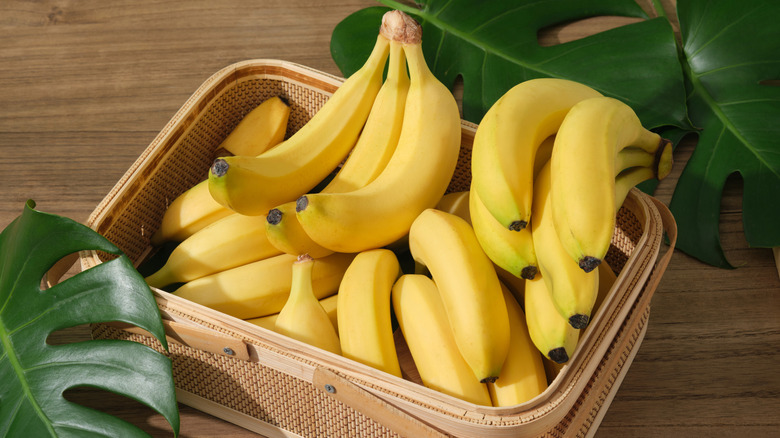
Bananas, which, thanks to banana bread, experienced massive popularity during the Great Depression, have a historical twist. Older generations regularly claim the bananas of their youth had more flavor or sweetness. One Reddit user wrote, "As a kid in the early 1960s, I recall that bananas tasted better – but so did most other foods!" This comment recalls the Gros Michel (sometimes cheekily called "Big Mike"), which dominated exports until a soil-borne fungus known as Panama Disease decimated global plantations in the '50s. Because commercial banana plants lack genetic diversity, the entire global supply was nearly wiped out by the late '60s.
In response, growers switched to the Cavendish, a variety resistant to Race 1 Panama Disease. The price, according to some, was flavor. The Gros Michel has been described as creamier, more aromatic, and with a lingering floral sweetness. It also has a higher concentration of isoamyl acetate,the organic compound responsible for much of the flavor and aroma we associate with bananas. Boomers familiar with the taste and texture of the Gros Michel may find the Cavendish a blander substitute (though a dash of cinnamon can make these bananas more flavorful).
We may now be on the brink of another transformation. A new fungal strain known as Tropical Race 4 is currently threatening Cavendish plantations worldwide. Researchers are racing to create hybrid varieties and gene-edited crops that can withstand this new threat, meaning the supermarket banana of tomorrow may taste different yet again.