

To Give Baked Goods Better Flavor, Swap In Some Of This Nutty Flavor
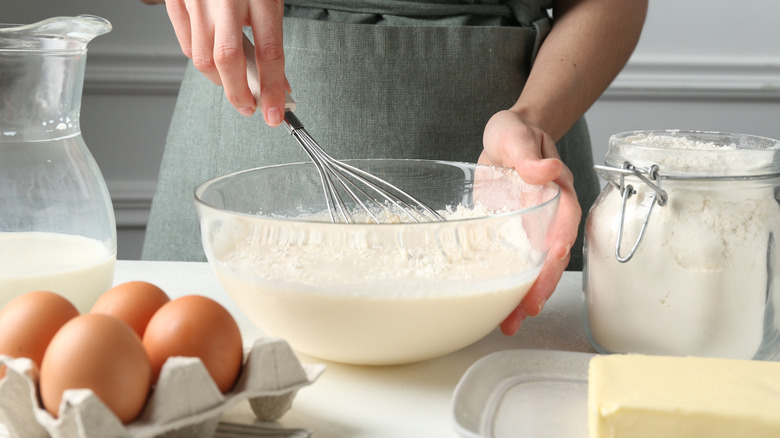
Getting creative in the kitchen is easy when it comes to baking, especially when experimenting with flavors. Whether you're adding more texture with fruits and nuts or incorporating spices and extracts, there are plenty of ways to switch up your bakes. However, flour isn't always an ingredient you touch (unless you're swapping for a gluten-free alternative like almond flour), but there is a switch you can make in your recipe to add more flavor to your baked goods. Next time you're baking, try using chestnut flour for an added sweetness and a hint of nutty, earthy flavor.
Chestnut flour is made from ground chestnuts. It's a naturally gluten-free flour that's packed with vitamins and nutrients. Because this flour is gluten-free, it does not rise on its own, but people often still use it in recipes simply for its delicious taste. This flour has been used all over the world for its flavor, but it's especially popular in Italy – Tuscany in particular. In fact, this flour is so sweet that it is known as farina dolce in Italian, which translates to sweet flour. It is used in savory recipes like pastas for a subtle earthiness, or bakes such as breads, biscuits, and castagnaccio, a cake made with chestnut flour, pine nuts, raisins, rosemary, and olive oil (and it's an Italian cake you should try at least once). This flour will transform the flavor of your baked goods.
How to use this flour in your baked goods
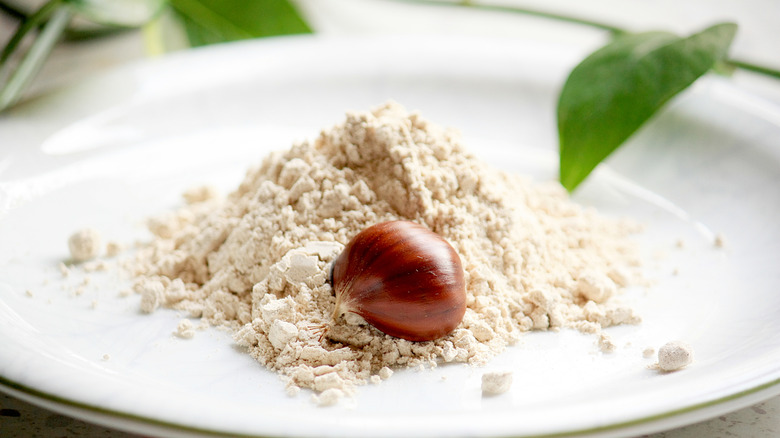
Since chestnut flour is gluten-free and doesn't rise, you can't expect it to entirely replace the flour in bakes that need structure. Replace only about half the usual wheat or gluten-free flour in your recipe with chestnut flour using a 1:1 ratio in such cases. You'll also need to add a leavening agent, such as baking powder. If you're baking something that can be flat and doesn't require an airy structure, think crepes and flatbreads, you can use swap all of the flour with chestnut flour. Additionally, chestnut flour is very dense, so it's important to add in more liquids and adjust your cooking time by around 25% less to prevent a dry, heavy texture.
Chestnut flour is great to use in cakes, cupcakes, cookies, or muffins. You could even use chestnut flour to make breads or pizza dough, but it's best to only use a small amount of chestnut flour here, as too much will create a dense result. That said, chestnut flour isn't always easy to find in stores, but it's simple to make yourself at home — just roast some chestnuts in the oven, then dry and grind them up for an at-home flour. Whether you use chestnut flour in sweets or savory bakes, it's sure to add a delicious nut-like flavor, and once you start baking with it, this may just become your new staple ingredient.