

The Hands-Down Best Steak Cut For Steak Diane
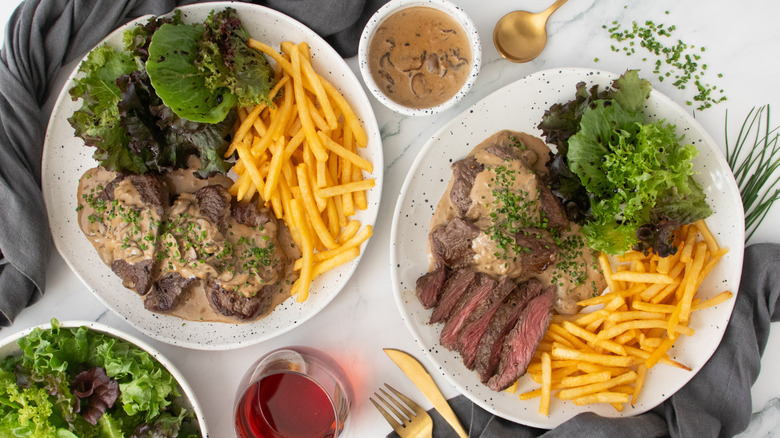
The only thing more mysterious than steak Diane's fabled name is which cut of red meat will help the recipe perform at its very best. It is, after all, essentially beef cloaked in a pan sauce. But steak Diane is at its peak when prepared with dainty tenderloin medallions, even though these prized, accordingly expensive cuts might ultimately become obscured by the sauce.
A lot of steak Diane's flavor can be attributed to its sauce, so it does not need a heavily marbled slab that will contribute its own flavorful fat. What the medallions lack in that ivory lace, they make up for with their titular tenderness, thanks to being sourced from a less-exercised part of the cow's back. That tenderness straight from the butcher is crucial to steak Diane's relatively quick cooking time and high heat. A tougher cut that requires a low-and-slow treatment would end up too chewy after the scant few minutes steak Diane spends over intense heat. Their uniquely yielding quality, along with a somewhat mild flavor that won't compete with the sauce, makes tenderloin medallions the gold medal-winning choice for steak Diane.
Making steak Diane at home
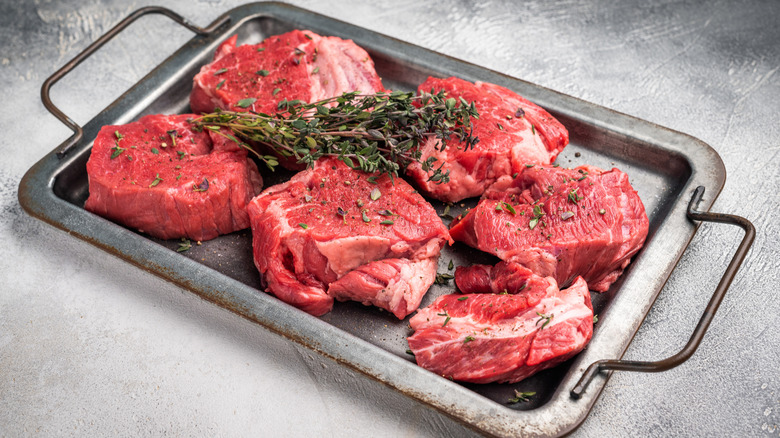
Our old-school steak Diane recipe provides detailed instructions on how to turn tenderloin medallions into the classic dish. But you'll first need to acquire them, and they aren't quite as ubiquitous in plastic-wrapped packages as some other cuts at the supermarket or grocery store. Visiting a dedicated butcher shop, or at least a butcher counter, is the easiest way to nab a few. You can also sometimes save a few bucks by buying a whole tenderloin and slicing the medallions yourself.
This is probably one preparation you'll want to make by the book the first few times you try it. Once you get the hang of steak Diane, however, you'll be able to create what looks like a fairly elaborate plate in as little as half an hour. And that's largely thanks to the pan sauce, which does a lot of the lifting here.
After being halved widthwise and pounded thinner, the medallions are seasoned and seared in a skillet more or less like any other steak. Once they're removed, butter, mushrooms, garlic, and shallots are added to their juices before the pan is carefully deglazed with a splash of brandy, which is flammable, hence the caution. The mixture is further reduced and whisked with mustard and cream until it's nice and creamy, then simmered with Worcestershire sauce and demi-glace for a few more minutes. Finally, it's reunited with the tenderloin medallions and served.