

The Reason In-N-Out Is More Affordable And Consistent Than Other Fast Food Chains
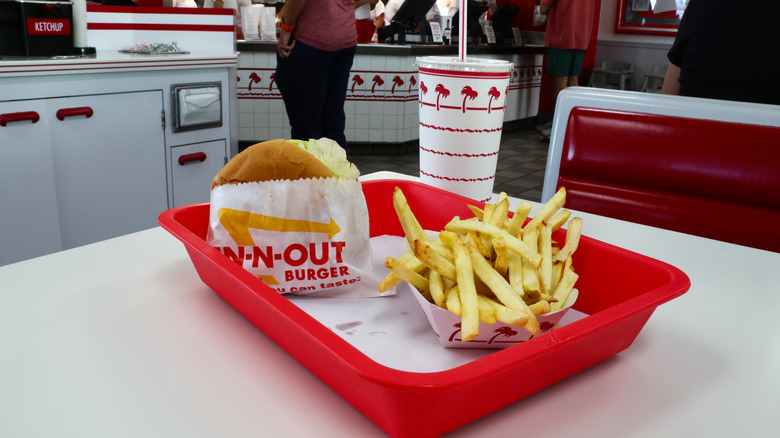
If you've ever eaten at an In-N-Out Burger, you may have noticed a few things. For one, the menu is fairly limited compared to McDonald's. You're probably not going to ever be able to get a chicken sandwich there, for one thing, but you can order from its secret menu and get onions six different ways, among other perks. The company's limited menu, along with several other factors, means that In-N-Out can deliver customers food that's more consistent and affordable than many other fast food companies. As an example, an In-N-Out Double Double typically costs less than a McDonald's Big Mac, and the former is made using fresh beef while the latter uses frozen.
Before we get into the other factors that come into play — a refusal to franchise, only having locations about a day's drive from one of its regional distribution centers, and vertical integration — let's look at In-N-Out's limited menu of hamburgers, cheeseburgers, fries, and drink in regard to consistency. A limited menu means it's easier for the company to maintain consistency in how each item is produced and cooked compared with other fast food places with bigger menus that require more equipment and training, which can lead to inconsistencies. In-N-Out's other unique attributes are all geared towards this goal of delivering uniform, high-quality food that also allows it to keep prices reasonable.
For consistency, control is key
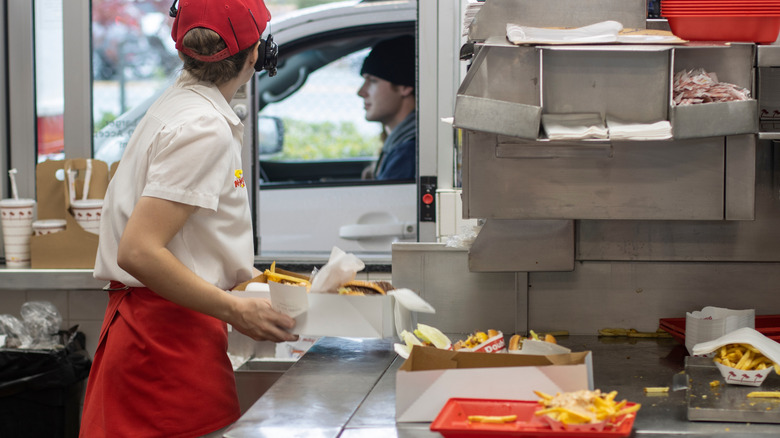
More than 75 years after opening its first location in Baldwin Park, California, In-N-Out Burger remains a privately owned company that doesn't franchise. It also owns its own distribution centers that deliver ingredients to its restaurants on a daily basis. As well, the company sources its own beef and has butchers at its own facilities on-site who grind it for patties to ensure quality. In-N-Out's slow growth (it's only currently in eight states) is driven by the company's policy of having each restaurant within 500 miles of a distribution center. This helps reduce store spoilage, among other positives.
This vertical integration of the company's distribution and logistics not only means In-N-Out can maintain top-notch quality, but it also saves the company money, which helps keep prices down. Its refusal to franchise also helps with consistency by allowing it to control everything from store cleanliness to employee training. In-N-Out owns most of its properties, too, which saves on overhead that again can help maintain affordable pricing. As you can see, the company has figured out a way to not only differentiate itself from its competitors with fresh, high-quality food, but has managed to create a model that helps guarantee consistency and reasonable prices.