

Are Pork Chops Better Baked Or Pan-Fried?
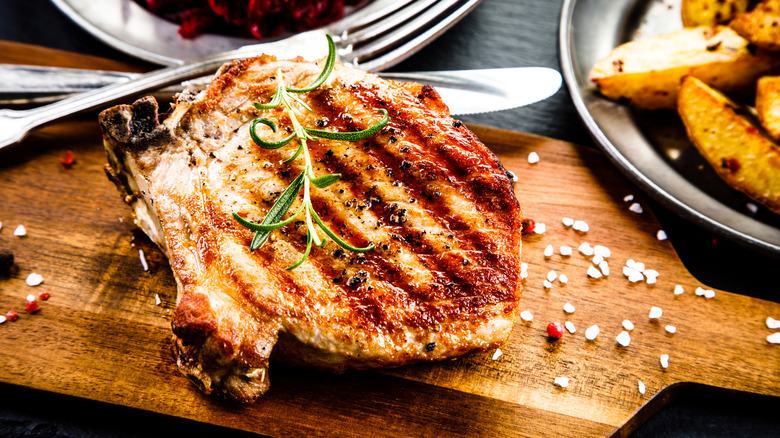
If you're in the mood for something savory, juicy, and seriously satisfying, you might want to consider pork chops. Subtly sweet with just the right amount of succulent fat, they shine in the oven, and can be equally delicious pan-fried. However, choosing between the two cooking methods isn't actually so simple. Though, if you feel like you have to make a pick, according to Ashley Lonsdale, ButcherBox chef-in-residence, then there's a high chance you have been cooking your pork chops wrong this entire time. As a matter of fact, she believes that the best pork chops come when you combine both approaches.
In an exclusive talk, the chef-in-residence revealed how to exactly bring the two techniques together. "Start with a screaming hot cast-iron pan, sear on both sides to create that deliciously desired crust," Lonsdale told Chowhound. "Then transfer the whole pan to a 400-degree oven to cook gently and evenly, resulting in the juicy chop you're after."
Each cooking method brings something different to the table. Baking will help the chops cook slowly and gradually all the way through. It will also keep the meat's center slightly pink, without leaving it undercooked or drying it out. At the same time, however, the hard sear from pan-frying will create a deep, golden crust and add richness to the pork chops, which baking alone simply can not achieve. "The combination approach offers the best of both worlds and leaves a wider margin of error for home cooks," Lonsdale added.
Turn to the oven when you're dealing with thicker chops
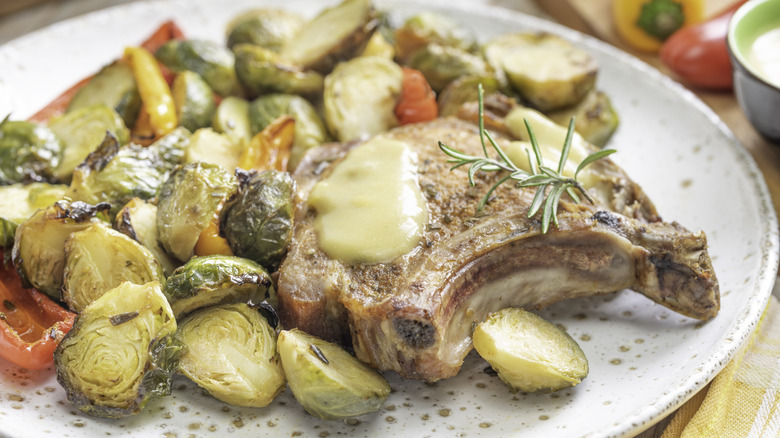
Even though the process is simple, Ashley Lonsdale suggests using an instant read thermometer once the chops go into the oven. If you haven't used one before, there are some handy tips for using an oven thermometer the right way that can make a big difference. "Eliminating guesswork is nothing to scoff at when trying to achieve the perfect chop," Lonsdale said. "Insert the thermometer into the center of the pork chop to get the most accurate reading, then pull the meat out of the heat a few degrees before it reaches the desired temperature, as it will continue to cook while it rests."
When asked whether pork chops always need both cooking methods, Lonsdale explained that it largely depends on how thick the cuts are. Thinner chops typically need much less time to cook. This is why they're better off pan-seared. In general, they need up to three minutes on one side, and another two on the other. However, thicker pork chops are a totally different story. If they are an inch or more thick, they will do best roasted. This will ensure they're cooked to perfection. It will further keep the surface from browning too much, through the so-called Maillard reaction which is the reason meat changes color as it's cooked, before the center reaches the right temperature. "Bone-in chops will take slightly longer than boneless, as the bone slows down how quickly heat travels through the meat, so an oven finish is your best bet," Lonsdale said.