

Brownies Take Less Effort When You Use The One-Bowl Method
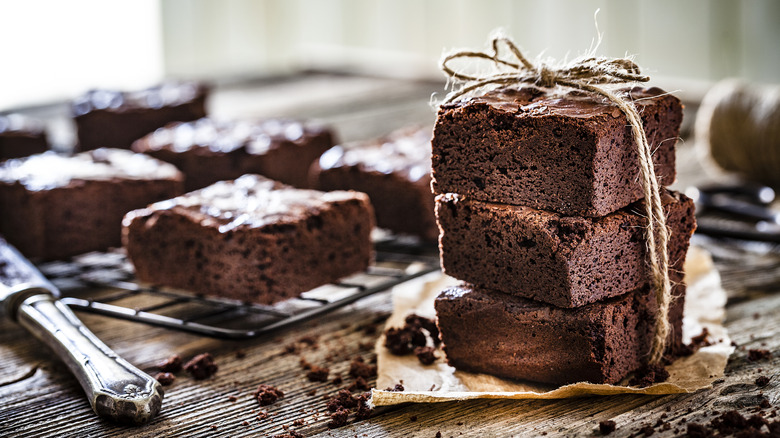
When it comes to baking brownies, there are 1,001 tips for getting the exact results you're looking for, from adding chocolate chips to brownie batter for a beautifully shiny crust to using instant pudding mix for the fudgiest brownies ever. Though these hacks usually lead to fairly delicious treats, sometimes the ultimate one is the near-magical, old-school mixing method nestled among your grandma's handwritten recipes — and it involves only using one bowl.
Generally speaking, baking recipes instruct us to mix the wet and dry ingredients in separate bowls before folding them together and scraping the batter into your baking pan. The point of this is to help ensure all of the ingredients are thoroughly mixed without stirring too much. Overmixing can make brownies tough and rubbery, while not mixing enough could leave pockets of unbaked flour or cocoa powder. However, using two bowls is clunky and kind of messy, so it's a good thing grandma knew of a better way.
Instead of using two bowls, you can simply melt baking chocolate, butter, and sugar over low heat on the stovetop, mixing until they create a smooth, shiny texture. You can also melt the chocolate and butter in the microwave, stirring the sugar into the hot mixture until it's fully dissolved. After letting the mixture cool slightly (to avoid cooking the eggs), place a large sieve over your mixing bowl and add your dry ingredients to it, then sift them into the wet ingredients. Crack in your eggs and mix gently but thoroughly until everything is smooth and fully incorporated.
Why one-bowl brownies might become your go-to recipe
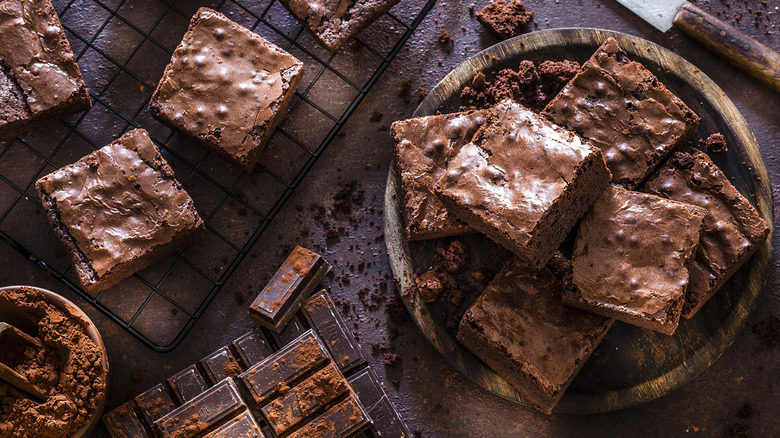
This method for making one-bowl brownies isn't just better because of the simplicity and reduced mess in only requiring a single bowl, it also takes advantage of specific baking wisdom to produce brownies that are the perfect balance of fudgy and cakey with that signature crisp crust. As mentioned, melting together the sugar, butter, and chocolate into a shiny ganache and sifting in the dry ingredients helps produce a beautifully tender texture, as the premixed ingredients can simply be folded gently together. Sifting also helps lightly aerate and gift loft to the dry ingredients in addition to mixing them.
Another way this method protects the texture is that the batter is already warm when it goes into the oven, meaning you can reduce baking time slightly and still get a fully cooked brownie. Less time in the oven means less time to dry out, resulting in a gorgeously rich, chewy interior. This technique is all about achieving that perfect texture with as little mess and effort as possible.
However, if you have a few extra minutes and the inclination, one more tip for ensuring this tasty result is to beat your eggs before adding them to brownie mix, as this can also help prevent the overmixing and the associated tough, unpleasant texture. The only caveat is that this tip will require an extra bowl, as you'll need to beat the eggs separately from the rest of the ingredients first. While this would technically no longer be a one-bowl batch, it may be worth the little extra effort.