

The Best Temperature For Frozen Vegetables In Long-Term Storage
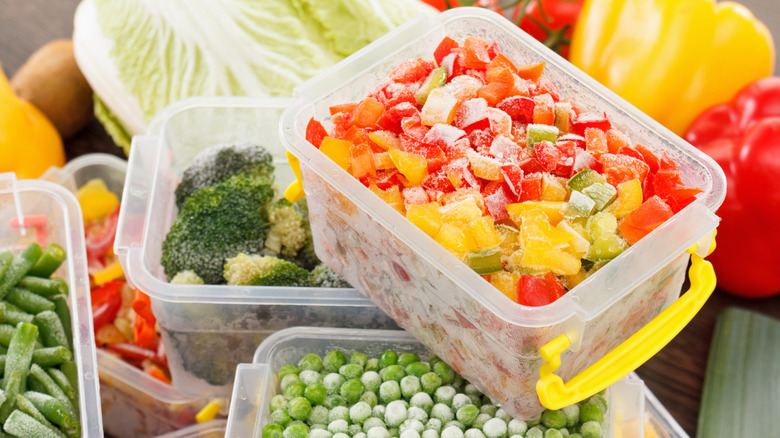
At the crossroads of quality and convenience, frozen vegetables are a godsend. Frozen vegetables are harvested and flash frozen at peak ripeness, preserving both their flavor and nutrient content. It's also fairly easy to get frozen vegetables crispy in the oven, making them perfect for nestling into rice, layering over pasta with strips of chicken, or adding to homemade pizza. Most advantageously, frozen vegetables also remain fresh for up to 12 months, making it easy to store your favorite veggies in bulk long-term.
Of course, that's provided they're kept at the proper temperature for all those months. Though cold protects your veggie's quality and severely reduces the potential for microbial and fungal growth, it doesn't stop the spoilage process entirely. This means it's crucial to keep your frozen veggies at 0 degrees Fahrenheit (or lower) to ensure they remain completely frozen at all times.
Higher temperatures may trigger them to thaw slightly, which can trigger a chain reaction to spoilage, which is why you should never buy frozen veggies stuck together in clumps. This indicates they may have thawed and refrozen at some point during transport, which may have fostered the right conditions for bacterial growth. In your home, things that may temporarily raise the temperature inside your freezer include a weak freezer door seal and power outages. Always carefully check your frozen veggies when things like this occur, discarding produce that smells off, has a mushy texture, or is frozen together in big clumps, as mentioned.
Tips and tricks to ensure frozen veggies are safe

The first tip for ensuring your freezer remains at or below zero degrees is making sure your freezer door seals properly. To test this, close your freezer door, then open and close your fridge door. If the freezer door "jumps" open, the seal is likely compromised since it should always stay firmly shut. You can also test the seal by attempting to open the freezer door with one finger. Again, if it opens easily, you need to replace the seal around the door.
Another tip involves freezing water inside a clear plastic cup (glass or ceramic can shatter). Place it near the front of your freezer with a coin on top, which falls if the ice begins to melt during an outage. This is an especially useful tip for gauging the safety of your food if outages occur when you're not home. If it's just a little below the rim, you're probably okay, but lower than that may mean you need to replace the food in your freezer.
Some final tips include keeping your frozen veggies in a sealed freezer bag rather than the bag from the grocery store, and storing them in the right place inside your freezer. Put them on one of the main shelves rather than on the freezer door since items stored on the door experience the most temperature fluctuations, which could cause your veggies to sustain freezer burn or spoil prematurely.