

Why Rice Water Is Much Better Off In Your Garden Than In The Trash
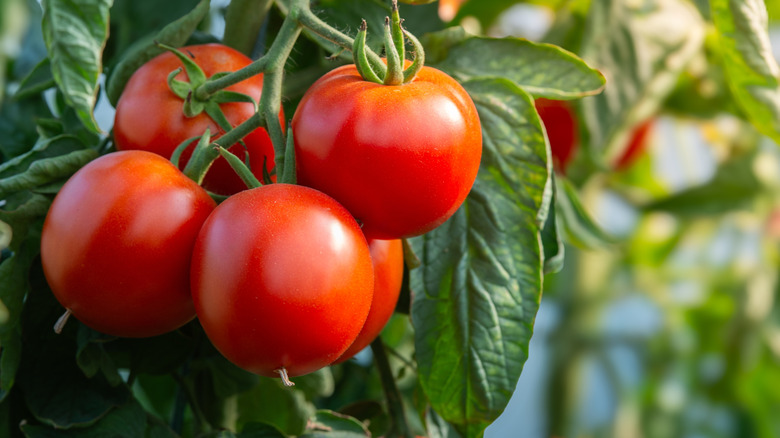
Whether you're making basic stovetop steamed white rice, prepping a base for paella, or gathering ingredients to make rice pudding, common wisdom states that you should (almost) always rinse your rice before cooking it. This process removes excess starches from the grains, which practically guarantees fluffy, tender rice. The only downside here is how much water is wasted in the process, especially since that rice water is infused with nutrients that can help nourish your garden.
While rice water isn't a replacement for traditional NPK (nitrogen, phosphorus, and potassium) fertilizers, it does contain small amounts of NPK that make it more nourishing to your plants than plain water. Additionally, it's packed with starches that can help feed beneficial bacteria and fungi in your garden's soil, which also indirectly benefits your plants. These benefits are amplified if you have the time and energy to ferment your rice water, as the fermentation process makes the nutrients in it more bioavailable to your plants.
Simply drape a tea towel over a jar of rice water and leave it in a cool, dark place for several days until it smells sharp and the cloudiness has faded. While unfermented rice water can be applied directly to your garden, fermented rice water is very potent and should be diluted with an equal amount of plain water. Whatever method you decide to use, much like saving the water from steaming veggies for your garden, this is a great way to conserve water for a more sustainable home.
Precautions and considerations for repurposing rice water
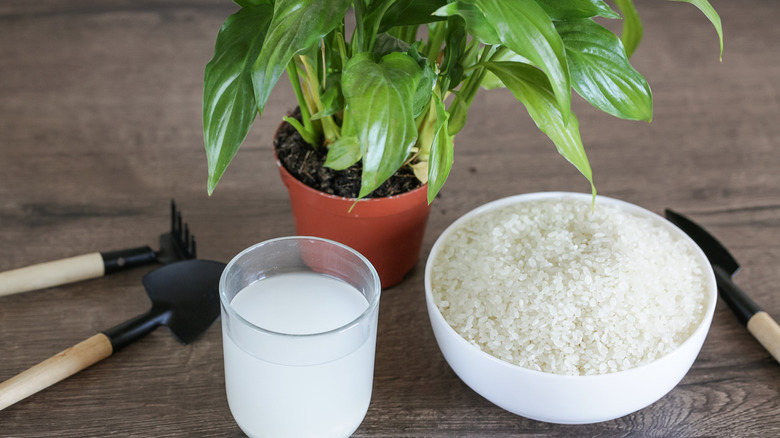
Since rice water does contain lots of starches and some nutrients, it can't completely replace plain water as a source of hydration for your plants. Too much of a good thing in the form of an overabundance of NPK can hurt your plants, while adding too much starch to your soil can foster mold growth or attract nasty pests. For this reason, it's best to use fresh or diluted fermented rice water in your garden about every three to four weeks. Since it contains nourishment that fosters rapid growth, it's also best to use it only in the period before harvesting. Once growth has slowed, stick to regular water.
Additionally, rice water is better for some plants than others, as different plants require different ratios of nutrients. Nightshades, such as eggplants, tomatoes, and various types of peppers; brassicas such as green cabbage and bok choy; and citrus, especially lemon trees, all grow fuller and produce more with the occasional infusion of rice water.
However, you'll want to avoid using fermented rice water on plants that prefer alkaline soil, and skip rice water altogether in hydroponic systems and potted houseplants. Rice water could disrupt the delicate microclimate in these fairly small, enclosed systems by oversaturating the plants with nutrients or — in the case of indoor plants — easily overwhelming the soil with starch. To protect your garden, try creating a list of plants you grow that would love rice water, and leave the rest alone.