

What Does The Little Fork And Wine Glass Symbol On Takeout Containers Mean?
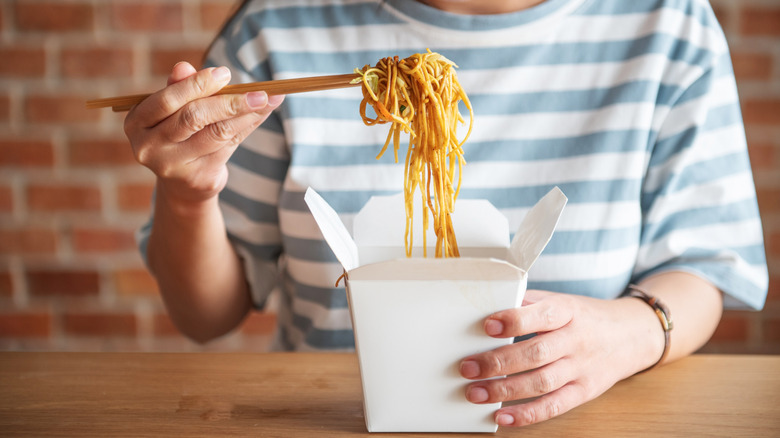
If you've ever looked closely at your takeout container, you may have noticed a small symbol of a fork and wine glass on it. You can also find this symbol on some reusable food storage solutions, yogurt cups, and drink bottles. This symbol indicates that the container is safe for direct contact with food and beverages, so long as you use it as intended. The symbol isn't mandatory to use in the United States, so not every food-safe container will carry it. If your takeout container doesn't have the mark, it doesn't automatically mean that it's not food-safe.
If you're unsure about a container that doesn't have the food-safe mark, you can dig up more context about its materials by looking for a separate symbol that features a number from one to seven within a triangle. That's called a resin code, and it indicates what kind of plastic it's made of. This symbol does not guarantee that the container is food safe, but a quick online search of the number you find inside the triangle will tell you to which type of plastic your container is made of. This offers major clues, as certain plastics are commonly used with food and viewed as more generally safe than others (but again, unless a container is marked as food safe, you can't know for sure). If you're able to pin down whether the container is food safe, the next step is determining whether it's safe for heating.
Food safe doesn't necessarily mean microwave safe
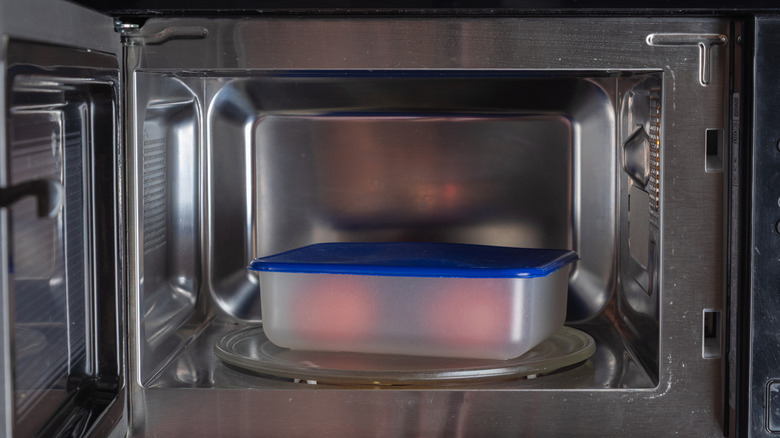
If you find out your container is food safe, your next question might be whether you can use it to reheat your leftovers, but some takeout containers really shouldn't be microwaved. For microwaving, there's a separate symbol to look out for: The microwave-safe symbol, which generally consists of either a rectangle icon, three wavy lines, or some combination of the two together. Heating food in the wrong container is a common microwaving mistake, and one reason it happens is because people sometimes assume that food safe equates to microwave-safe. It doesn't always. If you don't see the microwave-safe symbol on your container, you can also look back to the resin code for more clues. Resin code numbers 2 or 5 are usually considered safe to microwave.
You should avoid using non-microwave-safe containers in the microwave because in some cases, heat can expose your food to chemicals from plastic packaging. This could include things like bisphenol A (BPA) and phthalates, which some experts believe could cause endocrine disruption. This means they could interfere with your body's hormone regulation.
Another concern is microplastics, tiny plastic particles that make their way into food from surrounding packaging. We are all exposed to microplastics daily, but microwaving certain plastic containers can make that exposure higher. While this needs to be studied more, early research shows that higher exposure to these particles could lead to health issues. If you're not certain a container is food safe or microwave safe, move it to a container you trust (like a ceramic bowl or plate from your cabinet) before you eat it or heat it.