

The Right Oven Temperature For Perfectly Tender Cabbage Every Time
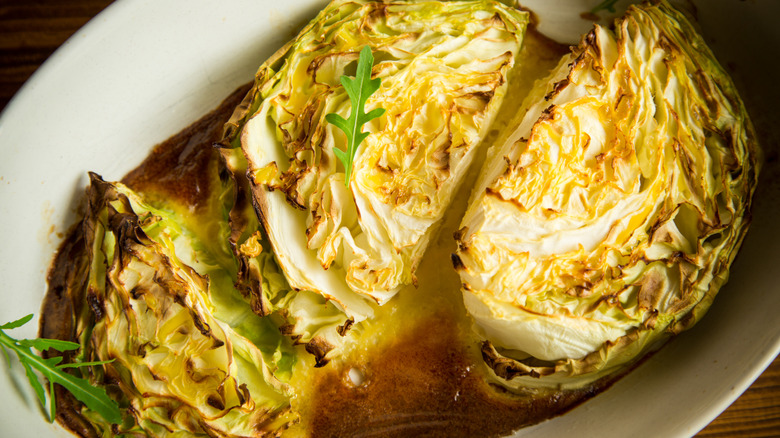
Cabbage can be a difficult vegetable to crack when it comes to achieving a perfectly cooked center, tender outer layers, and no burnt edges. Balancing oven temperature and cook time is the key. In general, for roasted cabbage wedges, medium-high to high heat and a short cook time will help you achieve a tender result. For cabbage steaks, aim for medium to medium-high, and give them a bit longer.
If your cabbage wedges are on the thinner side, roast them for 25 to 30 minutes at 400 degrees Fahrenheit. Flip halfway — this helps achieve even browning no matter what temp or cut style you're using. For wedges a bit thicker (roughly four equal pieces), you can aim for a solid 30 minutes at 450 degrees Fahrenheit. A high heat version is possible, too. Try roasting thinner wedges (about six to eight) at 500 degrees Fahrenheit for 20 minutes. The interiors will have enough time to cook through while the cabbage's natural sugars caramelize. Caramelization, along with the Maillard reaction, ensures a deep, savory flavor and nutty, sweet outer leaves. At this high heat, another alternative is steam roasting. On your baking sheet, cover the cabbage wedges in foil and cook for 20 minutes. Next, to get the slight crunch on the outside, uncover and cook each side for another five to 10 minutes.
Then there are cabbage steaks — slabs about 1 inch thick throughout. These are best cooked at 350 to 400 degrees Fahrenheit for 45 minutes to an hour, turning at the halfway point. They're done when tender enough for a fork to go right through them and the edges are as brown as you like.
Other tips for the perfect cabbage
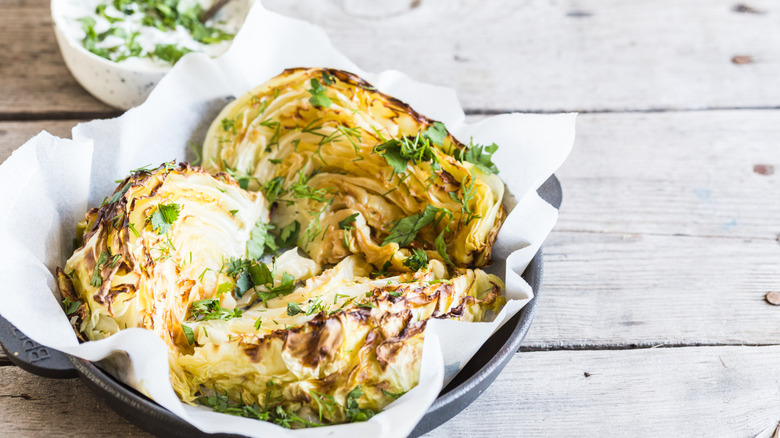
While oven temperature is important, you'll also want to consider ways to prevent your cabbage portions from falling apart and ruining the look of your beautiful roasted slabs. First is to choose the best type of cabbage for roasting. Make sure to grab green, red, or savoy cabbage. Avoid roasting napa cabbage as it tends to be delicate and will fall apart easily. When sectioning up your cabbage, leave the core intact so that the slices stay attached to it, and cut off the base of the stem. Of course, no matter how strategically you cut, flipping is a risky time for the integrity of cabbage steaks — especially tender ones. Make flipping a two-hand job with a thin, wide spatula and tongs.
Roasted cabbage is often cooked with flavorsome oil, but there's another option to enhance the taste of your vegetable: leftover bacon grease. This common kitchen discard gives your cabbage the same coverage and aids in the roasting process like cooking oil would. It also elevates the dish with added smokiness and a savory flavor boost. Additionally, this is a cost-effective, environmentally friendly way to utilize rendered fat from your breakfast. Simply strain through a coffee filter, cheese cloth, or fine mesh strainer before storing your bacon fat.
An alternative way to incorporate additional flavor while keeping the dish vegetarian is to sprinkle Parmesan cheese on top toward the end of the roasting process, just about 10 minutes before it's ready. Parmesan is a rich source of umami, the essence of the savory taste. Imagine that infused into your super-tender roasted cabbage — it's a dish you'll come back to again and again.