

Why Aldi Carries So Many German Products
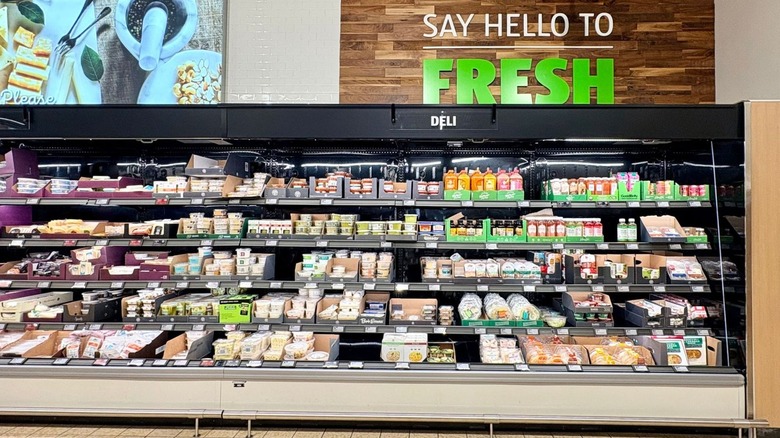
Aldi is the fastest-growing grocery chain in the United States, but its founders aren't from around here. As a grocery chain that offers affordable European chocolates, many from Germany, and a cache of traditional German foods, you might get the correct impression that Aldi is a German company. But since it's a grocery store operating in the United States, you also might wonder why and how Aldi can offer so many German products.
Aldi sells so many German food products because of both its heritage and its business model. Selling German food is one way Aldi celebrates its roots. You can witness this at the German Week events hosted by the store in the spring and fall (during Oktoberfest), when Aldi has sales on specialty German products for limited time periods. In a thread on Facebook, German shoppers who live in or are visiting the United States have raved about the authentic German products at Aldi.
Aldi has operated in Germany for almost a century, and it has developed direct relationships with German vendors and food producers, from which it buys products directly as part of its business model. According to the Observatory of Economic Complexity, which provides visualizations of economic data, Germany accounted for the largest share of Aldi's imports in March of 2026, which made up 54.8% of the total shipment count, though the number may vary by month.
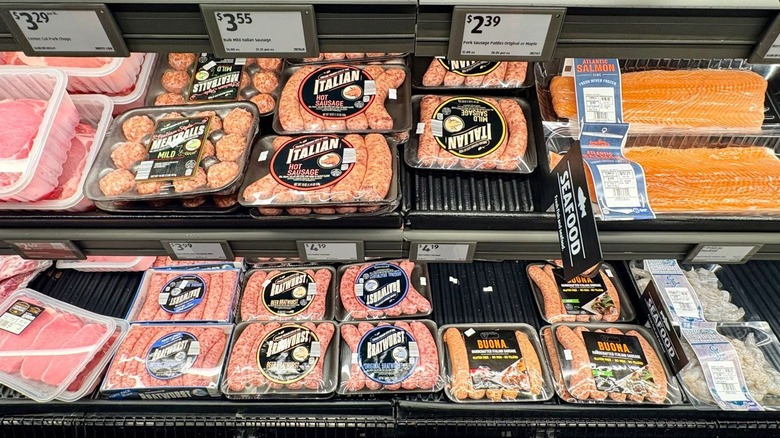
Aldi sells products from numerous suppliers, so just because something's technically German doesn't mean it's definitely imported from Germany. So if you'd like to know whether a product is really German, check the label for little seals that read either "Imported from Germany" or "Inspired by Germany."
A business model that works for U.S. shoppers
The lore behind the Aldi name is that it's a shortened combination of two words from the original name of the discount market, Albrecht (Al) Diskont (Di), which was founded in Essen, Germany, by Anna Albrecht in 1913. Albrecht's sons, Karl and Theo, took over the family store in 1948, and after years of growth at home and abroad, Aldi launched its first U.S. location in the state of Iowa.
The way Aldi does business is modeled on its discount store roots, which were very successful in a post-World War II Germany. The frugal Albrecht brothers envisioned people having the opportunity to purchase quality food at affordable prices. To accomplish this, they maintained a small inventory of private-label products, mostly non-perishable items, and monitored sales closely. Aldi kept only products that sold, and eliminated what didn't. Because of this, Aldi didn't need to advertise to sell excess products, which in addition to having a simple, warehouse-style store, allowed Aldi to maintain a low overhead and an efficient operation. By keeping expenses low, Aldi was able to pass the savings on to its customers.
Aldi brought these lessons, learned during a time of economic hardship in Germany, to the U.S. to offer quality products, mostly private-label, to budget-conscious shoppers. This low-cost, no-frills business model has helped the company stand out with their loyal customer base.