

What Exactly Does It Mean When Food Is Halal?
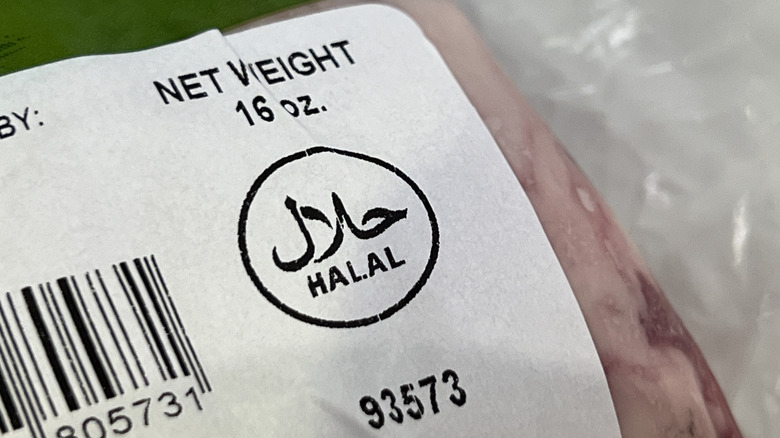
Chances are you've seen the word "halal" to describe a restaurant or a package of meat at a grocery store. You may have a rough sense that it's connected to Islam, but for those who don't follow a halal diet, the ins and outs are less well known. So here are the basics. The word "halal" is Arabic for "lawful" or "permitted." Its opposite is "haram," meaning forbidden. While these terms are used in other situations, in the context of food, calling something "halal" designates that it's acceptable for Muslims to consume. The rules come from two sources: the Quran (Islam's holy book), and the Hadith, the sayings and actions of the Prophet Muhammad, the founder of the religion.
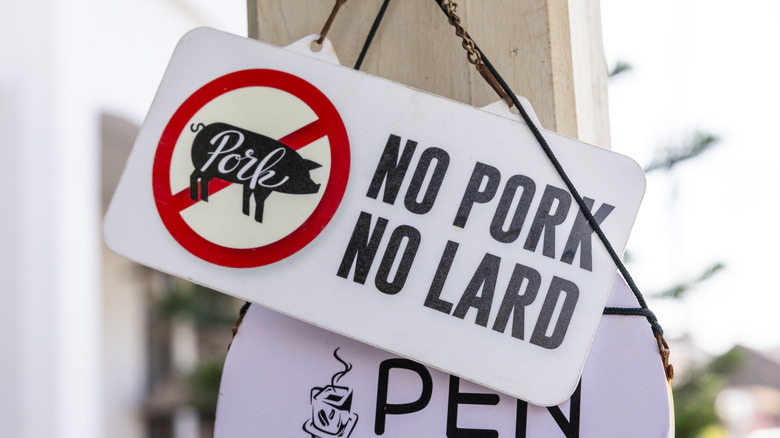
So, what's off the table? All pork products are strictly forbidden, and the same for alcohol, including anything prepared with alcohol (even if it cooks off). Blood in any form is a no-go, as are carnivorous animals. Beyond these categories, most foods, such as fruits, vegetables, and grains, are inherently halal. For example, there's effectively no such thing as non-halal rice or potatoes. Meat and seafood is where you'll find more restrictions on halal food.
Starting with fish — although halal is sometimes compared with kosher law (foods that are permissible for Jewish people to eat), halal diets are less strict on seafood. While kosher law only permits Jews to eat fish with fins and scales (shellfish is off the table), Islamic dietary law generally considers all seafood halal — although there's some debate between theologians on this point.
Halal meat, explained
The food category where halal rules get the most complicated is meat. Meats allowed in halal diets, such as beef and chicken, aren't automatically halal since they need to be raised and slaughtered in specific ways to qualify. Animals need to be well treated before slaughter: This means well fed and watered, without injuries or health problems, and not subject to cruelty.
For slaughtering, a method called dhabiha (sometimes spelled zabiha) is required. It involves a quick, deep cut across the front of an animal's neck with an extremely sharp knife. Before each animal is killed, the slaughterer must also recite a ceremonial religious phrase. Finally, the animal's blood must be totally drained before consumption. There's a parallel here with kosher meat, which has a similar (but not identical) set of requirements. Both dietary laws require slaughtering that ensures a quick, humane death, and both forbid pork. The United States Humane Slaughter Act considers both kosher and halal slaughtering methods as humane and generally acceptable.
For those following a halal diet, they'll need to find meats with a "halal certified" label. This certification is done by private Islamic organizations, including the American Halal Foundation. These organizations often have a logo on food they've certified. If you're not Muslim, it's still completely acceptable to eat halal food — in fact, since many foods are so easily certified, you've almost certainly eaten it before. One of New York City's most iconic dishes is even notably halal.