

The Garden Pest That's Causing Mysterious Holes In Your Cabbage And How To Stop It For Good

We may receive a commission on purchases made from links.
Inspecting your cabbage and finding holes in the leaves is a nightmare sighting for most gardeners. If you've battled with holey cabbage, you probably know it's a sign that cabbage worms (i.e. caterpillars) have gotten a hold of your veg. The good news is there are a few easy ways to identify the bugs and make steps towards correcting the issue.
Cabbage worms are identifiable by their bright green fuzzy caterpillar form. When cabbage white butterflies lay eggs on the bottom of cabbage leaves, these caterpillars grow and eat holes through them. They're usually found on members of the brassica family, including cabbage, kale, collard greens, cauliflower, and broccoli.
Sometimes, dealing with harmful insects ruining your vegetable garden can have some unexpected solutions. In the case of caterpillars, the most effective solution is to reach for a form of bacteria called Bacillus thuringiensis (aka, B.t.), such as Monterey B.t. This insect killer works against worms and kills them quickly, but is safe for beneficial insects and wildlife. Simply dilute with water and spray all over the vegetable leaves to put an end to the infestation. Planting the cabbages early in spring also gives you a head start to let them grow before the season when the pests are most active (between May and October).
Other ways to stop cabbage worms from ruining your cabbage
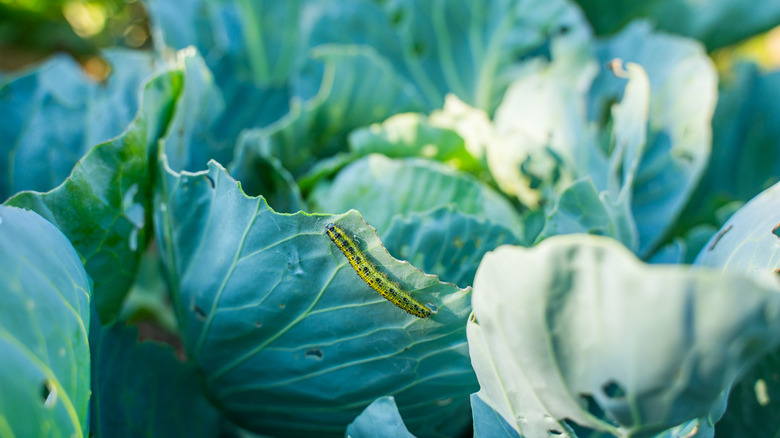
There are several hacks to keep pests away from your vegetable garden so you can reap the benefits for your home-cooked meals. A long-term solution is to ensure you strategically plant crops that attract beneficial bugs that ward off cabbage worms, including green lacewings, damsel bugs, hoverflies, and parasitic wasps. These eat the eggs and worms left on the leaves. Planting marigolds and nasturtiums aids in attracting these bugs. Another alternative is to plant purple cabbage, which is a difficult veg for caterpillars to camouflage with since their vibrant green stands out. Butterflies know this, and don't plant their eggs on the vegetable since they're too visible to survive against predators.
If your garden setup allows for it, add floating row covers to protect your cabbage, which prevent butterflies from landing on them. Just be sure it's big enough to be pinned to the ground, and that the wind isn't constantly blowing it open; otherwise, it leaves your cabbage vulnerable. Some Redditors swear by using butterfly and moth nets for smaller garden setups. It's especially useful for crops from the brassica family that require protection from pests, but still require air, rainwater, and sunlight, all of which is available through the tight mesh netting. Finally, you may wish to look into planting cabbage varieties that mature faster, including Chinese cabbage, golden acre, and red express; these fast-growing varieties grow smaller cabbage heads, but mature before cabbage worms infest your crops.