

You Should Stop Buying Pricey Produce At The Grocery Store And Join A Farm Share Instead
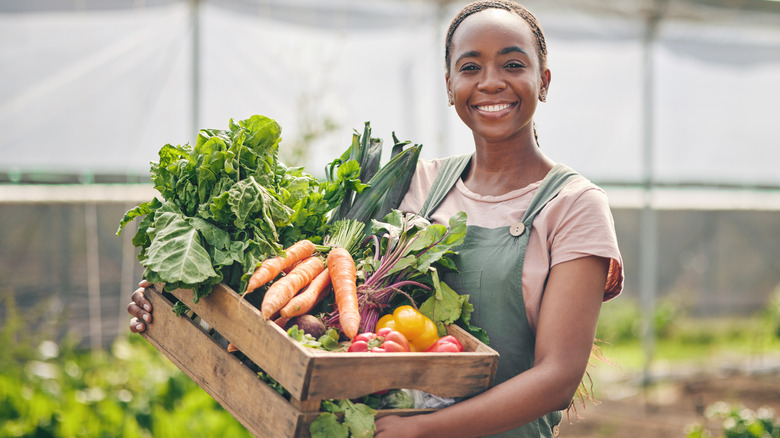
You've probably noticed by now that grocery store prices have gotten seriously expensive lately. Inflation, supply chain problems, bird flu, climate change, and other issues are wreaking havoc on our commercial food supply, and even worse, it seems like many of our favorite packaged products and portion sizes are experiencing shrinkflation. Produce and meat are not immune either, and it's becoming more common to bring home fresh items that spoil faster or lack the quality we've come to expect. If you're nodding your head at all of that, it might be time to leave the grocery store life and get a farm share.
If you've never had a farm share, the business model is pretty simple. It is a way of buying food directly from a local farm by purchasing a share of the harvest at the beginning of the growing season. Most farms charge a flat fee of a few hundred dollars, which they use to cover the cost of planting, equipment, and the labor needed to maintain the farm throughout the season. In exchange, you are entitled to a portion of the food the farm produces, which is distributed either by pickup at the farm or via delivery at least once or twice a week (although some farms let you come and shop like a store and keep a running tally of what you take).
How farm shares can be cheaper than grocery stores
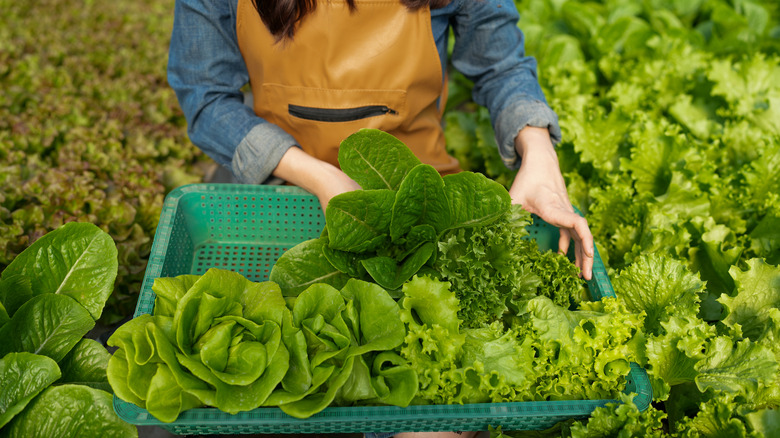
Farm shares, which are often called community supported agriculture (CSA) programs, are available in many towns and cities and come in a wide range of sizes, budgets, and options. Some farms offer crates or bags of seasonal fruits and vegetables, while others might offer meat, eggs, or even fish (depending on your locale). These programs are a great alternative to traditional grocery shopping for a number of reasons. Not only are the products grown locally, so they're fresher and last longer, but buying a farm share can often be a better deal than paying retail at the grocery store, and you won't have to shop at multiple grocery stores to get better deals.
Because you pay up front for the farm-grown food, it can be hard to compare apples to apples in terms of whether you're getting a better deal at a farm share as a consumer. There is growing evidence, however, that farm share food is significantly less expensive than buying similar items at the grocery store, sometimes as much as 25% to 50% cheaper, or a $250 to $300 savings over the course of the season, because you're buying direct and don't have to cover the costs of distributors, wholesalers, and retail markups. Also, since the local food is fresher, it lasts longer than items from the grocery store, which helps to reduce food waste.
What to keep in mind before joining a CSA
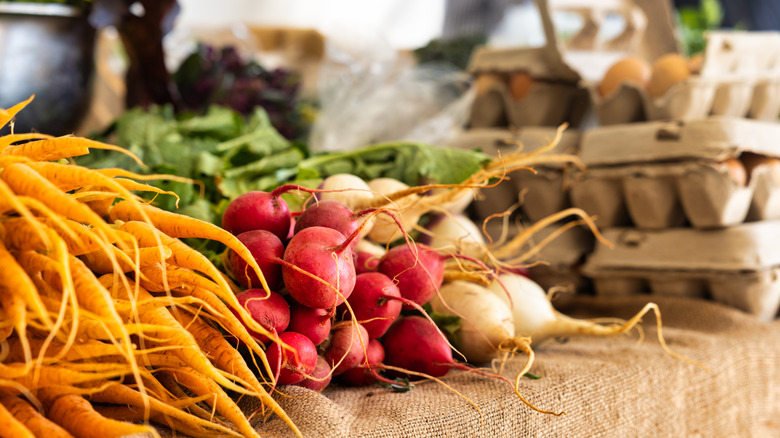
Another way that a CSA can save you money is by insulating you from market fluctuations since everything is paid for at the beginning of the growing season. If the bird flu sweeps the commercial chicken farming industry, or there's a hard freeze in California's central valley, your local eggs and lettuce stay the same price no matter what, which can be an overall better value.
Farm shares are not without their downsides, however. The upfront costs are usually between $100 and $800, which can be a lot for many working families. You also need to be able to eat all of the food you get in your weekly share; otherwise, it goes to waste. To ensure that you use it often enough for it to make sense financially, shop around to the different farms in the spring to find a share that has the things you need, a weekly distribution size that you can comfortably manage, and a pickup day that works for your schedule.
If you're not sure if you'll use all the food in a farm share, try splitting it with a friend or another family. Each of you can pick and choose what you want from the box, and your initial buy-in will be cut in half. That'll leave a little extra money in the budget for any extras that the farm might offer through the season, like fresh bread, flowers, and even Christmas trees!