

Why There's Rice In Restaurant Salt Shakers
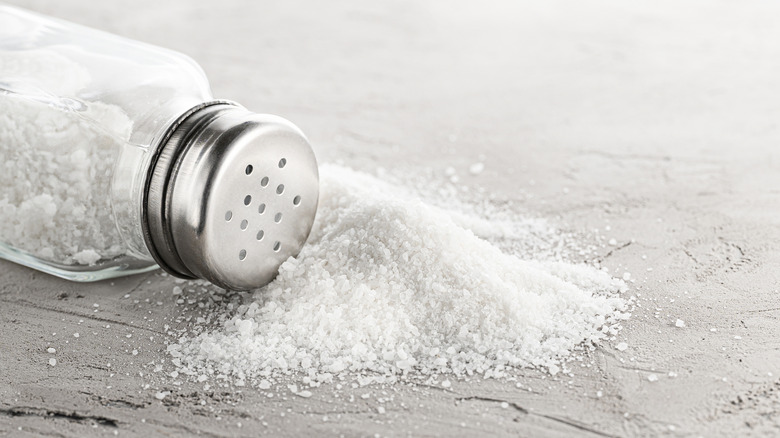
If you've ever eaten in a local diner, tiny pizza joint, or any other casual restaurant in the United States (especially in the South), you've likely noticed grains of rice intermingled with the salt inside the clear glass shakers. It was once a prevalent practice, but now with fewer restaurants offering salt and pepper shakers at the table, it's somewhat less of a phenomenon. The truth is, the rice in your salt shaker isn't an indication that someone was careless while measuring out grains for stovetop steamed white rice — it's absolutely there on purpose.
As you may know, salt is a crystal that absorbs moisture easily and can dissolve when combined with it, hence why it flavors our food so easily. On touching the moist surface of a scoop of mashed potatoes, grilled chicken, or scrambled eggs, the salt crystals dissolve and distribute evenly across the surface of the food. Unfortunately, if a salt shaker isn't completely dry when it's filled, or if it's stored in a humid area, this same salt trait can cause big, solid clumps to form inside the shaker. It dissolves, dries, and sticks together, making it impossible to shake onto your food.
Putting rice in the shakers before filling them with salt solves this problem, because the grains are capable of absorbing a lot of moisture without dissolving. That way , the rice can create a nice, dry environment that prevents the salt from clumping. This leaves the tiny salt crystals free to flow easily out of the perforated cap and onto your food.
Using the right rice + understanding salt vs pepper
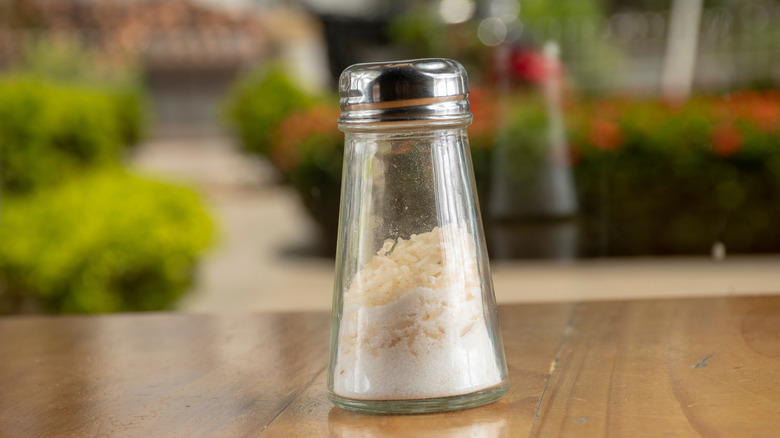
If you've ever fallen prey to clumpy salt gumming up your shaker at home, this professional trick may be a useful one for you, especially if you believed one of many myths about salt: the (false) belief that it doesn't matter where salt is stored. Cooking steam from your stove can easily get into your salt shaker and cause clumps. To remedy this, put a little less than a teaspoon of rice in your shaker, fill it as usual, and shake the container gently to distribute the rice.
Though this hack is extremely simple, it's worth noting that the type of rice you use matters. Brown, wild, black, or any other rice besides white won't absorb moisture as well because the fibrous outer layer, called bran, is still intact. White rice has the bran removed, exposing the more absorbent layers underneath. Not to mention, white rice is often much cheaper than the other types of rice mentioned, so it's best to save your fancy rice for cooking instead.
Additionally, while it's not exactly a mistake to put rice in your pepper shaker as well, it's honestly just a waste of rice. Unlike salt, ground black pepper is not a crystal, and it doesn't absorb water as readily. In fact, it naturally contains oils that can help keep it from sticking together quite as much as salt does. Though it can still clump slightly, a firm shake or two should be enough force to break pepper up and get things flowing again.