

Skipping This Step Before Planting Sweet Potatoes Can Ruin Your Harvest
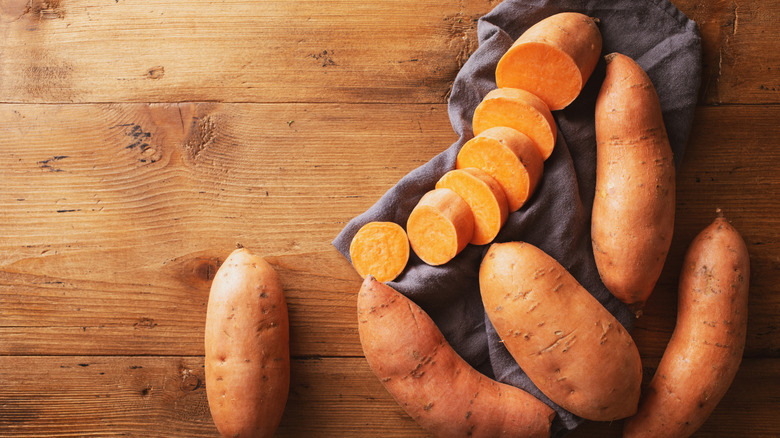
Sweet potatoes are one of the most flavorful veggies ever. They're sweet, mild, and naturally starchy, which means they match beautifully with a hearty steak and excel when stuffed with some cheese, bacon bits, and green onions. But when growing them in your own garden, there's one particular step — hardening off – that you should never skip.
The practice involves bringing sweet potato slips (rooted sprouts) outside in late spring. You then need to leave them in a partially shaded area for a few days before gradually exposing them to the sun. In an exclusive talk, Juan Anciso, PhD, a professor in the Department of Horticultural Sciences at Texas A&M, noted this process is absolutely essential. "If you skip this process then several of potato slips may not survive the transplant shock and they will die," Anciso told Chowhound. "Not all will die but a higher percentage will if you had not hardened them off."
Anciso, who is also a vegetable specialist at the Texas A&M AgriLife Research and Extension Center in Weslaco, emphasized the importance of the method. "Hardening off of any plant (edible or not) means a gradual exposure to the sun and wind as these plants are coming from greenhouse conditions with reduced sunlight and wind," he explained. He also shared some great tips on how to grow sweet potatoes for a plentiful harvest all year long.
Hardening off sweet potatoes to reduce transplant shock
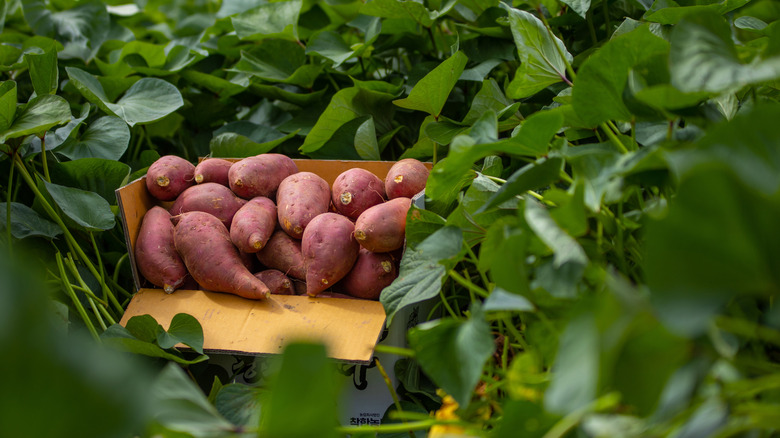
When asked how to properly harden off sweet potato slips, Juan Anciso proposed easing them into outdoor conditions over several days. "This is typically done for three to seven days where the plants are taken out of the greenhouse and placed in full sunlight and wind starting with a few hours and increasing the time outside to eight hours before planting," he explained.
Once the process is done, the slips are good to go. "They will be ready to plant after this time period, but leaves will not have that tender green look to them," said Anciso. You can prepare to harvest your homegrown sweet potatoes roughly three to five months later. On that note, here's how to tell when sweet potatoes are ready to harvest without digging too soon. Once picked, you can finally try out the fast, easy hack for the absolute best baked sweet potatoes you've ever made.
Finally, on what home gardeners can do to reduce transplant shock, Anciso stated hardening off the slips is the simplest and, at the same time, most effective step to a successful harvest. "Otherwise, [you] will have to monitor the plants closely and water more to keep those non-hardened off plants alive," he concluded.