

How To Grow Plump Blueberries Without A Garden

Even if you don't have room for a full garden, there's nothing stopping you from growing your favorite fruits and veggies inside. Listed among the easiest fruits to grow in a small garden, blueberries are the perfect place to start. Those in small apartments or in urban spaces lacking arable land can still reap all the benefits of growing beautifully plump blueberries in containers indoors, provided you have just a little creativity and determination.
Before you get excited about having fresh blueberries for your bakery-worthy blueberry pie recipe, it's important to remember your plants won't produce right away. Even properly planted in an acidic growing medium (ideally a blend of potting soil with peat moss mulched with pine bark), blueberry shrubs may take up to five years to fruit. Still, you can enjoy the beauty of the leaves and flowers as they grow, watering lightly and frequently to keep the soil moist but not soaking, as blueberries dislike soggy roots.
It's also more likely you'll be successful growing blueberries indoors if you choose the right cultivars, particularly low-growing, clumpy, dwarf varieties such as Top Hat, St. Cloud, or Polaris. These varieties are either "low" or "half-high," meaning they're smaller than typical cultivars and better suited to growing in pots. Even so, blueberries still need plenty of room to spread their long, spindly roots, thriving best in containers 5 gallons (or larger) with wide, flat openings to ensure they have lots of space to spread their leaves and gather light.
The right soil and sunlight
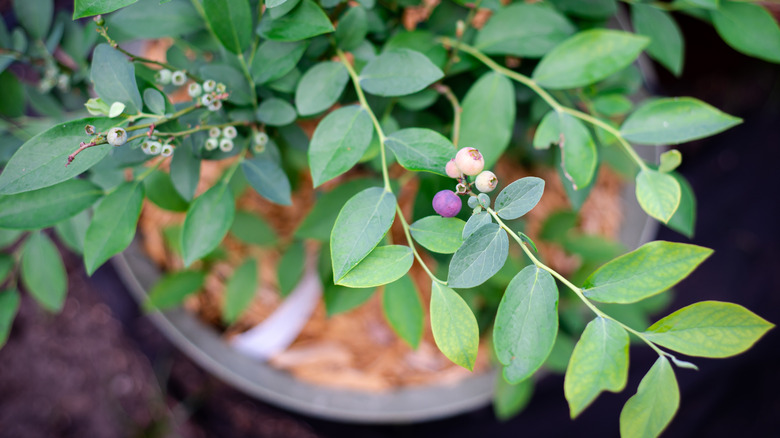
Any window in your home that receives full, direct sunlight for the majority of the day is the perfect place to park your indoor blueberry plants. South-facing windows will likely be best if you live in the northern hemisphere, while north-facing windows receive the most sun in the southern half of the globe. If the leaves on your plant show signs of scorching (brown, crisp edges or spots), you may need to shield them from strong afternoon rays with sheer curtains or another window covering that filters the light slightly. This is especially important for the low-bush cultivars you'll most likely be growing indoors.
As mentioned, blueberries also require well-drained soil to avoid root rot, which is easier to prevent than it is to remedy. In addition to adding perlite to your soil-peat mix, you can also place a coffee filter over the drain hole in the bottom of the container. This allows things to drain freely without pulling any of the soil out of the pot and making a mess, or depriving your blueberries of necessary nutrients.
Speaking of nutrients, your blueberries may benefit from a slow-release, acidic fertilizer early in the growing season. Following these guidelines, along with keeping your home no cooler than about 65 degrees Fahrenheit, should create the perfect conditions for indoor container blueberries to produce beautifully plump fruit. Half-high cultivars, such as the one you'll be growing indoors, produce about 4 pounds of fruit per year on each bush you plant.