

This Is What Happens When You Crank Your Slow Cooker Up High To Save Time
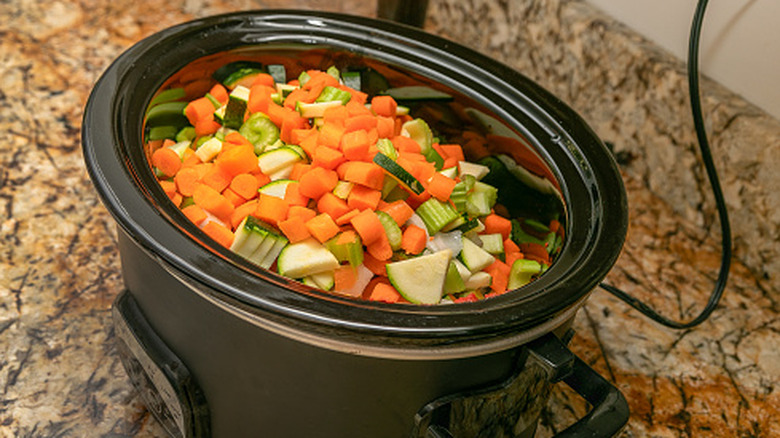
Picture it: It's 4 p.m. and you'd really, really love some easy slow cooker pulled pork, buffalo chicken dip, or another easy-peasy slow cooker meal. The problem? You've waited too long to get it started. It's tempting to crank your slow cooker up to high (even if your recipe calls for cooking low and slow), but it might not be the best call. It turns out that sometimes, using the high setting on a slow cooker when a recipe calls for the low setting can negatively impact both the texture and flavor of your food.
In order to understand why you can't just crank up the heat and get the same results when it's set to low, it's important to understand how a slow cooker works. When you choose the high setting, you aren't actually cooking food at a higher temperature. Rather, you're changing the amount of time that it takes for the slow cooker to reach its cooking temperature. This means the ingredients in your slow cooker will end up at the same temperature eventually, whether you cook them on high or low. It's generally recommended to cook red meat on low to get the most tender result. If you ramp up the setting despite the recipe's instructions to keep the slow cooker set to low, you run the risk of creating a tough result that may not be fully cooked on the inside. The faster cooking time also doesn't allow flavors to meld, potentially creating a dish that doesn't quite reach its potential.
How to effectively speed up slow cooker recipes when you're in a pinch
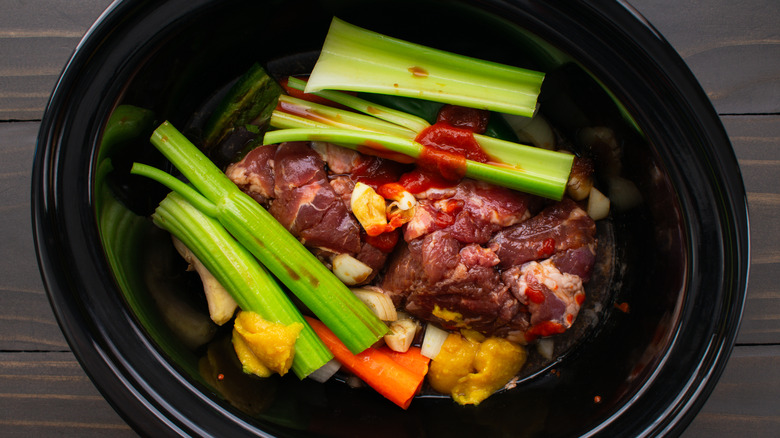
One of the first rules of slow cooking on low: If you don't want it to take forever, thaw your meat first. Using frozen meat is one of the most common slow cooker mistakes. While some recipes recommend placing frozen meat directly in the slow cooker, it extends cooking time and isn't the best option when it comes to food safety. If you forgot to move your frozen meat to the fridge to thaw (we've all been there), all hope isn't lost. You can place your meat in a sealable plastic bag, then place it in cold water to thaw. While it'll still take some time, your frozen meat will thaw far more quickly than in the fridge.
If you're making potatoes or root veggies in your slow cooker, you can seriously cut down on cooking time by parboiling them first. Bonus: Parboiling your potatoes can make it easier to get a nice, fluffy texture. Prepping slow cooker meals in advance and freezing them (then thawing them in the fridge the night before or via a cold-water bath) can also be a major time saver. A little bit of planning ahead goes a long way when it comes to efficient slow cooking — and can save you from the less-than-great texture and flavors that can come from cranking your slow cooker up to high when the recipe calls for the low setting.