

For Flavor Bomb Fried Eggs, Swap Butter For One Popular Fat
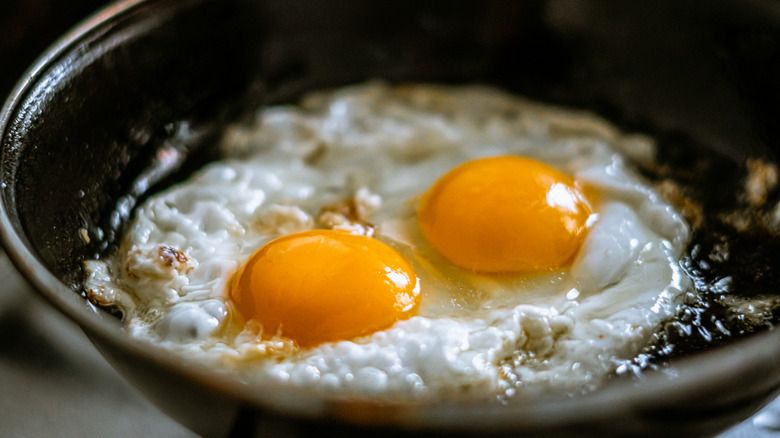
Eggs are tasty, satisfying, and absolutely delicious, whether you scrambled them with diced ham and cheddar , transform them into a flavorful mushroom and cheese omelette, or fry them sunny-side up and serve along with your favorite veggies. However, regardless of how you decide to prepare them, butter is the one ingredient that truly makes them stand out. For instance, swapping cooking oil for butter is one of the secrets for making the best scrambled eggs. It makes them creamier, richer, and beautifully buttery. But if want to make them even tastier (or you're out of butter), consider cooking them in beef tallow instead.
In essence, beef tallow is rendered beef fat. It contains less saturated fat than butter (though its saturated fat content is largely the reason why people stopped using it in the late 20th century). What truly makes it special, however, is its taste, which is slightly nutty, umami, and beef-like, and will add a whole new savory depth to the eggs.
At the same time, beef tallow's high smoke point (about 420 degrees Fahrenheit) is another reason it's been regaining its popularity lately. The higher the smoke point, the more heat it can handle before it starts to burn. This actually means that the eggs will cook evenly at higher temperatures, and will get nicely browned edges while still remaining tender and flavorful on the inside. In the end, beef tallow will add a bit of crispness to your eggs while infusing them with a subtle savory flavor that doesn't overpower anything.
Cooking eggs with beef tallow is easier than you imagine
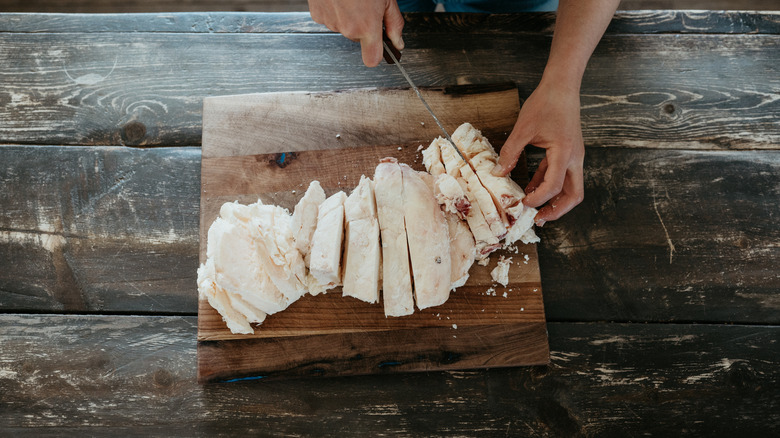
Cooking eggs with beef tallow isn't that much different than cooking them with butter. Just grab your favorite skillet and add a tablespoon or so of beef tallow, letting it melt evenly before you crack in the eggs. You can let them cook sunny-side up, or stir them with a spatula to get super soft scrambled egg curds. The savory, umami-rich flavor from the beef tallow will likely make it difficult to go back to butter or vegetable oil again.
As with most cooking fats, it's important to keep in mind that there are pros and cons of cooking with beef tallow. As we mentioned earlier, beef tallow may have less saturated fat than butter, but it still contains up to 50% of it. This can increase the so-called "bad" cholesterol, and as a result, put your heart health at greater risk. So it's best to use it occasionally rather than every day. On the flip side, however, its high saturated fat content means that once it cools down, beef tallow solidifies. This means it can be easily stored at room temperature and reused in other dishes.
Ultimately, although it isn't a vegan or vegetarian-friendly option, beef tallow is still a sustainable fat. The reason for this is that it supports the nose-to-tail eating approach, which aims to use every part of the animal instead of letting it go to waste. So go ahead and give beef tallow a try the next time you whip up some eggs.