

The Tomato Watering Tip Beginners Need To Know For Blight-Free Blooms
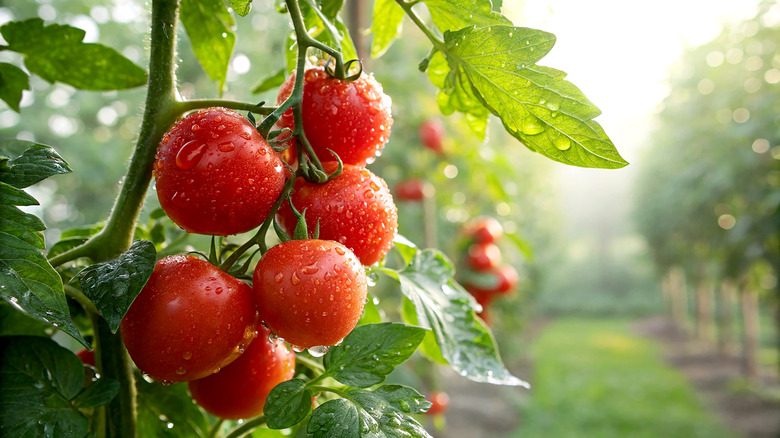
There are few things more satisfying than making a batch of your favorite creamy roasted tomato soup recipe with tomatoes harvested from your own garden, as they're guaranteed to be sun-kissed fresh. Each bite is just a little bit tastier from the effort of nurturing each seedling in the sunlight, defending your tomato plants against hornworm infestations, and — possibly most important — mastering the art of watering them at the base to protect the leaves from disease and prevent them from developing blight.
Tomato blight is an insidious fungal infection that often shows on the leaves as yellow and brown spots, which gradually spread, withering the leaves on your plant until they fall off. Early-onset blight can also rot tomato plants on the stem from the inside out. Since it's virtually impossible to eliminate once it begins to spread, the best cure is prevention. As overhead watering from hoses and sprinklers causes excess moisture on the leaves, it's best to avoid these techniques entirely, as wet leaves are one of the main culprits for causing late-onset blight.
Instead, water each tomato plant at the base with a slow, gentle stream of water to help saturate the soil deeply to ensure your plants develop strong roots. Not only does this technique keep the leaves dry and dramatically reduce the chance of them developing blight, but it also ensures your tomatoes are well hydrated. Water pooling on leaves is more likely to evaporate instead of hitting the soil, which can leave your tomatoes high and dry.
How to properly water tomato plants
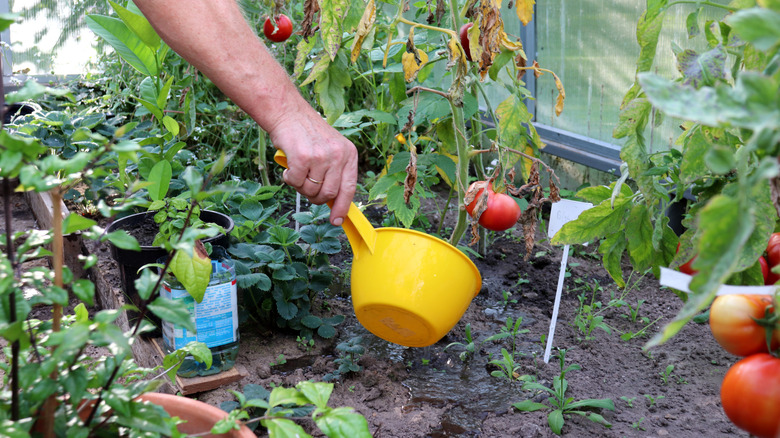
Tomatoes love a good, long drink of water, requiring moist soil to bear fruit worthy of making the best tomato sandwich of your life. Seeds and seedlings should be watered every few days, especially if the soil around them feels dry. Once transplanted into your garden, aim to saturate about six inches into the soil for their first drink, then water every few days or when the surface of the soil feels dry. It's also a good idea to avoid watering after a rainstorm and check on them more often when it's sunny and temps are high.
Keep a close eye on your plants' leaves to tell whether they're over or under-hydrated. Shriveled leaves indicate your tomatoes need more water, while yellow leaves indicate their roots are likely soggy. Dehydrated plants can be revived with a little extra watering, but overwatered ones may need to be replanted into dry soil so you can start over with the correct watering technique.
If you can't get outside regularly, try using empty soda bottles to create a simple irrigation system. Fill one bottle per plant with water and quickly flip it upside down, jamming the opening into the soil. Alternatively, you can pierce holes in the bottom of each bottle and place one at the base of each plant. Both techniques allow water to dribble slowly into the soil as needed, reducing how much you need to water them manually.