

Contrary To Popular Belief, Boiling Your Sweet Potatoes Offers This Nutritional Benefit
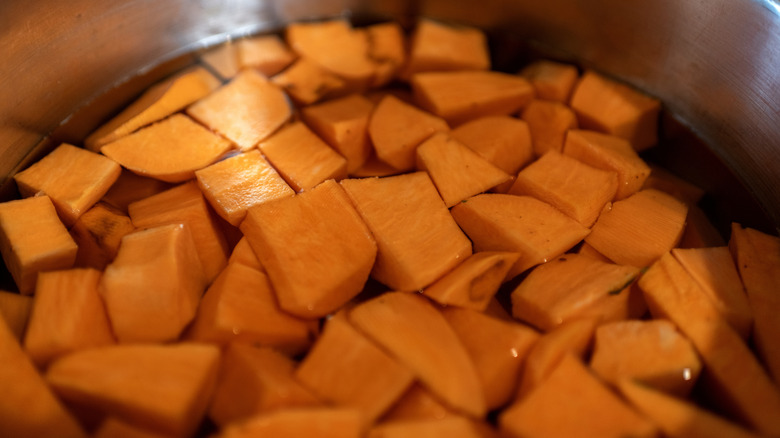
Whether you're working to hit personal health goals or simply trying to maximize the nutrient content of the veggies you enjoy, you may have heard boiling vegetables can lower the number of vitamins and minerals in your spuds. While studies show this is true for some vegetables, sweet potatoes are a little tricky — and it turns out boiling them may not be the worst idea. Jennifer Pallian, registered dietitian and founder of Foodess, talked exclusively with Chowhound about what you need to know to choose the best sweet potato preparation method for your needs.
"Boiling isn't automatically 'better' than other cooking methods for sweet potatoes," Pallian said. "It depends on what you're trying to optimize." One study showed boiling sweet potatoes enhances beta-carotene accessibility, which becomes vitamin A in the body, providing a ton of health benefits, like boosting your immune system and preventing cardiovascular disease. The science isn't totally cut-and-dry, however. "Nutrient loss depends on cooking time, temperature, food size, and whether the cooking liquid is retained," explained Pallian. Water soluble nutrients — like vitamin C — are more likely to dissipate in water. Whether it makes more sense for you to boil, roast, or steam your sweet potatoes doesn't just depend on your health goals — it also depends on your tastebuds.
Tips to create great boiled sweet potatoes that don't turn out watery
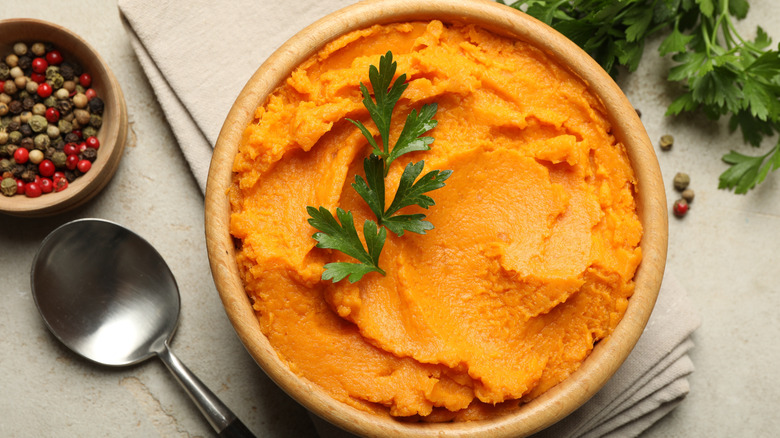
If you feel like it's usually a mistake to boil sweet potatoes, you're not alone — but there are some steps you can take to improve the texture and consistency of your sweet spuds. "Boiling changes sweet potatoes in noticeable and measurable ways," explained Jennifer Pallian. Water content shoots up quickly, and if you're not careful, you can end up with a mushy, watery result. Paying close attention to your sweet potatoes during the cooking process is key, according to Pallian. "To keep boiled sweet potatoes from becoming bland or watery, cook them only as long as needed and avoid overcooking," she recommended. Leaving the skin on can help your sweet potatoes retain flavor during the boiling process (getting rid of the skin is actually one of the most common sweet potato mistakes) — Pallian suggested giving them a solid scrub first.
Not a fan of boiled sweet potatoes? When it comes to vegetables (and yes, sweet potatoes do officially count as a vegetable), even the healthiest preparation is pointless if the veggies on your plate (or on your kiddo's plate) go uneaten. If you love the taste of boiled sweet potatoes, by all means, enjoy that extra beta carotene. If you prefer your sweet potatoes roasted or baked instead of boiled, more power to you. Since different preparation methods offer different health benefits, you really can't go wrong ... but maybe take it easy on marshmallow-topped sweet potato casserole if you're working toward health goals (maybe).